
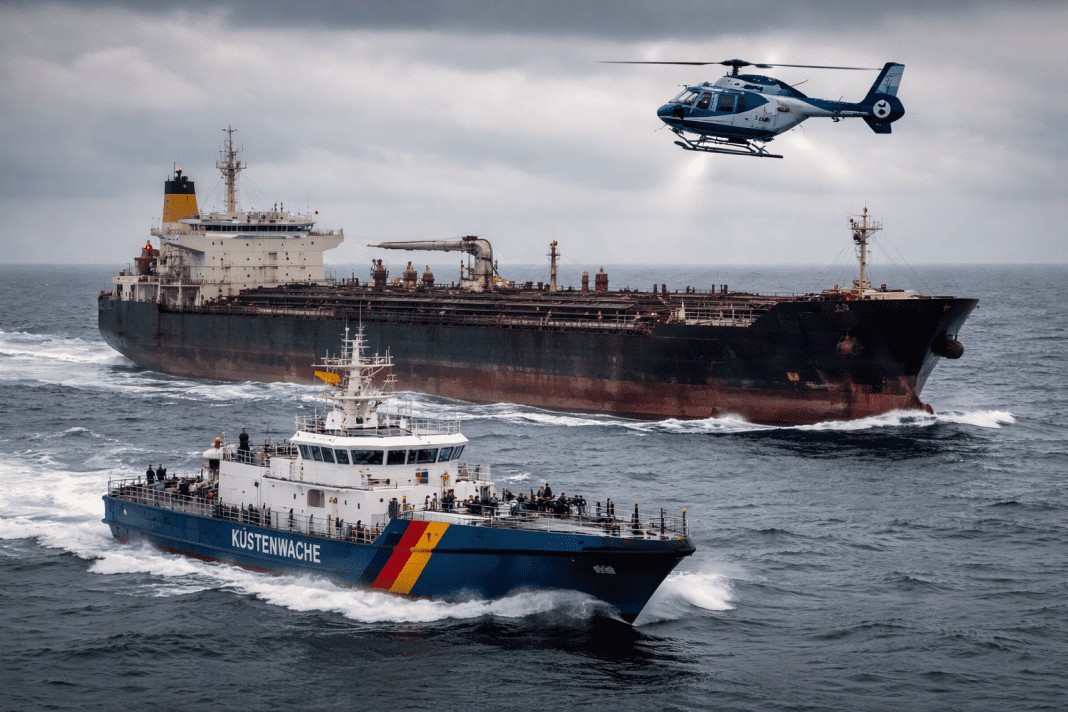

Germany denies Baltic Sea entry to shadow fleet tanker Tavian in unprecedented move
Germany has taken an unprecedented step in the enforcement of maritime sanctions by denying a Russian-linked oil tanker access to its territorial waters in the Baltic Sea. On January 10, German authorities refused entry to the tanker Tavian, a vessel widely described by German media as part of the so-called “shadow fleet” used to move oil while avoiding international sanctions.
The decision followed an inspection by the German Federal Police, which raised serious concerns about the ship’s identity, documentation, and possible involvement in sanctions evasion. The Tavian was prevented from entering German waters and later changed course away from the Baltic Sea.
This marks the first publicly reported case of Germany blocking a shadow fleet tanker outright, signaling a tougher stance on maritime enforcement in one of Europe’s most sensitive sea routes.
Why Germany stopped the tanker Tavian in the Baltic Sea
German authorities identified the Tavian as it approached the Baltic Sea near the northern state of Schleswig-Holstein. The vessel is 27 years old and has a long history of changing names and registrations. At the time of the inspection, it was sailing under a Cameroonian flag, which authorities suspected was false.
According to German media reports, the tanker was also using a fabricated IMO number, a unique identifier that ships are legally required to carry. These irregularities are common among so-called “zombie” vessels — ships that operate under fake identities to hide their true ownership and trading history.
A police helicopter was dispatched to the ship to carry out a document inspection. Officers concluded that the Tavian did not meet the legal requirements to enter German territorial waters. The vessel was therefore denied access and forced to turn back.
Instead of continuing toward its presumed destination near St. Petersburg, the tanker reversed course and headed north toward the Norwegian Sea. The refusal meant the ship never entered German jurisdiction, avoiding the risk of detention or further legal action.
What shadow fleet tankers mean for sanctions and security
Shadow fleet tankers are vessels that transport oil while attempting to bypass international sanctions, particularly those targeting Russian energy exports. These ships often operate with unclear ownership, poor maintenance records, and falsified documentation. Many are older tankers that would normally be retired from regular commercial use.
The Tavian fits this profile closely. Maritime tracking data shows that it has operated under several different names, including Tia and Arcusat. It has also appeared on U.S. sanctions lists for its role in illegitimate oil trades. Constant name and flag changes are a common tactic used to confuse regulators and hide a vessel’s past activities.
German authorities have grown increasingly concerned about the risks posed by such ships. Beyond sanctions evasion, these vessels are often linked to navigation failures, near-collisions, and environmental hazards. In narrow waterways like the Baltic Sea, even a single accident can have serious consequences.
The Baltic region also contains critical undersea infrastructure, including power cables and communication lines. Suspicious maritime activity near these assets has drawn heightened attention from security agencies across northern Europe.
Growing enforcement pressure in the Baltic and North Sea region
Germany’s action against the Tavian comes amid broader scrutiny of shadow fleet activity in the Baltic and North Sea. In late 2025, German authorities inspected another suspicious vessel, the Chariot Tide, after it was observed near sensitive undersea infrastructure. The inspection raised alarms about potential threats to cables located along narrow shipping routes.
German investigators have also examined the activities of the Chinese bulk carrier Yi Peng 3, which was suspected of damaging two submarine cables in November 2024. These incidents have reinforced concerns that poorly regulated or deliberately deceptive vessels pose risks beyond commercial shipping.
Other countries have also increased enforcement against shadow fleet operations, including inspections and monitoring in the North Atlantic and Caribbean. However, Germany’s refusal to allow the Tavian into its territorial waters stands out as a rare and decisive action.
By blocking the tanker before it could enter the Baltic Sea, German authorities demonstrated a firm approach to sanctions enforcement and maritime security. The move highlights how European states are responding to the growing challenge posed by vessels operating outside normal international shipping rules.