




Finance ministers from the world’s biggest economies met in Washington to talk about a problem that affects far more than factories and governments. They discussed how to reduce their countries’ heavy dependence on rare earths and other critical minerals that mostly come from China. These minerals may sound like something only scientists care about, but they are actually part of many things people use every day.
Why Rare Earths Matter to Everyday Life
Rare earths and similar minerals are used in smartphones, computers, electric cars, wind turbines, solar panels, batteries, chips, and even medical and defense equipment. Without a steady supply of these materials, many modern products would become more expensive or harder to make.
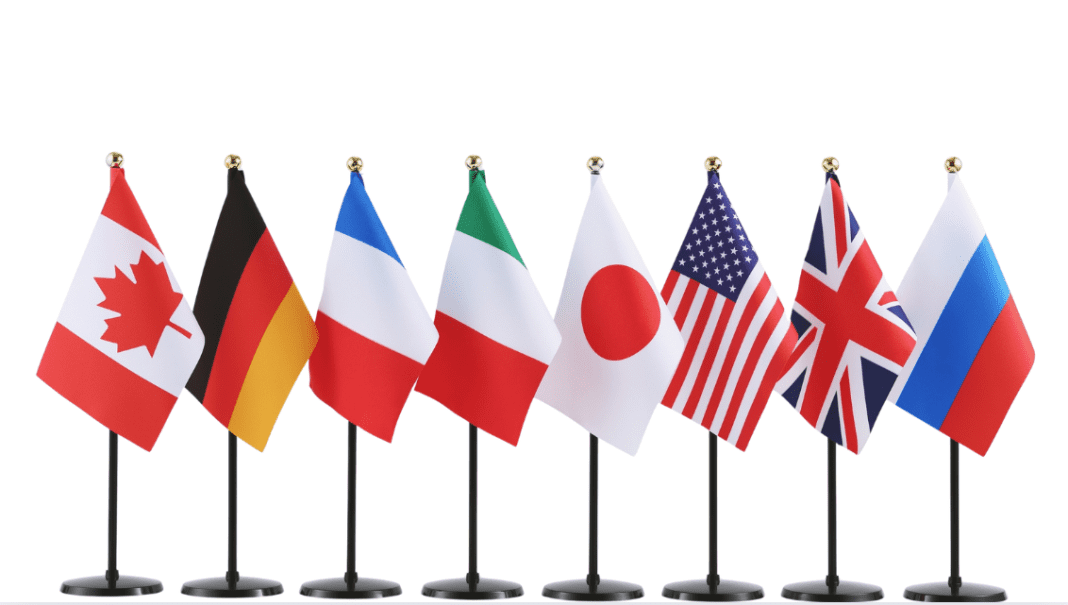
At a meeting in Washington, ministers from the G7 countries — Japan, Britain, France, Germany, Italy, Canada, and the United States — met with officials from other major economies such as Australia, Mexico, South Korea, and India. Their goal was to find ways to reduce dependence on a single main supplier for these important materials.
Japan begins deep sea mission to test rare earths extraction and reduce reliance on China
China currently plays a very large role in the global supply chain. It processes a big share of the world’s copper, lithium, cobalt, graphite, and rare earth elements, sometimes more than half. This means many countries depend on China not only for mining, but also for processing.
This reliance has raised concerns, especially after China placed new export controls on some materials. The talks focused on “de-risking” supply chains by creating more sources without cutting off trade.
What Countries Are Discussing to Change the Supply Chain
During the talks, countries discussed several ways to build up rare earth supplies outside China. One key idea was to set a minimum or “floor” price for rare earths. This would make mining and processing projects in other countries more stable and more attractive for investors, because companies would not have to fear sudden price drops.
Another major focus was building new partnerships. Countries want to work together to explore, mine, process, and recycle these minerals. This could include agreements between governments, support from public financial institutions, and cooperation with private companies. The goal is to create a more balanced global system where no single country controls the entire supply chain.
🔋 With rare earths in China’s hands, Trump backs off Beijing and shifts the trade war to Delhi
Officials also discussed using different policy tools such as tax benefits, financial support, trade measures, and rules to make sure mining follows standards for workers and human rights. Recycling was highlighted as an important option, since many devices already contain rare earths that can be recovered and reused, reducing the need for imports.
Together, the participating countries and the European Union make up about 60% of global demand for critical minerals, yet they control only a small part of the supply chain. This is why they want to move faster to develop their own sources.
Although the talks are still at an early stage, there was broad agreement on the need to reduce dependence on China, while focusing on strengthening their own systems rather than targeting any single country.
How China’s Role and Recent Moves Shaped the Talks
China built its strong position in the critical minerals market over many years by investing heavily in mining, processing, and refining. This strategy gave the country a major advantage in both cost and scale. Today, China processes a very large share of the world’s key minerals, sometimes more than 80% for certain materials.
Manufacturers use these minerals in many important products, so any change in supply can have a big impact. Companies rely on them for defense equipment, computer chips, renewable energy systems, batteries, and many industrial uses. When supplies become limited, prices rise and factories slow production.
Recently, China has taken steps that raised concerns in other countries. It restricted exports of some items with both civilian and military uses and placed new controls on rare earth shipments, including to Japan. These moves showed how quickly trade rules can change and how strongly they can affect global industries.
This is why the Washington meeting felt urgent. Countries want to avoid sudden factory shutdowns or sharp price increases caused by supply decisions made elsewhere. By building more sources and processing capacity in different regions, they hope to make supply chains more stable and reliable.
Trade and financial officials also joined the talks, showing that the issue is about investment and business as well as politics. Even without a joint statement, there was clear agreement that relying on a single supplier is risky. The talks also stressed the need to move faster on funding, approvals, and recycling to widen supply sources.