
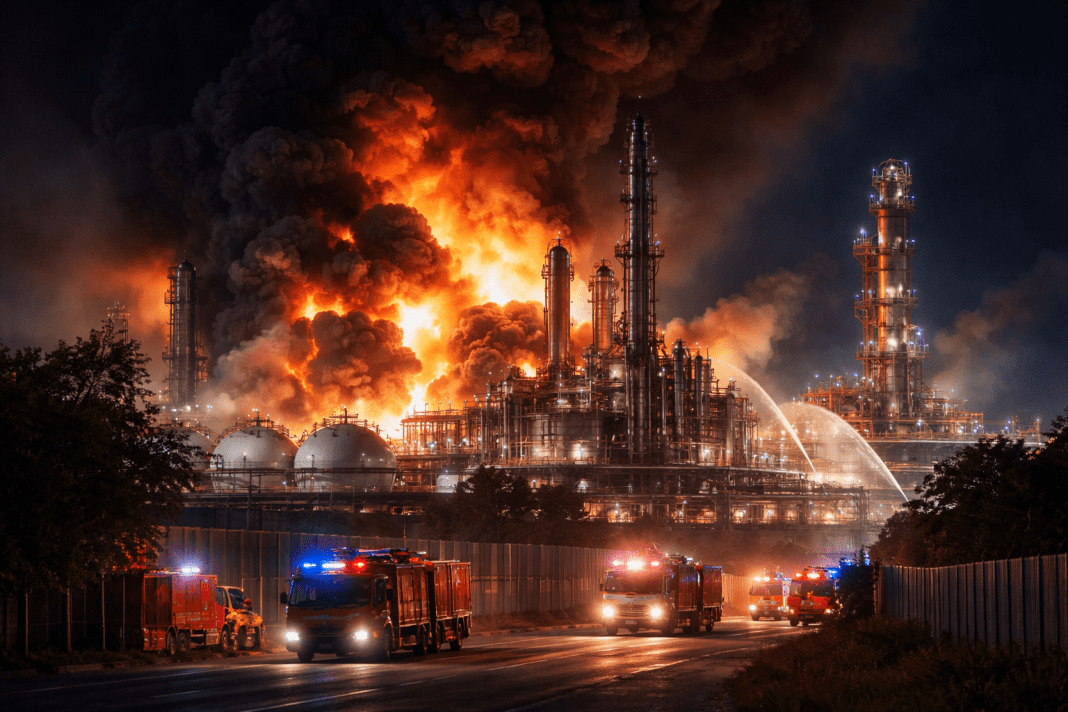

A sudden wave of drone attacks swept across at least seven Russian regions overnight, causing widespread power and heating disruptions and sparking a fire at one of the world’s largest chemical plants. Authorities reported damage to municipal infrastructure and industrial facilities, leaving many residents without electricity, heating, and hot water.
Widespread Disruptions Across Multiple Regions and Industrial Facilities
In Oryol Oblast, drones reportedly struck a major thermal power plant, damaging key municipal infrastructure. The attack led to interruptions in heating, electricity, and hot water supplies in parts of the city. Emergency teams were immediately deployed to repair the damages, and short-term restrictions to energy and heating services were announced.
Some neighborhoods, including the Sovietsky district, faced a full suspension of heat and hot water. Authorities canceled classes at schools and kindergartens in affected areas to ensure the safety and comfort of residents. Local reports indicated that residents experienced sudden blackouts and limited access to essential services during the early hours of the morning.
Drone Hell Hits Russia’s Oil Heartland — S-400 Base Ablaze, Novorossiysk Engulfed in Chaos
In Rostov Oblast, authorities activated air defenses as drones targeted Rostov-on-Don, Taganrog, and nearby districts. The attacks damaged civilian infrastructure, including a high-voltage transmission line that cut power to homes and industrial sites. Despite the disruptions, officials emphasized that no one was injured.
Other regions reportedly affected by the attacks include Belgorod, Voronezh, Samara, Astrakhan, Kursk, and Krasnodar. Authorities confirmed that both civilian and industrial facilities experienced power interruptions, leaving residents struggling with outages in the middle of the night.
Fire Erupts at Major Chemical Plant in Samara
A separate incident occurred in the Samara region, where a drone strike reportedly hit the TogliattiAzot (TOAZ) chemical plant. The attack triggered a significant fire at the facility, which is among the top ten ammonia producers in the world and a major player in Russia’s chemical industry.
Local residents saw thick smoke rising from the chemical plant and reported that authorities had blocked roads leading to the facility for safety reasons. Eyewitness accounts indicated that a drone strike triggered the fire. Emergency services mobilized to contain the blaze and prevent further damage to the surrounding area.
Global watchdog uncovers €1.4B in Russian oil sneaking through Danish Straits on false-flag ships
The fire at the chemical plant raised concerns because of the facility’s importance in chemical production and the potential risk of hazardous materials spreading. While there were no immediate reports of casualties, the fire added to the already tense situation caused by the widespread drone attacks.
Russia Claims Large Number of Drones Intercepted Over Industrial Sites and Chemical Plants
The Russian Defense Ministry stated that air defense systems intercepted and destroyed 94 drones overnight. Among these, 36 were over Rostov Oblast, 17 over Belgorod, 15 over Voronezh, and several others across Samara, Astrakhan, Kursk, and Krasnodar Oblasts. Additional interceptions were reported over the Caspian and Azov Seas.
While the ministry’s figures could not be independently verified, they suggested a large-scale coordinated attack targeting both civilian and industrial sites, including chemical plants. The incidents highlight the vulnerability of critical infrastructure to drone strikes and the challenges faced by emergency services in responding to multiple simultaneous threats.
Residents in affected areas experienced sudden disruptions to daily life, from power cuts to blocked roads and suspended heating services. Emergency crews worked throughout the night to restore essential services, repair damaged facilities, and contain fires at industrial sites and chemical plants.
The overnight drone strikes represent a significant escalation in attacks on Russian territory, affecting multiple regions and essential services. Authorities emphasized that repairs and emergency operations were ongoing, while civilian life gradually returned to normal in areas where damage was less severe.