


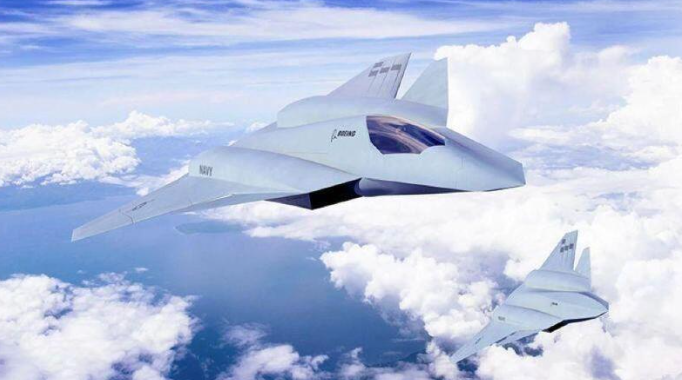


The United States military is facing a major challenge as delays affect its advanced F-47 and F/A-XX fighter jet programs, both part of its sixth-generation air combat plans. Experts now expect these next-generation jets, designed to be more powerful and intelligent than current aircraft, to enter service only by the mid-2030s.
This setback could create a long “fighter gap,” forcing the US to rely on older jets like the F-22 Raptor and F/A-18 Super Hornet for much longer than planned, raising concerns about maintaining air power during the transition.
F-47 & F/A-XX Delays Trigger Sixth-Generation Fighter Capability Gap
Engineers designed the F-47 and F/A-XX as advanced next-generation fighter jets to transform air combat with cutting-edge stealth, artificial intelligence, and the ability to operate alongside unmanned drones. These features are expected to give the United States a major advantage in modern warfare by improving speed, awareness, and combat effectiveness.
B-21 and F-47 fleets too small to strike deep inside China in Taiwan war, report warns
Initially, planners aimed to bring both aircraft into service around 2030. They scheduled the F-47 to achieve its first flight by 2028, while they planned the F/A-XX, built for naval operations, to follow a similar development timeline. However, both programs have encountered delays, pushing their expected entry into service to the mid-2030s.
As a result, the US military will have to rely on older fighter jets for a longer period than planned. This situation creates what experts call a “fighter gap,” where current capabilities may fall behind future technological demands in aerial warfare.
Aging Aircraft Must Stay Longer Than Planned
Because the new fighter jets are not ready, older aircraft like the F-22 Raptor and F/A-18 Super Hornet will have to stay in service much longer than originally planned. While these jets remain highly capable, engineers did not design them to operate for such extended periods, which creates added pressure on both equipment and personnel.
One major challenge is maintenance. As aircraft age, their components begin to wear out more quickly. This leads to more frequent inspections, repairs, and part replacements. Maintenance crews must work harder to keep the jets operational, and the cost of sustaining these older systems continues to rise over time.
Symbol of strength — stealth bomber and F-22 jets dominate skies at Trump-Putin summit
Another issue is the need for upgrades. Modern combat requires advanced radar systems, secure communication networks, and updated software. Engineers find it complicated and expensive to integrate these technologies into older aircraft, as they often need to make structural and electronic modifications that they did not include in the original design.
There is also a growing logistical burden. Managing an aging fleet while preparing for future aircraft strains supply chains, workforce availability, and infrastructure. Ensuring a steady supply of spare parts and trained technicians becomes more difficult, adding billions in costs and making overall defense planning more complex.
Complex Development and Industry Challenges Slow Progress
Delays in the F-47 and F/A-XX programs are not unusual given the complexity of these next-generation fighter jets. They involve advanced technologies, strict security requirements, and highly detailed engineering, which naturally makes development slower and more challenging.
One key reason for the delay is a shift in development strategy. In earlier programs, private companies controlled much of the technology and data, which later caused higher costs and slower updates. To fix this, the government now wants greater control over design and systems, but this approach adds extra layers to the development process.
1,000-Mile Strike Radius, Drone Control, and Stealth++: F-47 Is America’s Ultimate Warplane
Another major factor is pressure on the defense industry. Several large military aircraft projects are running at the same time, including new bombers and other advanced platforms. This is stretching manufacturing capacity, skilled labor, and supply chains, making delays more likely.
The F/A-XX program also faces uncertainty as a final contractor has not yet been selected. Together, these issues have pushed timelines into the mid-2030s, forcing the United States to rely on older aircraft longer and creating a significant fighter gap in its air power.