
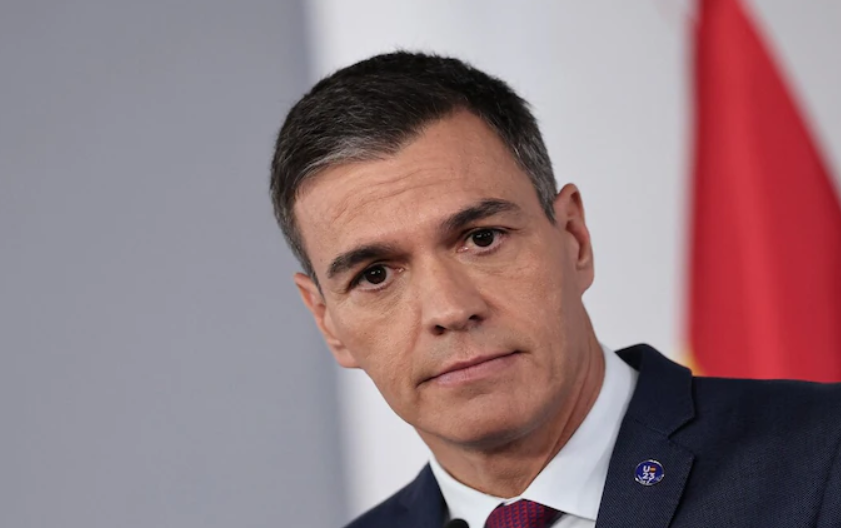

Elon Musk, the owner of X, sparked controversy after attacking Spanish Prime Minister Pedro Sánchez. His comments followed Spain’s move to introduce new rules for social media platforms. Musk posted the remarks publicly on X. The comments spread quickly and drew strong reactions in Spain and abroad.
Musk’s Public Attack on Spain’s Prime Minister Sánchez
The dispute began when Spanish Prime Minister Pedro Sánchez shared a post explaining plans to introduce five new rules for social media platforms. The measures aim to reduce what he called impunity for large tech companies and to better protect minors from harmful online content.
Elon Musk soon reposted the message on X and responded with a harsh attack. He called Sánchez a “tyrant and traitor to the people of Spain,” used an insulting nickname, and added a poop emoji, making the exchange highly personal.
Because Musk owns X and has millions of followers, the post spread quickly worldwide. Some users reshared it widely, while others criticized the remarks as inappropriate and disrespectful.
Spanish political leaders pushed back strongly, defending Sánchez and rejecting claims of authoritarianism. Supporters of Musk, however, praised him for speaking against what they see as government overreach and threats to free speech.
Spain’s Five New Rules for Social Media Platforms
At the center of the clash are five measures announced by Spanish Prime Minister Pedro Sánchez during a public address. He argued that social media platforms have become “a failed state” where laws are ignored and harmful behavior is tolerated. Sánchez said the government can no longer allow platforms to avoid responsibility for what happens on their services.
One of the most significant measures directly affects tech leaders such as Elon Musk. Sánchez said Spain plans to change its laws so that platform executives can be held legally responsible for serious violations. Under the proposal, CEOs could face criminal charges if they fail to remove illegal or hateful content from their platforms.
Blame Game Erupts: Spain’s Grid Sparks Portugal’s Power Meltdown
Sánchez stressed that hiding behind technology and algorithms is no longer acceptable. He said executives must ensure their platforms follow the law, just like companies in other industries. Another key measure targets algorithm manipulation. According to Sánchez, some actors intentionally create and spread harmful or illegal content, while platform algorithms amplify it because it drives profits. The government plans to investigate both content creators and the platforms that help spread such material.
The overall goal of the measures is to create a safer online environment, with special focus on protecting minors from harmful content, including hate speech and disinformation. These proposals place Spain among European countries seeking stronger oversight of major digital platforms.
Growing Tensions Between Musk and European Leaders
This is not the first public clash between Elon Musk and Spanish Prime Minister Pedro Sánchez. Just days earlier, Sánchez responded to a Musk post criticizing Spain’s decision to regularize migrants by saying, “Mars can wait, humanity can’t,” a remark referencing Musk’s focus on space exploration.
The latest exchange has further strained their relationship and comes at a sensitive moment for Musk in Europe. On the same day Sánchez announced Spain’s new social media measures, French authorities took action involving X. The Paris Attorney General’s office reportedly raided X’s offices in France and summoned Musk to testify as part of an investigation into possible algorithm manipulation. The probe is examining whether certain messages were amplified in ways that could have enabled foreign interference.
Spain shelves F-35 jet deal as funds redirected to European defense projects
These developments are being closely watched across Europe. Regulators and political leaders are paying attention to Musk’s increasing role in global political debates, particularly around free speech, platform regulation, and the influence of large technology companies.
The clash highlights how online political rhetoric is becoming more direct and personal. It also shows how comments made on social media can quickly turn into international disputes when influential figures are involved. Reactions remain divided, with supporters seeing Musk as challenging government power, while critics argue he is overstepping as a private businessman.