
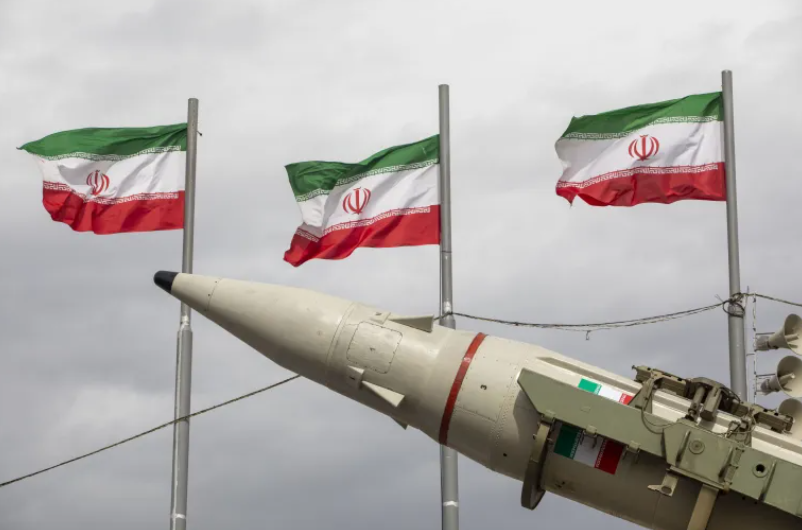

US President Donald Trump recently claimed that Iran had positioned around 1,200 missiles aimed at several countries in the Middle East, raising serious concerns about regional security. During an interview, Trump said Tehran had been preparing for months to expand its military influence across the region.
Trump Alleges Iran Planned to Control the Middle East Region
“Iran had thousands of missiles pointed at all these Middle Eastern countries for the last four months,” US President Donald Trump said. “They were going to take over the Middle East, they were going to control it all – UAE, Qatar, Oman and Saudi Arabia. Iran had 1,200 missiles pointed at these countries.”
Trump made the remarks amid rising tensions in the region, following threats from Iran’s newly appointed supreme leader, Mojtaba Khamenei. He suggested that Iran’s military buildup posed a serious threat to regional stability and international security.
Oman dragged into Middle East war as drones strike Salalah port, Iran denies role
Experts said that such a large number of missiles could target key cities and military bases. This increases the risk of clashes or deliberate attacks. The claims also highlight the ongoing US-Iran rivalry. Both sides have been signaling military readiness. Analysts warned that the combination of missile stockpiles and heated rhetoric has created a tense situation. This tension affects not only the Gulf countries mentioned by Trump but the wider Middle East.
Khamenei’s Response and Leadership Concerns
The missile allegations surfaced just after Khamenei released a statement on Thursday. He warned that Iran would not back down from its conflict with the United States and Israel. In the message to the Iranian people, he said, “We will not refrain from avenging the blood of your martyrs.”
These developments follow reports that Khamenei may have been injured in a US-Israeli strike on a Tehran compound on February 28. That strike reportedly killed his father, and rumors circulated that Khamenei might have fallen into a coma. However, Trump indicated he believes the Iranian leader may still be alive.
“I think he probably is. I think he is damaged, but I think he’s probably alive in some form, you know,” Trump told Brian Kilmeade.
This uncertainty over Khamenei’s health has raised concerns about Iran’s political and military stability. Observers suggest that unclear leadership during a period of high tension could lead to unpredictable decisions and increase the risk of miscalculations. The situation is particularly sensitive as Iran continues to assert its regional influence while facing internal and external pressures.
The combination of missile threats, leadership uncertainty, and recent strikes has created a highly volatile scenario. Many experts believe that in such conditions, even small incidents could trigger a serious escalation, emphasizing the importance of careful monitoring by regional and global powers.
Strait of Hormuz and Regional Security
Addressing maritime security, Trump focused on the Strait of Hormuz, a narrow but strategic waterway through which a large portion of the world’s oil supply passes. He encouraged vessels to continue navigating the strait despite recent threats, emphasizing that Iran’s naval capabilities are limited.
“Go through the strait of Hormuz and show some guts,” Trump said. “There’s nothing to be afraid of. They have no Navy and we sunk all their ships.”
Pakistan holds talks with Saudi Arabia on Islamic defence cooperation amid Middle East tensions
Trump’s comments underline the US commitment to maintaining freedom of navigation in the region. They also emphasize the importance of keeping global shipping lanes open. Analysts warn that any disruption in the Strait of Hormuz could have serious consequences for international trade and oil markets. The strait is a critical route for crude oil exports from Gulf countries.
These remarks come amid a series of recent military exchanges between US and Iranian forces. There are also reports of missile stockpiling by Tehran. Ongoing questions about Khamenei’s health and leadership add to the uncertainty. Together, these developments have left the Middle East on high alert. Global attention remains focused on the region.