


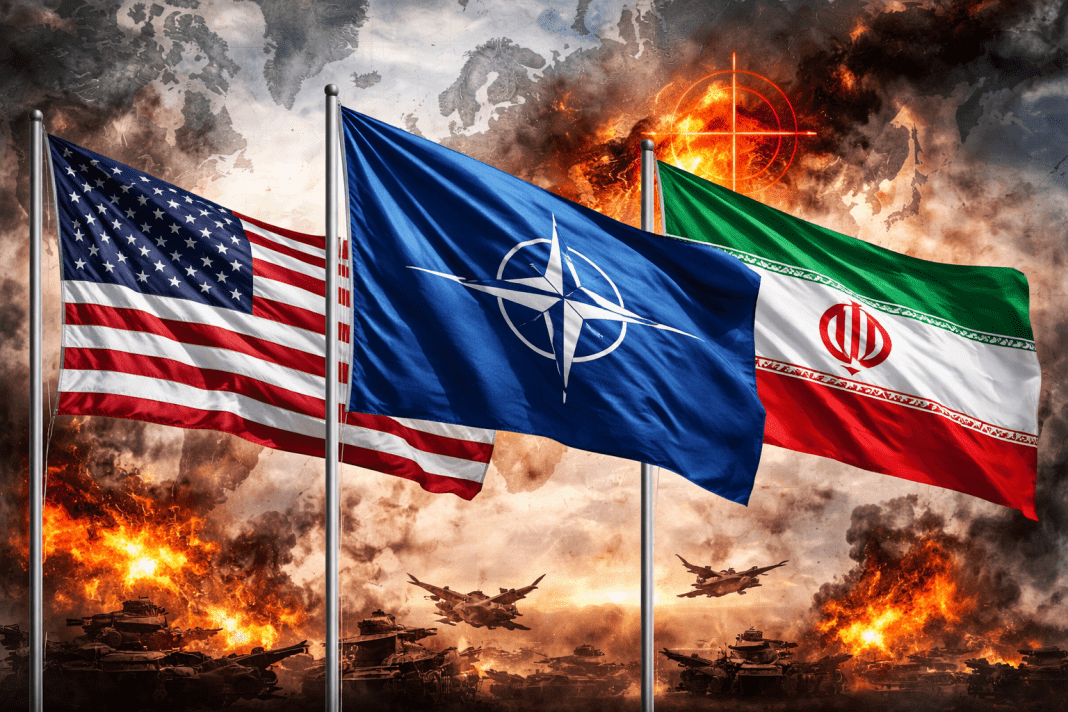


US President Donald Trump has reignited tensions with the NATO (North Atlantic Treaty Organization). He criticised their lack of support during the Iran war. His remarks have raised fresh concerns. They highlight growing divisions between the United States and its long-standing allies.
Trump criticises NATO and allies over Iran war support
US President Donald Trump has strongly criticised the North Atlantic Treaty Organization, accusing it of failing to support the United States during the Iran war. Speaking at a White House press conference, he said the conflict has significantly changed how he views the alliance, describing it as unreliable and lacking unity during times of crisis. His remarks highlighted growing frustration with long-standing partners.
Trump claimed that when the US reached out for help, NATO members chose not to get involved. He said he did not make a strong demand but still expected some level of backing from allies. According to him, their refusal to participate has left a lasting negative impression about NATO’s commitment, raising doubts about how the alliance responds in critical situations.
Why the NATO alliance is facing its biggest test over the crisis in the Middle East
He also criticised key allies such as Japan, South Korea, and Australia, saying they too did not assist the United States. Trump pointed out that these countries benefit from US military protection, yet did not offer support during the conflict.
“Paper tiger” remark and tensions with global leaders
In one of his strongest remarks, Trump described NATO as a “paper tiger,” suggesting that the alliance appears strong but lacks real power when tested. He also claimed that Russian President Vladimir Putin does not see NATO as a serious threat.
Trump’s comments come just days before NATO Secretary General Mark Rutte is expected to visit Washington for talks. The timing has added to the attention around his statements, as they highlight growing tensions between the US and the alliance.
The US President also said that NATO members are now trying to reconnect with him after the war. He claimed that they are offering help only after the United States has already achieved its objectives in the conflict.
Donald Trump calls NATO a paper tiger and considers withdrawing the United States
According to Trump, this delayed response shows a lack of genuine support. He suggested that allies should stand with the US during difficult times, not after the situation has already been resolved.
He repeated that several countries avoided involvement, even though they benefit from US military protection. His remarks pointed to what he sees as an imbalance in global security responsibilities.
Military presence in Asia and Greenland dispute
US President Donald Trump spoke in detail about the large number of American troops stationed in Asia. He said around 50,000 soldiers are based in Japan and about 45,000 in South Korea. According to him, the United States deploys these forces to protect the region from threats posed by Kim Jong Un and North Korea’s growing nuclear weapons program.
Trump questioned why these countries did not support the United States during the Iran war, despite receiving long-term military protection. He said the US often places its troops in dangerous situations to defend allied nations, and in return, those allies should be willing to stand with the US during conflicts. Trump suggested that their lack of involvement raises concerns about fairness and mutual responsibility in global security partnerships.
Trump praises Middle East partners while accusing NATO of offering “only words”
He also said he maintains a good personal relationship with Kim Jong Un, while still recognising the serious risks posed by North Korea’s nuclear capabilities. Trump criticised past US leadership, suggesting that earlier decisions and inaction allowed North Korea to develop and expand its nuclear program over time.
The President further claimed that tensions with the North Atlantic Treaty Organization began before the Iran war, pointing to the issue of Greenland. Allies rejected the US proposal to take control of Greenland, creating friction and widening the divide.