
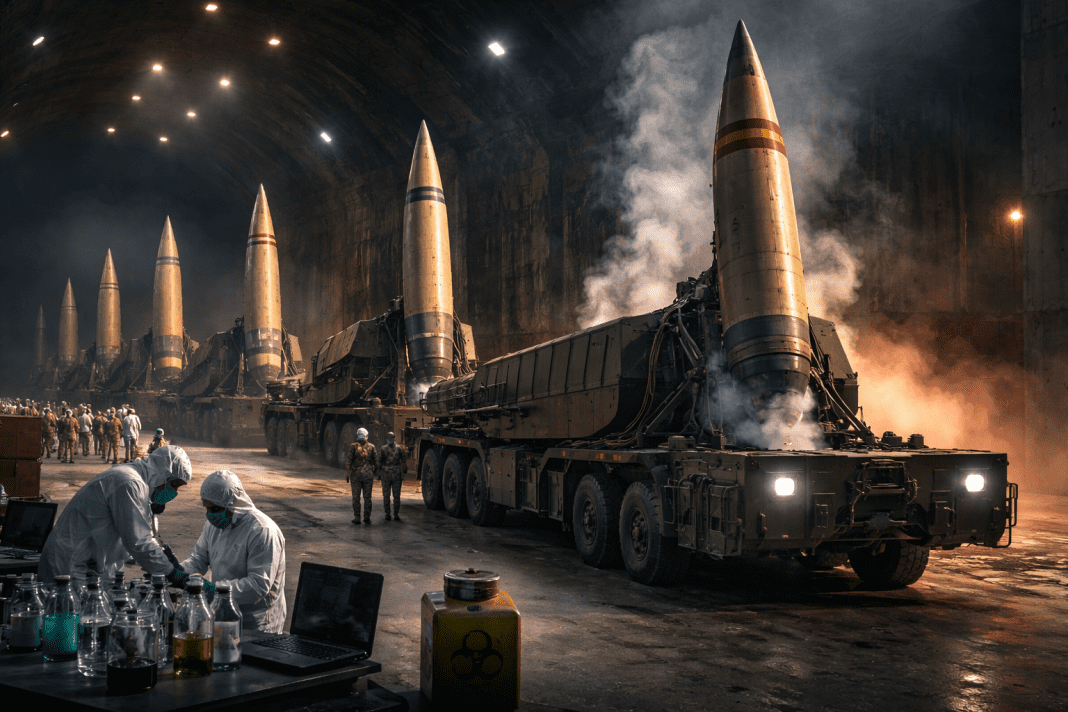

Tensions in the Middle East appear to be rising as reports indicate that Iran is working to develop chemical and biological warheads for its long-range ballistic missiles. The program, reportedly led by Iran’s Islamic Revolutionary Guard Corps (IRGC), has sparked concern among regional and international security observers. If confirmed, this would mark a major expansion of Iran’s military capabilities beyond conventional weapons and potentially include chemical weapons.
Missile Enhancements Expand Iran’s Chemical Weapons Arsenal
Sources cited by Iranian opposition media report that Iran’s Islamic Revolutionary Guard Corps (IRGC) Aerospace Force is working to modify the country’s long-range missiles to carry unconventional payloads, including chemical weapons and biological materials. Experts warn that the inclusion of chemical weapons could significantly increase the threat posed by Iran’s missile capabilities and alter the strategic balance in the region.
In addition to the missile modifications, the program reportedly includes significant upgrades to Iran’s command-and-control systems. These improvements are designed to allow the military to better coordinate and manage missile forces, making operations faster and more efficient. Officials suggest that the enhanced systems could improve Iran’s ability to respond quickly to potential threats and manage multiple missile launches simultaneously, including missiles capable of delivering chemical weapons.
Lebanon draws a hard line against Iran as Hezbollah faces growing pressure
The report also highlights a recent transfer of missile launchers to eastern regions of the country. Sources familiar with the matter say these movements have accelerated in recent months, suggesting a deliberate strategic repositioning of Iran’s missile forces. Observers note that this redeployment, combined with missile upgrades and the potential addition of chemical weapons, indicates a broader effort to strengthen Iran’s overall missile readiness and deterrence capabilities.
Rising Regional Tensions Over Chemical Weapons
The reported developments come amid increasing tensions across the Middle East. Observers believe that Iran may be preparing for potential confrontations with Israel and the United States. The country’s leadership reportedly views possible strikes by these nations as existential threats, prompting efforts to strengthen its deterrent capabilities, including the development of chemical weapons.
Iran’s $2 billion Venezuela gamble at risk as US moves to choke oil exports
Sources suggest that chemical and biological warheads are intended as a “complementary deterrent” to Iran’s existing missile arsenal. In other words, Iran may see chemical weapons as a way to increase the potential cost of any attack against it. Experts note that this approach aligns with Tehran’s broader military strategy, which has focused on ensuring it can respond effectively to large-scale conflicts.
Recent diplomatic activity highlights the urgency of the situation. International leaders are reportedly closely monitoring Iran’s missile program, especially the repair and expansion of missile production facilities and air defense systems damaged in previous regional conflicts. This heightened scrutiny reflects concern over the possibility that Iran could expand its chemical weapons capabilities without triggering immediate international action.
Surveillance and International Reactions
Western intelligence agencies are reportedly tracking unusual activity by the IRGC Aerospace Force. Observers note increased deployment of missile launchers, logistical movements, and communications activity, all of which indicate a possible build-up of missile forces. Intelligence analysts are closely monitoring command-and-control systems and other related operations to better understand Iran’s capabilities, including potential chemical weapons programs.
The reported development of chemical and biological warheads has raised alarms among military experts and analysts. They warn that if confirmed, these advancements—including chemical weapons—could dramatically alter the balance of power in the region. Such a move would likely provoke widespread international condemnation and could result in new sanctions or increased diplomatic pressure on Iran.
Despite these reports, Iran continues to deny any interest in producing unconventional weapons, including chemical weapons. The country maintains that it remains committed to international obligations and treaties. Nevertheless, Tehran has steadily expanded its ballistic missile capabilities over the years, enhancing both the range and accuracy of its arsenal. These advancements, along with potential chemical weapons, have long been a source of concern for countries in the Middle East and beyond.
After 12-day conflict, Israel fears Iran’s missile factories are running at “unprecedented speed”
Sources familiar with Iran’s military planning say the leadership sees a potential strike from Israel or the United States as a direct threat to the nation’s survival. In this context, they argue that unconventional weapons, including chemical or biological warheads, could be considered if Iran faced what it viewed as existential danger. The ongoing reports highlight the complexities of regional security and the growing role of such weapons in global military strategies.
With missile deployments, command system upgrades, and the reported development of chemical weapons and biological warheads, Iran’s missile program continues to draw significant international attention. Observers warn that the situation warrants close monitoring, as the strategic and political implications could be far-reaching.