
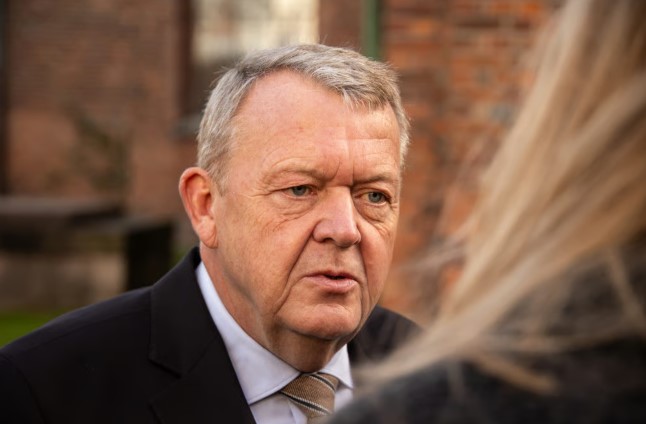

Denmark said the U.S. decision to appoint a special envoy to Greenland shows continued American interest in the Arctic island, but stressed that Greenland is part of the Kingdom of Denmark and its territorial integrity must be respected, following President Donald Trump’s appointment of Louisiana Governor Jeff Landry.
Denmark responds to US move on Greenland
Denmark’s Foreign Minister, Lars Lokke Rasmussen, addressed the issue in a written statement shared on Monday. He said the appointment of a special envoy leaves no doubt that the United States continues to show strong interest in Greenland.
Rasmussen explained that Denmark understands the importance many global powers place on the Arctic. The region is seen as valuable because of its location, natural resources, and growing military importance. Greenland, the world’s largest island, plays a key role in this region due to its position between North America and Europe.
However, Rasmussen made it clear that Denmark expects respect from its allies. He stated that everyone, including the United States, must respect the territorial integrity of the Kingdom of Denmark. This means Denmark sees Greenland as an inseparable part of its sovereign territory, even though Greenland has a high level of self-rule.
Greenland governs many of its own domestic matters, such as education, health, and natural resources. Still, Denmark remains responsible for defense and foreign policy. Because of this arrangement, any international actions involving Greenland often require careful coordination between Copenhagen and Nuuk, Greenland’s capital.
Denmark’s statement did not criticize the United States directly, but it set clear boundaries. Officials emphasized that interest in Greenland must not cross into actions that could question Denmark’s authority or Greenland’s political status.
Why Greenland matters to the United States
Greenland has long attracted attention from the United States due to its strategic location and military value. The island sits along key Arctic routes and is close to North America. The U.S. already operates the Pituffik Space Base, formerly known as Thule Air Base, in northern Greenland. This base is important for missile warning systems and space surveillance.
During Donald Trump’s presidency, Greenland became a topic of global headlines when he openly expressed interest in purchasing the island. That idea was quickly rejected by both Denmark and Greenland, with officials saying Greenland is not for sale. Despite that rejection, the United States continued to expand its diplomatic and strategic engagement with the island.
U.S. weighs direct role in Greenland rare earths development through $50 million plan
The appointment of Jeff Landry as a special envoy is being viewed as another step in this ongoing engagement. A special envoy typically serves as a representative to focus on a specific region or issue. In this case, the role suggests that Greenland remains a priority area for U.S. policy discussions.
American officials have often described Greenland as important for national security, climate research, and Arctic cooperation. As ice melts due to climate change, new shipping routes and access to natural resources are becoming more visible, increasing global interest in the Arctic.
Denmark and Greenland have acknowledged these global changes. At the same time, they have consistently said that decisions about Greenland’s future must involve its people and respect existing political structures.
Political and diplomatic sensitivities around the Arctic
The Arctic has become a region of growing diplomatic sensitivity as major powers such as the United States, Russia, and China show increasing interest in its strategic and political importance. This has made Arctic nations, including Denmark, more cautious about how international involvement in the region is managed.
Greenland’s government has also taken steps to raise its global profile by opening diplomatic offices and seeking economic partnerships abroad. At the same time, it has made clear that any cooperation with foreign countries must follow Greenlandic laws and remain consistent with Denmark’s responsibility for foreign and security policy.
Denmark’s response to the U.S. decision to appoint a special envoy to Greenland reflects this delicate balance. Danish officials want to preserve strong ties with the United States, a key NATO ally, while firmly protecting national sovereignty and ensuring Greenland is not treated as a prize in great power competition.
Foreign Minister Lars Lokke Rasmussen’s statement was carefully worded. By acknowledging continued American interest, Denmark recognized the reality of U.S. involvement. By stressing respect for territorial integrity, it reinforced its legal and political position.
This stance is similar to Denmark’s earlier reactions when President Donald Trump expressed interest in buying Greenland. Then, as now, Danish leaders emphasized calm dialogue and cooperation while clearly rejecting any challenge to Denmark’s sovereignty over Greenland.