
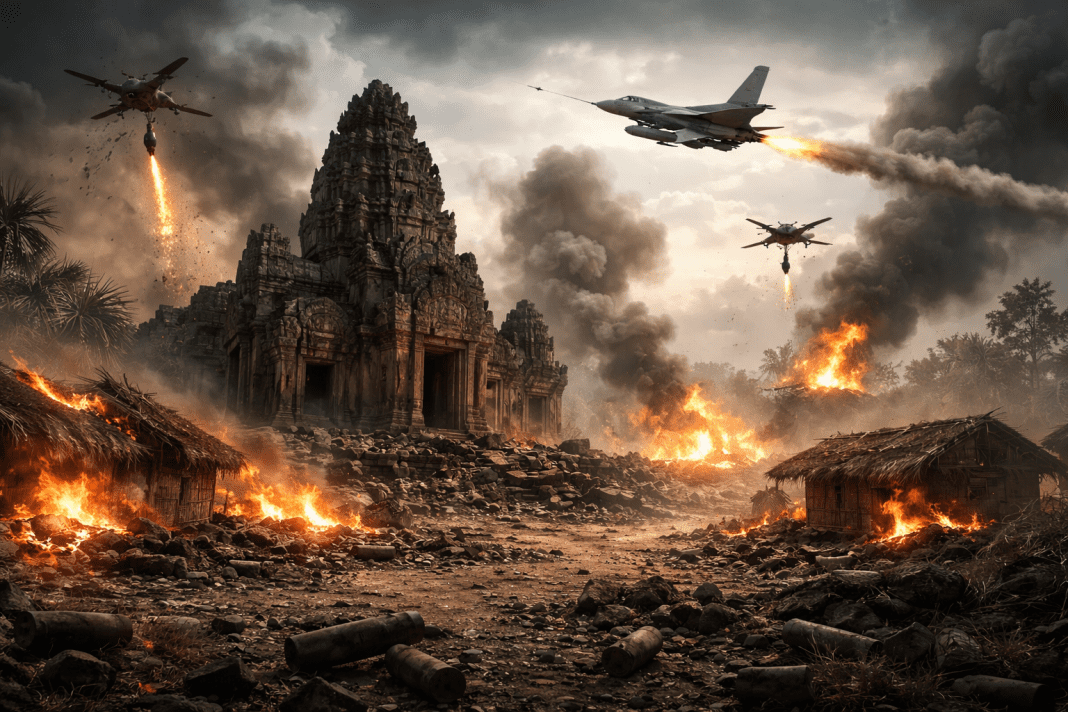

The border war sharply escalated on its 11th day as heavy weapons, airstrikes, and reported toxic gas use hit temple areas and nearby villages, putting civilians and cultural sites at risk. Early morning shelling, drone attacks, and air raids spread fear across border communities, marking one of the most intense and coordinated phases of the fighting so far.
Dawn Assaults and Toxic Gas Threaten Temples and Villages
The latest escalation began before sunrise when heavy machine guns and tank-mounted cannons opened fire on border areas near ancient temples. These sites, valued for their religious and cultural importance, were caught in the fighting, causing widespread alarm among nearby residents.
Soon after, bombing drones and heavy artillery struck the same locations in repeated waves, hitting temples and nearby villages. Explosions echoed across the region, forcing families to flee or hide as roads, farmland, and homes were damaged.
Thailand moves to defend border operations as Cambodia disputes claims in renewed hostilities
As the morning progressed, fighter jets were used to bomb a border village, marking a major escalation. The deployment of F-16 aircraft showed the conflict had expanded into full air and ground combat. Alongside these attacks, reports of toxic gas being used near populated areas sharply increased fear among civilians. Toxic gas can spread quickly and harm people far from the fighting, with children, older people, and those with health conditions at greatest risk.
Villages continued to face shelling as ground forces supported by tanks moved closer to civilian areas and drones flew overhead. Airspace violations added to the confusion. The presence of toxic gas made the situation even more frightening, forcing many residents to abandon their homes without warning.
Use of Toxic Gas Raises Alarms Over Civilian Safety
The reported use of toxic gas emerged as one of the most alarming developments of the conflict. Official statements said toxic gas was released during fighting near a village, raising serious concerns about civilian safety. Unlike conventional weapons, toxic gas can cause harm even after fighting shifts elsewhere, making it especially dangerous for people living nearby.
Exposure to toxic gas can lead to breathing difficulties, skin and eye irritation, and long-term health risks. In crowded villages with limited access to medical care or protective equipment, these dangers are even greater. The claims of toxic gas use have heightened fear among families already living under constant shelling and air attacks.
Civilian areas continued to suffer throughout the day. Multiple villages reported artillery fire and explosions, damaging homes and forcing daily life to a halt. Farmers were unable to work their fields, while children remained indoors as a safety measure. Entire communities faced ongoing disruption and uncertainty.
Indonesia-Cambodia Inks New Partnership to Combat Online Gambling and Fraud
Officials said their military actions were carried out in self-defence and targeted only opposing forces. However, they accused the other side of deliberately striking civilian areas. Official figures released later showed rising civilian casualties, including deaths and dozens of injuries. Women and children, including an infant, were among those affected.
The presence of toxic gas added another layer of fear, even in areas not directly hit by bombs. Cultural sites, including temples near the fighting, were also damaged, deepening the emotional impact on local communities.
Escalation With F-16s and Mounting Costs of War
The use of fighter jets, heavy artillery, and advanced weapons on the 11th day highlighted the growing intensity of the border war. F-16 aircraft, precision-guided bombs, rockets, and large-calibre guns were all used within a short time frame. Such operations are not only destructive but also extremely costly.
Military analysts estimate that daily combat operations now cost close to $100 million. Fighter jet flights, bomb deployments, rocket launches, and artillery fire quickly add up. Each bomb dropped and each hour in the air requires fuel, maintenance, and technical support.
Despite these high costs, authorities approved a major budget allocation to strengthen border security and support ongoing military operations. Funds were set aside from the central budget to reinforce army and naval units, improve equipment, and maintain readiness. Officials said the spending was necessary to protect national security and maintain stability during the conflict.
While military resources expanded, civilian suffering continued. Border communities faced damaged infrastructure, disrupted services, and growing fear. The use of air power and reports of toxic gas made daily life increasingly unsafe for ordinary people living near the fighting.
Throughout the day, artillery fire, drone surveillance, and airstrikes were reported from several locations. The combination of F-16 attacks, heavy weapons, and alleged toxic gas use turned the 11th day into one of the most dangerous periods of the war. Civilians remained trapped between opposing forces, struggling to survive as the conflict showed no sign of easing.