
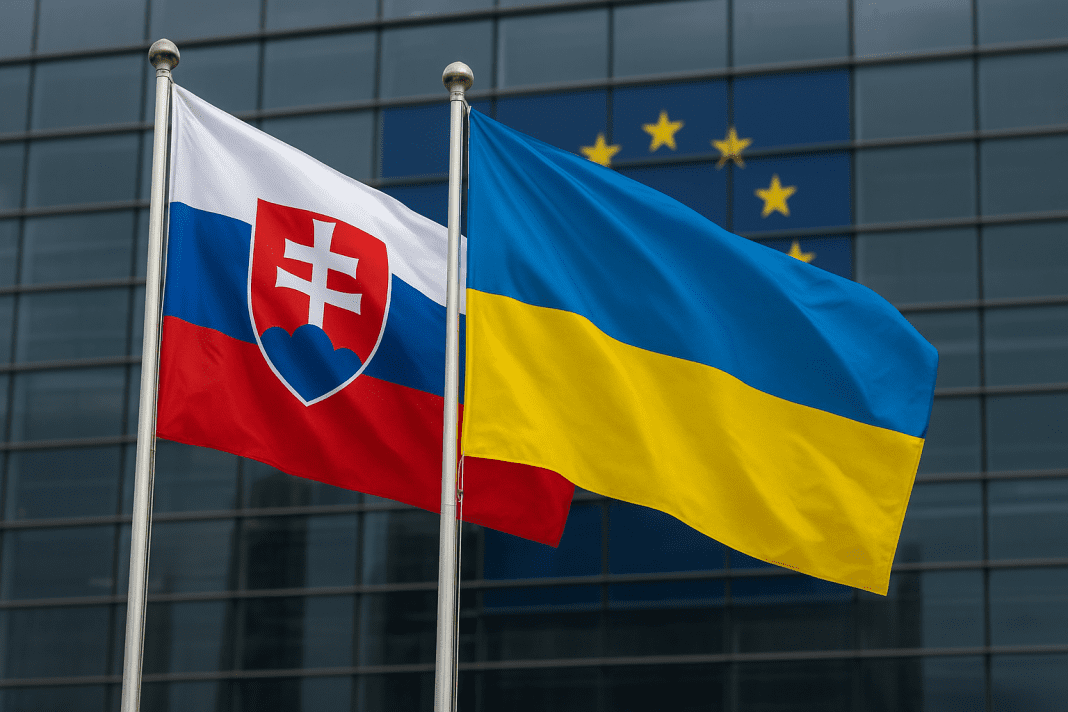

Brussels is witnessing an unusual clash within Europe as Slovakia, led by Prime Minister Robert Fico, publicly announced its refusal to support the European Union’s plan to finance Ukraine. Fico labeled the EU’s strategy as “wrong and ineffective” and described the ongoing conflict as “senseless killing” that fails to strengthen Ukraine’s negotiating position. His remarks have sparked a wave of controversy across European capitals and among NATO allies.
Slovakia Rejects Military Aid Plan for Ukraine, Cites Peace Concerns
The European Commission has proposed financial support to Ukraine for the years 2026 and 2027. This plan includes covering Ukraine’s military expenditures and utilizing frozen Russian assets to help fund the aid. Fico, however, has taken a firm stand against this approach, stating that Slovakia cannot back military funding. In a detailed letter addressed to the President of the European Council, Fico emphasized that his position is rooted in a consistent peace policy.
“I have long and unequivocally expressed my positions regarding the military conflict in Ukraine,” Fico wrote. “This conflict has no military solution. The continuation of the war is nothing but senseless killing without strengthening Ukraine’s position.” He stressed that Slovakia will continue humanitarian support for Ukraine but will not approve financial aid that prolongs the war.
NATO allies caught off guard as Washington cuts security funding for border defense programs
Fico highlighted that Slovakia has already contributed significantly to Ukraine in other ways. The country provides electricity through reverse flow, supplies gas, supports Ukrainian refugees, repairs border crossings, and organizes joint government meetings with Ukraine. Despite these efforts, Fico argued that direct military financing crosses a line that Slovakia cannot support.
The Prime Minister also criticized the potential use of frozen Russian assets to fund Ukraine’s military. He warned that such a move could interfere with ongoing peace initiatives, specifically mentioning efforts by former U.S. President Donald Trump to negotiate an end to the conflict. Fico raised concerns about corruption within Ukraine and suggested that covering military expenses with frozen assets could undermine broader peace strategies.
NATO Leaders Respond With Urgent Warnings
Fico’s stance drew immediate pushback from NATO officials, particularly Secretary General Mark Rutte, who issued stark warnings about the ongoing threat posed by Russia. Rutte described Russian President Vladimir Putin as being “in the empire-building business again” and urged European allies to prepare for the type of war that previous generations endured.
“Russia’s economy is now geared to wage war, not to make its people prosperous,” Rutte said. “Nearly 40% of Russia’s budget is spent on aggression. Around 70% of all machine tools are used for military production. Inflation is rising, and essential goods are rationed. Putin’s campaign should be called make Russia weak again.”
NATO’s concerns extend beyond Russia alone. Rutte highlighted that China is currently Russia’s main supporter, supplying essential electronics for Russian military equipment. North Korea and Iran are also providing weapons and ammunition. These alliances, he argued, allow Russia to continue its war in Ukraine and pose a growing threat to Europe and NATO nations.
Rutte emphasized the immediate need for vigilance. “Conflict is no longer fought at arms length. It is at our door. Russia has brought war back into Europe, and we must be prepared for the scale of war our grandparents endured,” he warned. He described a conflict scenario affecting every home, workplace, and community with mass displacement and widespread suffering.
Slovakia Stands Firm Despite Rising Pressure
Despite the criticism from NATO leaders, Prime Minister Fico remains steadfast. He stated that Slovakia’s National Council might not fully approve his position, but he stands firmly by it. Fico insisted that Slovakia will continue humanitarian assistance, support Ukrainian refugees, and back Ukraine’s eventual EU accession.
Spain shelves F-35 jet deal as funds redirected to European defense projects
The Slovak Prime Minister’s letter clarified that he does not seek excuses for rejecting military financing. He cited Slovakia’s difficult financial situation but emphasized that his refusal is primarily based on a consistent peace policy. “Providing tens of billions of euros for military expenditures is prolonging the war,” Fico wrote, underlining his concern for preventing unnecessary bloodshed.
Fico’s remarks have added to growing divisions within Europe over how to handle the Ukraine conflict. While some EU countries push for increased military aid, others, like Slovakia, advocate prioritizing diplomacy and humanitarian support. The disagreement highlights the ongoing debate among European and NATO leaders about the best strategy to address the war in Ukraine while balancing internal politics, economic capacity, and regional security concerns.