
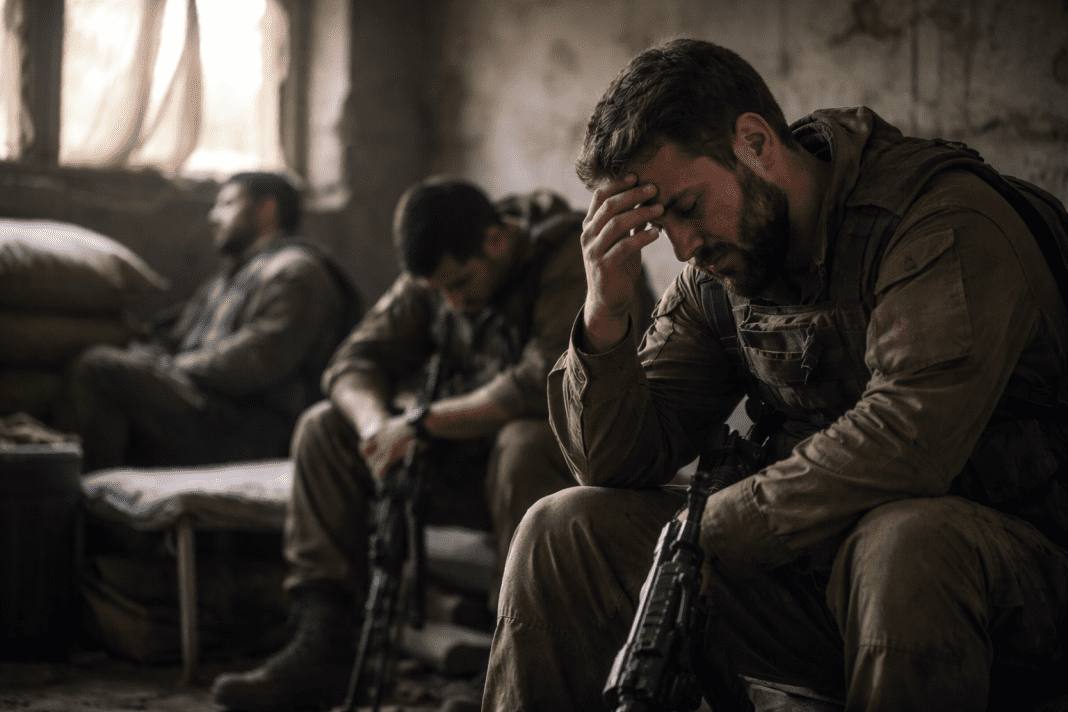

Israel is facing a serious mental health crisis among its military personnel as the conflict in Gaza and Lebanon continues. Reports from the country’s Defence Ministry and health providers show a dramatic rise in post-traumatic stress disorder (PTSD) and suicide among soldiers, a situation linked to the ongoing violence that started after the October 7, 2023, Hamas attack on southern Israel.
War Devastation Hits Soldiers and Civilians Alike
The war quickly escalated, involving Israeli forces, Palestinian militants, and Hezbollah in Lebanon. Hundreds of thousands of Israeli soldiers and reservists were deployed, taking part in some of the heaviest fighting in the country’s history. Officials say more than 1,100 Israeli service members have been killed since the conflict began, and many troops are now showing signs of PTSD from the intense combat.
At the same time, the fighting has caused massive casualties on the other side. Over 71,000 Palestinians in Gaza and about 4,400 people in southern Lebanon have lost their lives. The destruction has been widespread, leaving entire areas in ruins.
Calm before the storm? Gaza ceasefire hangs by a thread as Hamas digs in
Gaza’s 2 million residents now face severe shortages of food, clean water, shelter, and medical care. These harsh conditions are affecting civilians’ mental health, with many, including children, showing signs of trauma and PTSD, such as nightmares and difficulty concentrating.
PTSD Cases Climbing Among Israeli Soldiers
Israeli authorities have confirmed that PTSD cases among soldiers have surged by nearly 40% since September 2023. The Defence Ministry has warned that these numbers may rise even further in the coming years. Currently, around 22,300 troops are being treated for war-related injuries, and 60% of these soldiers suffer from trauma linked to combat.
The psychological stress is fueled by two main factors. First is the fear and danger soldiers face while deployed in combat zones like Gaza and Lebanon. Many soldiers witnessed violent attacks and the kidnapping of hostages, leaving deep emotional scars. Second is “moral injury,” the distress caused when soldiers believe their actions may have unintentionally harmed innocent civilians. These experiences leave many struggling to cope even after returning home.
Israel carries out airstrikes on southern Lebanon as ceasefire monitoring continues
Medical professionals have also noted a sharp increase in depression among military personnel. Surveys show that nearly 40% of soldiers receiving treatment have sought mental health support, while more than a quarter report feelings of depression.
To address this crisis, the Israeli Defence Ministry has expanded mental health services and increased budgets for alternative therapies. Organizations have stepped in to provide support, using innovative approaches such as therapy dogs and surfing programs to help soldiers manage stress and trauma.
Suicide Attempts and Untreated Trauma
A separate concern is the rise in suicides among Israeli troops. According to a parliamentary committee, 279 soldiers attempted suicide between January 2024 and July 2025. Notably, most of these cases involved combat soldiers, highlighting the direct link between frontline exposure and severe mental health issues.
However, accessing state support for mental health can be a slow process. Soldiers must be assessed by a ministry committee to determine the severity of their condition. As a result, this procedure can take months, sometimes discouraging soldiers from seeking help early. Health professionals emphasize that untreated trauma therefore increases the risk of suicide and self-harm.
Many soldiers describe living in a constant state of alert, even after leaving combat zones. In addition, some report flashbacks to battles in Gaza, Lebanon, and Syria. Meanwhile, the ongoing conflict keeps troops in high-risk areas, and many remain deployed across Gaza and southern Lebanon, with some Israeli forces occupying parts of southern Syria.
Experts warn that mental health institutions in Israel are overwhelmed by the sheer number of cases. Consequently, soldiers often struggle to recognize that the distress they feel is related to their combat experiences. Although immediate support from the Defence Ministry has increased since the conflict began, demand still exceeds capacity.
The continued deployment of troops in high-conflict zones, combined with the psychological scars of witnessing death and destruction, has created a mental health emergency within Israel’s military. Ultimately, soldiers face daily reminders of the war, leaving many unable to fully recover from the traumatic experiences they have endured.