
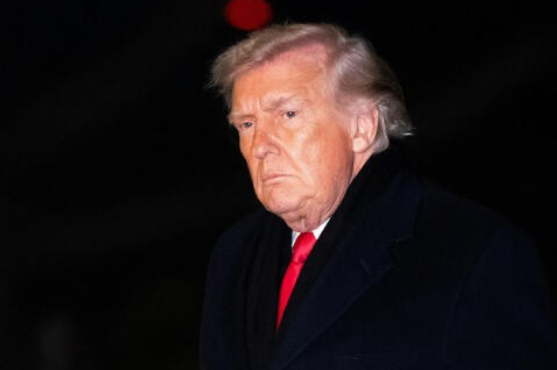

A tense political standoff between the United States and Europe has cooled after President Donald Trump stepped back from his threats over Greenland. For several days, European leaders were deeply worried after Trump warned he could impose heavy tariffs on European countries that opposed his demands related to the Arctic island.
Greenland is a large, icy territory that belongs to the Kingdom of Denmark, although it governs itself in many ways. Its location in the Arctic makes it very important for military and security reasons.
A sudden Arctic shift eases tensions but leaves many questions
The crisis eased after President Donald Trump met NATO Secretary General Mark Rutte at the World Economic Forum in Davos, Switzerland. After the meeting, Trump said he had agreed on “the framework of a future deal” and announced he would suspend his plan to impose tariffs on eight European countries. Those tariffs were supposed to begin on February 1.
NATO at a crossroads: Experts warn Greenland distraction could undermine Ukraine war effort
Trump did not explain what the new “framework” includes, saying only that the deal would be “really fantastic.” Even so, his softer tone helped calm markets and reduced immediate fears of a trade conflict between the United States and Europe.
European and NATO officials say there is already an agreement allowing the U.S. to expand its military presence in Greenland. The United States already runs the Pituffik Space Base there, which plays an important role in space and missile monitoring. Because Greenland lies between North America and Europe, its strategic value has grown as tensions rise in the Arctic.
Diplomats say talks may include more U.S. troops and bases, more American investment in mining and resources, and stronger NATO security efforts. Trump’s earlier threats had shaken Europe and led the EU to consider retaliation. Still, officials say no deal about national territory was ever discussed.
Denmark draws a clear line on sovereignty
In Denmark, leaders welcomed the drop in tensions but warned that difficult talks still lie ahead. Danish Foreign Minister Lars Loekke Rasmussen said Trump’s move “took the heat out” of the discussion, but did not solve the deeper issues.
Prime Minister Mette Frederiksen spoke firmly about Denmark’s position. She said Denmark is ready to negotiate on security, investments, and economic matters, but not on sovereignty. “We cannot negotiate on our sovereignty,” she said. She also stressed that only Denmark and Greenland can decide the island’s future.
Rasmussen also made it clear that the United States would not “own” Greenland.
NATO Secretary General Mark Rutte does not have the power to negotiate any transfer of land between NATO countries. NATO officials confirmed that no such proposal was ever made.
Trump doubles down on Greenland ahead of Davos visit amid global concern
Earlier this week, Denmark and Greenland suggested a different idea: possibly creating a NATO mission in Greenland to strengthen joint security efforts in the Arctic.
German leaders also reacted carefully. Chancellor Friedrich Merz praised Trump for stepping back from his threats but criticized the idea of putting national interest above cooperation with allies. He said talks should focus on closer teamwork, not pressure.
German Vice Chancellor Lars Klingbeil warned Europeans not to relax. He said Europe must not assume everything is fine just because tensions have eased.
Europe stays alert as trust takes a hit
Even though the immediate crisis has cooled, European officials say the damage is not over. Many believe Trump’s threats have weakened trust and forced Europe to rethink its dependence on the United States.
Because of the seriousness of the situation, all 27 European Union leaders held an emergency meeting in Brussels. The summit went ahead even after Trump’s change in tone. EU leaders are discussing what to do if talks fail and are reviewing their recent contacts with the U.S. government.
Before Trump changed course, the EU had been preparing possible retaliation measures. The Greenland dispute also sparked a new debate in Europe about “de-risking” from the United States, a term usually used for reducing dependence on China.
Trump cancels tariff plan on eight European countries after NATO signals talks on Arctic security
Sweden’s Deputy Prime Minister Ebba Busch said the relationship between Europe and the U.S. has been badly shaken in recent weeks.
The seriousness of the talks was clear when members of Trump’s team in Switzerland canceled a planned business event to focus on the Greenland issue.
For now, the threats are paused and tensions have eased. But across Europe, leaders say they are still watching closely and staying on guard.