
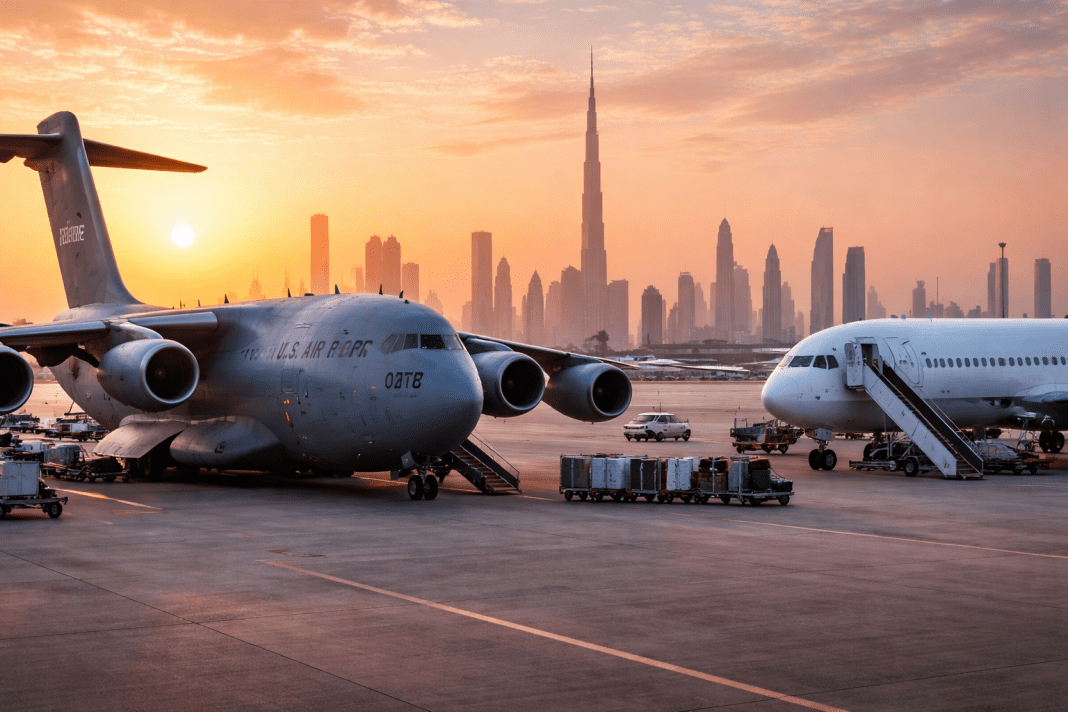

The United States has announced that it is now facilitating charter flights for its citizens stranded in the Middle East. This action comes amid criticism over delays in warnings for Americans to leave the region following joint U.S.-Israeli military strikes on Iran.
US Arranges Charter and Military Flights for Stranded Americans
The move comes four days after the start of the air campaign against Iran, which has severely disrupted global air travel. Key aviation hubs, including Dubai—the busiest international airport in the world—have remained closed for multiple days, leaving tens of thousands of passengers stranded. Airline tickets have surged in price, and travelers have faced uncertainty about how to exit the region safely.
The U.S. State Department stated that it is coordinating charter flights from the United Arab Emirates, Saudi Arabia, and Jordan. Officials confirmed that the Department is also working to secure military aircraft for those who want to leave but did not provide specific details about the schedule or capacity of these flights.
Trump signals prolonged US campaign as Middle East conflict enters fourth day
U.S. authorities report that approximately 1,500 Americans have requested assistance with departure. The Department is actively seeking options, including larger commercial flights and military transport, while negotiating with airlines to increase seat availability.
Warnings and Criticism on Evacuations
Before the charter flights were announced, Americans across 14 countries in the Middle East were urged to leave immediately using available commercial transport. However, no government-backed evacuation options were initially provided. Some embassies, including the U.S. Embassy in Jerusalem, initially reported they could not assist citizens trying to depart, though officials later confirmed that help was being arranged.
The delayed warnings and limited evacuation measures have drawn sharp criticism from lawmakers and public figures. Many pointed out that waiting several days into the conflict to provide evacuation guidance reflects poor planning. U.S. security alerts issued after the strikes urged Americans in countries like Kuwait, the UAE, Iraq, Qatar, and Bahrain either to shelter in place or be ready to do so, highlighting the urgency of the situation.
Several lawmakers described the U.S. response as lacking clear strategy, noting that unlike prior military actions, such as the invasion of Iraq in 2003, Americans received minimal notice before the outbreak of hostilities. The situation has also sparked concern as U.S. diplomatic missions remain without Senate-confirmed ambassadors in key regional countries, including Saudi Arabia, Qatar, Iraq, Egypt, Kuwait, Algeria, and the UAE.
Impact on Travel and Embassy Measures
The conflict has disrupted flights across the region. Dubai International Airport, which usually handles over 1,000 flights daily, has seen closures lasting several days. The disruption has forced many travelers to stay in hotels or makeshift accommodations while seeking any available exit routes.
The U.S. Embassy in Jerusalem advised citizens that shuttles operated by the Israeli Ministry of Tourism could take travelers to the Taba border crossing with Egypt. However, the embassy warned that it could not guarantee the safety of this route. Citizens using these shuttles are relying on their own judgment, as the U.S. government does not formally recommend this option.
After heavy losses, Iran’s missile power still shapes Middle East security balance
Meanwhile, the Department of State ordered non-emergency U.S. government personnel and their families to leave embassies in Bahrain, Qatar, the UAE, Kuwait, and Jordan. Similar steps have already been taken for U.S. missions in Lebanon and Israel. The evacuation of government personnel underscores the seriousness of the situation, as military and diplomatic resources focus on maintaining security amid ongoing strikes and tensions.
The U.S.-Israeli military campaign against Iran has also had a direct impact on regional security. Iranian drones reportedly targeted the U.S. embassy in Saudi Arabia, adding to the sense of urgency for Americans attempting to leave. Crude oil prices surged sharply following the strikes, further demonstrating the global consequences of the conflict.