
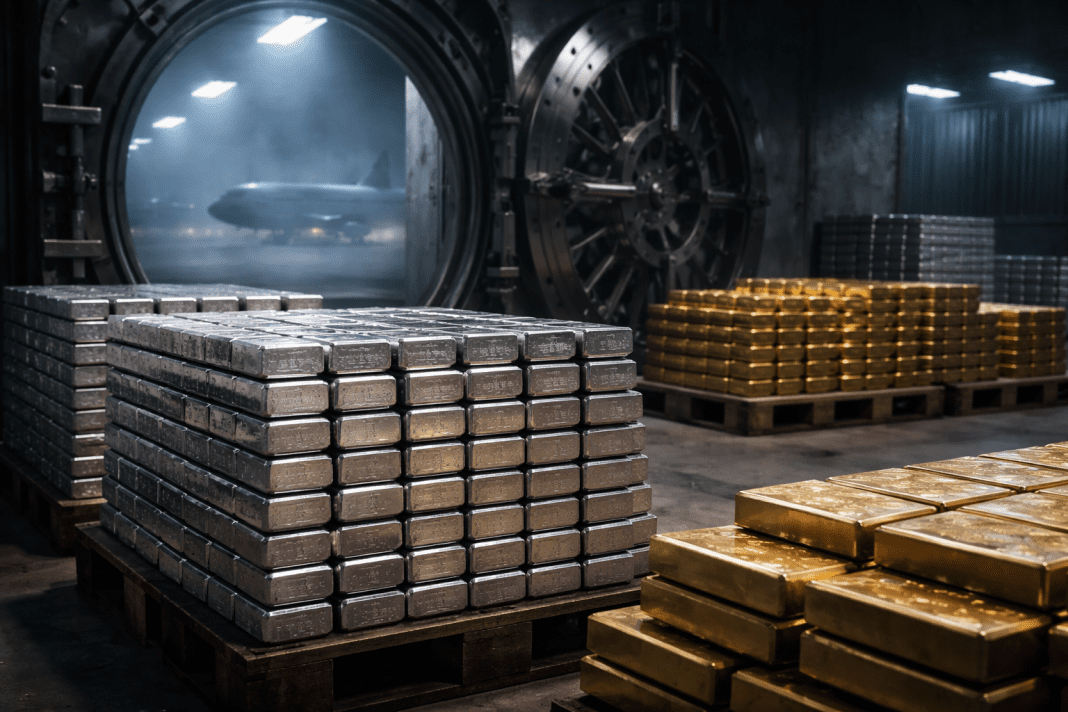

International reports claim that around 800 tons of silver and large quantities of gold were quietly removed from Venezuela in a short time, without any public announcement. The alleged transfer, linked to secret aircraft movements and restricted airspace, has drawn attention because of the massive scale and the strategic importance of precious metal reserves, while Venezuelan authorities have offered no clear explanation.
What the Reports Say About Venezuela’s Silver Reserves
Venezuela has long stored part of its national wealth in precious metals such as silver and gold, securing them in high-security vaults under state control. The government treats these reserves as a financial safety net, especially during sanctions, trade restrictions, or limited access to international banking systems.
According to circulating claims, authorities reportedly removed more than 800 tons of silver from Venezuela’s reserves almost overnight in a sudden and highly coordinated operation. Sources familiar with regional military movements say that several large aircraft landed in or near Venezuelan territory around the same time the reserves were allegedly cleared.
In the middle of chaos, Starlink switches on free internet for Venezuela
Silver, unlike paper currency, is a physical asset. Moving hundreds of tons is not easy and requires special transport planes, secure handling, and strict secrecy. This is one reason why the reported event has raised eyebrows among analysts and observers.
The reports further suggest that this silver, along with gold reserves, was part of Venezuela’s emergency financial holdings. Governments often use these holdings to back national currency value, settle international trade outside the dollar system, or secure strategic partnerships.
Officials added to the concern by releasing no official inventory update or public confirmation before or after the alleged movement, an unusual step for reserves of this scale.
Role of Russia and China in the Alleged Operation
The reports repeatedly point toward Russia and China as key players in the events surrounding the alleged silver transfer. According to regional security sources, observers saw special aircraft linked to Russia and China enter Venezuelan airspace days before reports of the missing reserves began to circulate.
Moscow and Beijing maintain close strategic ties with Caracas and have provided Venezuela with financial support, defense cooperation, and trade agreements over the years, often bypassing Western financial systems.
Breaking: Crypto markets rocked by claims Venezuela secretly holds over 600,000 Bitcoin
The claims suggest that authorities moved the silver and gold out of Venezuela for “safe keeping” or strategic storage, although Russia, China, and Venezuela have issued no official confirmation. Analysts note that governments often use precious metals in confidential state-to-state arrangements because they leave fewer digital trails than bank transfers.
Observers also point out that countries widely use silver and gold as reserve currencies during periods of financial pressure. For countries facing sanctions, holding wealth in physical metals can provide flexibility and leverage in international negotiations.
Despite the seriousness of the claims, none of the involved governments have publicly acknowledged the transfer, which has left room for speculation, leaks, and unofficial accounts to dominate the narrative.
How the Discovery Triggered Global Political Reactions
According to sources familiar with U.S. intelligence assessments, American authorities grew concerned after reports suggested that Venezuela’s silver and gold vaults were empty. Officials focused not on oil, but on the sudden loss of strategic reserve assets that could support rival global alliances.
After Washington concluded that the precious metal reserves were no longer intact, officials treated the situation as a serious geopolitical development. Governments view silver and gold as key tools of economic strength, and their movement can signal deeper coordination between states.
Reports of Nicolás Maduro capture prompt Venezuelan army to mobilise entire population against US
Following these developments, the United States reportedly sent strong political and military signals, increasing tensions in the region. Officials viewed the situation as part of a broader pattern of Russia and China expanding their influence in the Western Hemisphere.
So far, no independent audit has confirmed the exact amount of silver or gold involved. However, the figure of 800 tons continues to dominate discussions, with the lack of official clarification keeping global attention fixed on Venezuela’s missing silver reserves.