
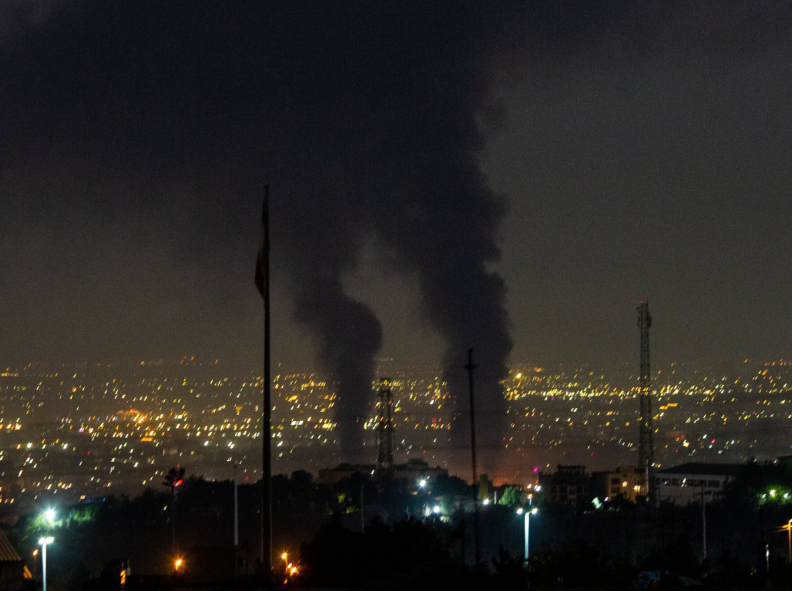

Tensions in the Middle East escalated after US President Donald Trump announced a sudden ceasefire between the United States and Iran. Soon after, Israel and several Gulf nations reported missile alerts and activated air defence systems, raising urgent questions about whether the ceasefire was already under threat.
Donald Trump’s Ceasefire Announcement Between Iran and US Triggers Immediate Regional Alarm
Tensions in the Middle East rose after US President Donald Trump announced a two-week ceasefire between the United States and Iran through a post on Truth Social. He said both sides agreed to pause military actions temporarily.
Trump stated that the decision followed discussions with leaders from Pakistan, including Prime Minister Shehbaz Sharif and military officials, who reportedly urged a halt in escalation to support diplomatic talks. He also linked the ceasefire to conditions involving the reopening of the Strait of Hormuz, a critical global oil route.
He further claimed Iran submitted a “10-point proposal” that could serve as a base for negotiations with Washington. According to his statement, the pause would allow both sides to work toward a longer peace agreement in the region.
Meanwhile, Iranian authorities indicated acceptance of a temporary pause, though no joint official confirmation was issued. Reports also suggested possible talks in Islamabad, adding to confusion as military and diplomatic signals overlapped across the region.
Israel and Gulf Nations Issue Missile Alerts as Air Defence Systems Respond
Shortly after the ceasefire announcement, multiple regions reported missile alerts and air defence activity. In Israel, authorities activated air-raid sirens in several northern and southern areas. Local reports, including those cited by The Times of Israel, stated that the Israel Defense Forces (IDF) detected incoming ballistic missiles.
Authorities reportedly intercepted some missiles before impact, and people heard sirens in cities and towns including Haifa and nearby urban areas. Officials instructed residents to stay in protected spaces as they activated precautionary measures. Early reports confirmed that the incidents did not cause any immediate casualties.
At the same time, authorities activated missile alert systems in several Gulf countries. In the United Arab Emirates, especially in Dubai, air defence systems engaged after they detected unidentified aerial threats. Officials said that ongoing defensive operations against incoming missiles and drones caused the sounds heard across the country.
Iran’s main oil export hub on Kharg Island hit by multiple strikes as tensions peak
Authorities also reported similar alerts in Kuwait, Saudi Arabia, and Bahrain, where security systems responded to possible aerial threats. Authorities in these countries did not immediately confirm damage or casualties but acknowledged that monitoring systems were actively tracking the situation.
The simultaneous activation of missile alerts across multiple nations created widespread concern, especially given the timing of the ceasefire announcement between Iran and the United States.
Questions Rise Over Ceasefire Stability as Iran Missile Reports Emerge
Following the missile alerts, online reports claimed that Iranian forces launched ballistic missiles toward Israel shortly after the ceasefire announcement. Some social media posts suggested multiple missile launches within a short time window, raising questions about whether the agreement was being followed in real time.
However, neither Iran nor the United States issued an official joint statement confirming violations of the ceasefire at the time of reporting. Iranian Foreign Minister Abbas Araghchi had earlier commented on regional shipping routes, stating that crude oil and gas vessel movement through the Strait of Hormuz would continue under Iranian military management during the ceasefire period.
Air defence activity reported in Israel and Gulf nations came amid these unclear and fast-changing developments. In Israel, officials continued to track incoming threats while maintaining public safety alerts in several regions. In Gulf states, defence systems remained on high alert due to possible drone and missile activity crossing regional airspace.
As information continued to emerge from multiple countries, questions circulated widely regarding the status of the ceasefire agreement and whether all parties were fully aligned on its terms at the same time.