
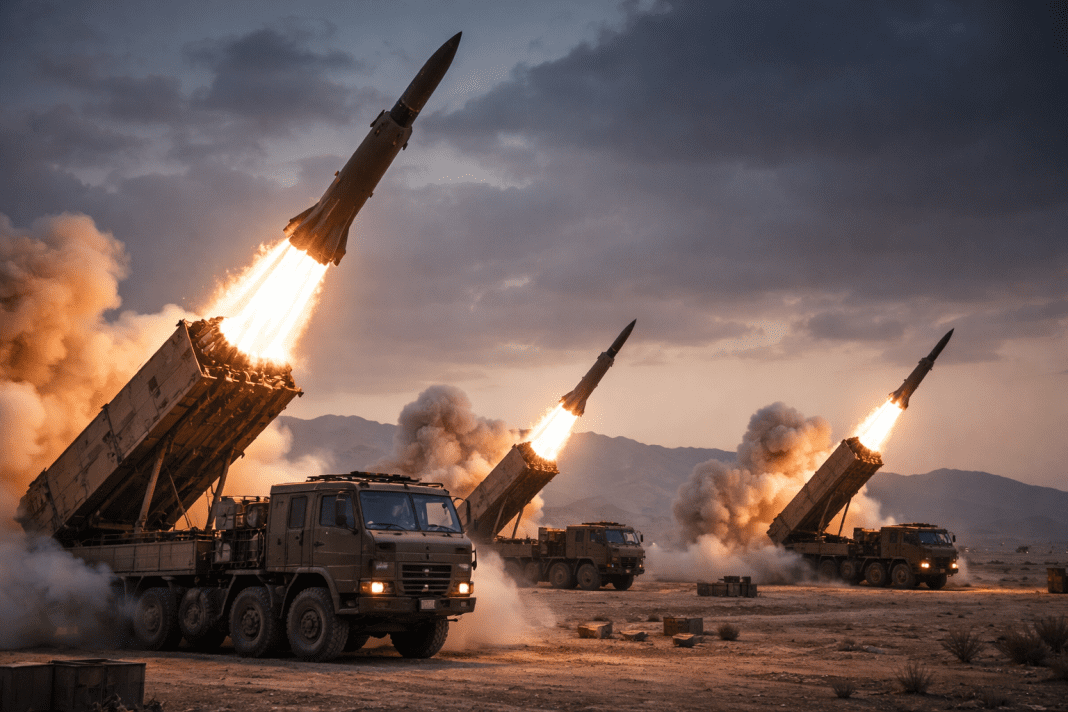

Rising tensions in West Asia have renewed focus on Iran’s missile capability. A US-based assessment has raised concerns about the effectiveness of its ballistic missile systems. The report suggests that many of these systems may no longer perform as intended in combat. This is despite a large number of launchers still remaining intact.
US Think Tank Assessment on Iran Missile Capability
A US-based research organisation has reported that a large number of Iranian ballistic missile systems are currently unable to perform their intended combat roles. Although many missile launchers remain physically intact, analysts describe them as “combat-ineffective,” meaning they cannot successfully carry out missions in real battlefield conditions.
These limitations can arise from technical issues, lack of coordination, reduced readiness, or operational challenges, even when the systems remain undamaged. The report estimates that about half of Iran’s missile launchers are still intact, but this does not guarantee that forces can use them effectively in combat.
Iran’s arsenal remains largely intact despite weeks of heavy strikes from the U.S. and Israel
Operational effectiveness depends on several factors, including trained personnel, missile availability, communication systems, and strike coordination. The report also notes that Iran has used drones and missiles in regional attacks, but analysts do not view its missile forces as a single system, as different types vary in capability and readiness.
Degradation of Medium-Range Missiles and Launch Systems
The assessment highlights a clear difference between Iran’s medium-range and short-range ballistic missile systems. It states that the medium-range missile force has weakened significantly over time, reducing its ability to carry out large and coordinated attacks.
The report points out that missile salvos, or groups of missiles launched together, have become smaller. Instead of large-scale strikes, only a limited number of missiles are now fired at once. This is seen as a sign of declining operational strength in the medium-range category.
In comparison, short-range missile systems remain more active and continue to carry out attacks at a steady pace. However, their exact condition is unclear, and there are questions about how long this level of activity can continue.
Trump signals that ending military operations depends on stopping Iran’s nuclear program
The assessment also explains that missile launchers may seem functional but can still fail in real combat. This can happen due to poor coordination, lack of trained personnel, or communication and supply issues.
It stresses the need to evaluate missile types separately to avoid confusion about overall capability. Ongoing strikes on defence infrastructure have also disrupted Iran’s ability to maintain and rebuild its missile systems.
Ongoing Strikes, Stockpile Pressure and Regional Escalation
The report also highlights the broader impact of continued regional conflict on Iran’s military operations. It states that sustained air and missile strikes in the region have created operational pressure on Iranian forces, leading to changes in the scale and frequency of missile launches.
According to the assessment, missile activity targeting Israel has shown a noticeable decline over time. Earlier phases of the conflict saw larger coordinated launches, while more recent activity has shifted to smaller groups of missiles per attack wave.
The report also states that repeated strikes have targeted Iran’s defence infrastructure and affected its ability to produce and replenish drones and missiles. It describes damage to production facilities as a key factor that limits long-term stockpile recovery.
It further explains that Iran has already used a large portion of its missile and drone stockpiles in ongoing regional operations. This continued usage, along with disruptions to production capacity, is placing additional strain on available resources.
Experts warn that a quick end to the Iran war could leave the West at a disadvantage
Alongside missile activity, the report highlights sustained military exchanges in the region. Iranian media sources have reported repeated strike waves involving coordinated drone and missile launches targeting military staging areas and strategic positions.
These continued retaliatory exchanges have created an ongoing cycle of attacks and counterattacks across multiple locations in West Asia. Repeated strike operations, shifting intensity levels, and changing missile usage patterns now define the situation.