
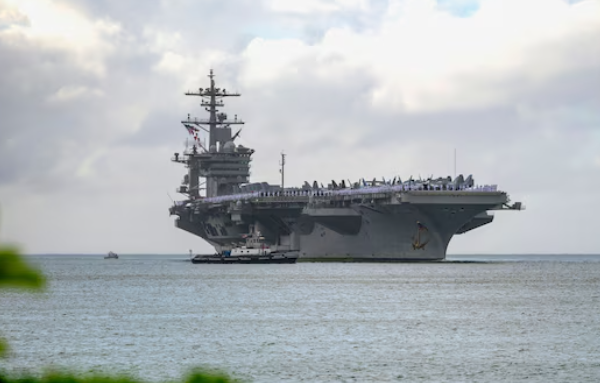

Rising tensions in the Arabian Sea have drawn global attention with the deployment of the USS Abraham Lincoln, one of the United States’ most powerful aircraft carriers. While both sides show strength, experts point to a clear military imbalance and high risks that make a direct naval clash unlikely. This article explains the key factors shaping Iran’s cautious approach and the wider situation in the region.
Rising Tensions and the USS Abraham Lincoln Deployment
Tensions in the Arabian Sea have risen sharply with the deployment of the USS Abraham Lincoln, one of the United States’ most powerful aircraft carriers. Its presence has drawn global attention as regional instability continues to grow. A direct naval confrontation in these waters would involve advanced weapons, large fleets, and thousands of personnel, making it a major and highly risky event. For Iran, engaging such a powerful force could quickly escalate into a full-scale conventional war.
Iran often shows strength through military drills and strategic messaging, but experts note that projecting power is very different from facing a highly advanced naval force in direct combat. The USS Abraham Lincoln operates as part of a carrier strike group, including guided missile destroyers, cruisers, submarines, and supply ships.
Together, this group forms a mobile military base capable of launching strikes, defending against threats, and sustaining long operations. The strength and coordination of this force make any direct confrontation extremely dangerous and capable of triggering wider conflict.
A Massive Military Imbalance at Sea
One major reason Iran avoids a direct naval clash is the clear gap in military power. The USS Abraham Lincoln is a nuclear-powered Nimitz-class aircraft carrier weighing over 100,000 tonnes. It can carry up to 90 aircraft, including fighter jets, surveillance planes, and helicopters, giving it a huge advantage in reach and strike capability.
These aircraft can hit targets far away, monitor enemy activity, and provide continuous air support. This creates a powerful system that is difficult for any opponent to challenge directly. The carrier’s presence alone gives the US strong control over the surrounding region.
In contrast, Iran depends on low-cost and unconventional methods due to long-term sanctions. Its naval strategy focuses on smaller, faster vessels and drone-based attacks. Some drones can travel up to 1,000 miles and are designed to overwhelm defenses by attacking in large numbers rather than relying on precision.
However, targeting a moving ship like an aircraft carrier is very difficult without real-time tracking, which usually depends on advanced satellite systems. Iran is believed to lack this capability. Even fast missiles can miss without accurate data. Meanwhile, the US uses advanced systems like the Aegis combat system, which can detect and destroy incoming threats. Its layered defense makes penetrating the carrier’s protection extremely difficult.
High Stakes and Strategic Restraint
The risks of a direct naval battle go far beyond weapons and ships. The USS Abraham Lincoln carries more than 5,000 sailors, and any attack on it would likely cause heavy casualties and trigger a swift and overwhelming response. This makes a direct clash extremely serious, with the potential to escalate into a much larger and more destructive conflict.
For Iran, this creates a difficult situation. While it seeks to maintain influence and show strength in the region, it must also weigh the consequences of confronting a far stronger military power. A full-scale war at sea would demand huge resources and could quickly spiral beyond control, something Iran cannot easily afford or sustain.
Mojtaba Khamenei takes charge as oil prices hit $100 and U.S. denies Iranian hit on aircraft carrier
Instead of direct confrontation, Iran often relies on indirect methods to apply pressure. These include working through regional allies, supporting proxy groups, and carrying out limited operations that stay below the level of open war. Another tactic involves using modified commercial vessels to launch multiple drones at once, aiming to overwhelm enemy defenses through sheer numbers.
However, these approaches face strong obstacles. The US carrier strike group is protected by advanced radar systems, interceptor missiles, and well-coordinated defense layers designed to stop incoming threats. At the same time, a prolonged conflict at sea would place significant strain on Iran’s economy, making a sustained naval confrontation highly difficult to maintain.