
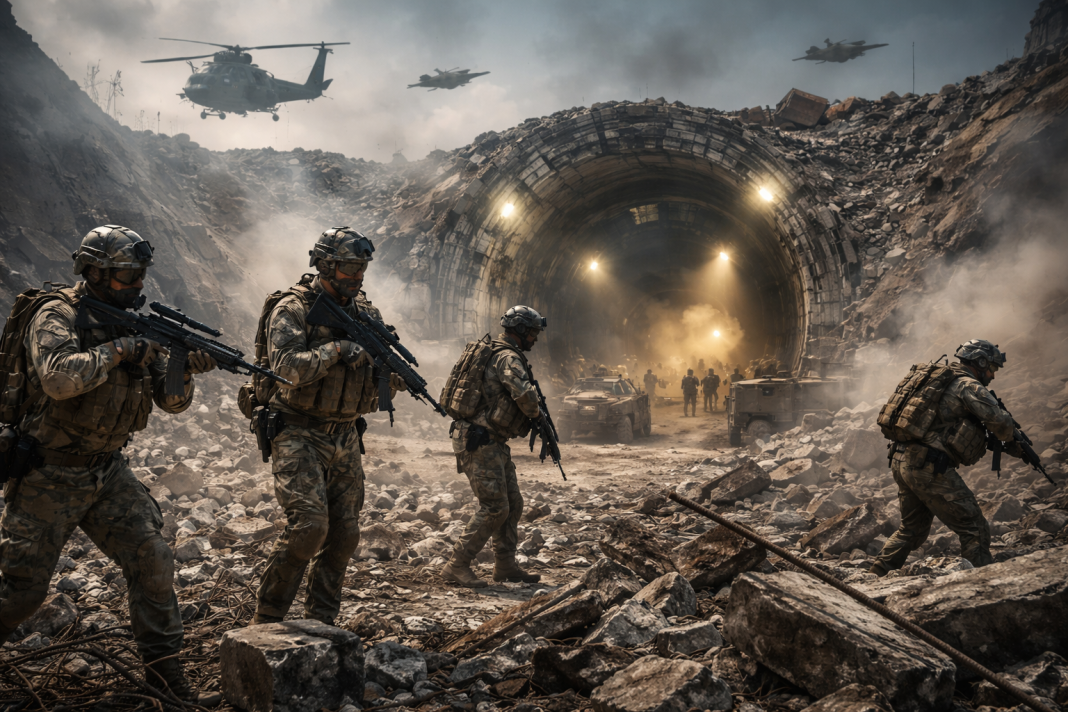

A plan to seize Iran’s enriched uranium could require what experts call the largest special forces operation ever attempted. Analysts believe rubble now buries much of the material at heavily damaged nuclear facilities after the recent airstrikes. Because further processing can turn enriched uranium into material for nuclear weapons, officials now see securing or removing it as a major concern during the ongoing conflict.
Large Uranium Stockpile Raises Global Security Concerns
Before the strikes on Iran’s nuclear facilities, analysts believed the country possessed a large stockpile of enriched uranium. Estimates suggested Iran stored about 440 kilograms enriched to 60 percent purity at key sites. This level is close to weapons-grade, which typically reaches around 90 percent enrichment. Experts say uranium enriched to 60 percent can reach weapons-grade much faster than material at lower enrichment levels.
In addition, analysts believed Iran stored around 200 kilograms of uranium enriched to about 20 percent. Although 20 percent enrichment is far below weapons-grade, experts still consider it an important step in the enrichment process. Because of these stockpiles, international concern has grown that the material could eventually be used if Iran keeps it accessible.
US conflict with Iran pushes aluminium prices to four year high on supply concerns
Reports also indicate that Iran stores much of its 60 percent enriched uranium inside an underground tunnel complex at the Isfahan nuclear site. After the strikes, large amounts of debris reportedly buried parts of the facility, making it difficult to confirm the exact location and condition of the material.
Massive Military Operation Would Be Required
Experts say retrieving the uranium would require a large and complex military operation. Special forces units would likely be deployed first to secure the area and prevent any attacks while the mission is underway. Establishing control of the site would be essential before engineers and technical teams could begin working.
Combat troops would then guard the surrounding perimeter as specialists attempt to reach the buried tunnels where the uranium may be located. This process could involve digging through large amounts of rubble, including broken concrete, twisted metal, and debris left behind after the airstrikes.
During the operation, teams would also need to watch for possible explosives, mines, or booby traps hidden within the wreckage. Clearing these hazards would require careful and slow work to ensure the safety of everyone involved in the mission.
Once the uranium is located, it would have to be secured in special containers designed for transporting nuclear materials. These containers would help protect both the personnel handling the material and the surrounding environment during its removal from the site.
Airfield Access and Ongoing Attacks Complicate Mission
Military planners say removing the uranium from the country would likely require aircraft capable of transporting sensitive nuclear material. For this to happen, military forces would first need to secure a nearby airfield. If the area does not have a suitable airfield, troops might need to build a temporary runway so transport aircraft can land and take off during the mission.
Security forces would also need to defend the operation from possible attacks. Experts believe hostile groups could launch drones, missiles, or other weapons to target the mission while it is underway. Because of this threat, military planners would likely deploy air defense systems and combat aircraft to protect the teams working on the ground throughout the operation.
US and Israel signal diverging war aims in Iran conflict as strikes expand beyond nuclear targets
Experts have also discussed another option: destroying or diluting the uranium instead of removing it from the site. This approach could prevent the material from being used in weapons. However, it carries serious risks. If teams damage the uranium or handle it improperly, radioactive contamination could spread into nearby areas and create long-term environmental and health hazards.
Officials in Iran say the strikes heavily damaged the nuclear facilities. They also say debris may now bury much of the material at the affected sites. Authorities have also indicated they have no plans to recover the uranium while the facilities remain under attack, as military operations in the region continue.