
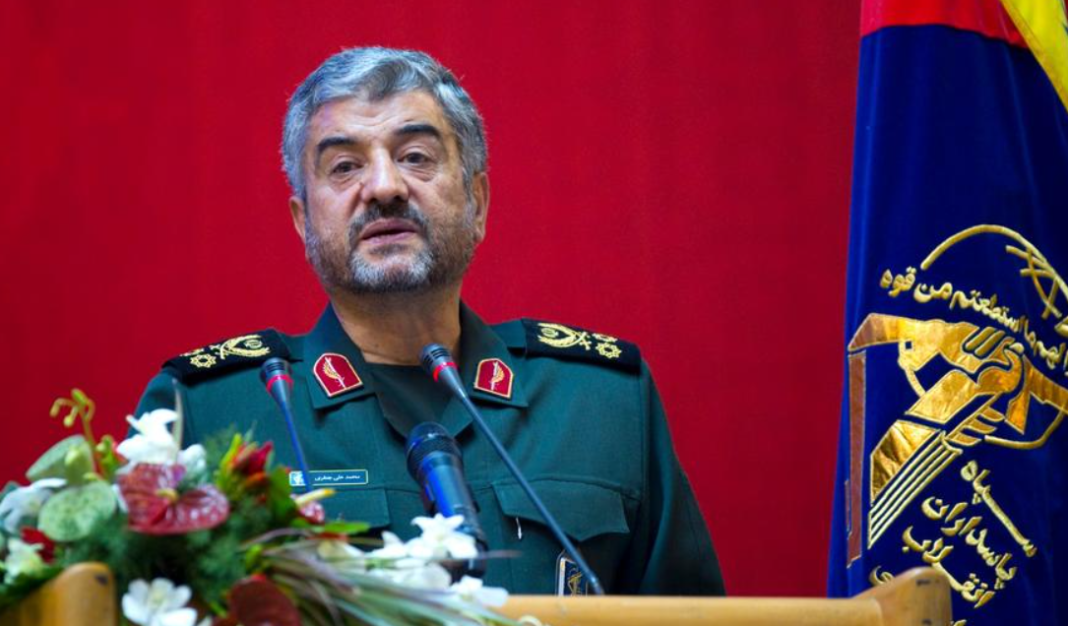

The ongoing conflict involving Iran, the United States, and Israel has brought renewed attention to a military strategy known as the “Mosaic Defence.” Many analysts believe this system is helping Iran continue its resistance despite major strikes targeting its leadership and military infrastructure.
At the centre of this strategy is Mohammad Ali Jafari, a former commander-in-chief of the Islamic Revolutionary Guard Corps (IRGC). His defence concept allows Iran’s military to keep fighting even if enemies eliminate top leaders or disrupt communication with the capital.
The strategy has become widely discussed during the ongoing conflict between Iran and the US–Israel alliance in 2026. Many military experts initially believed Iran’s forces could collapse quickly, similar to what happened during the 2003 Iraq War. However, the situation has developed very differently, and Iran has continued launching counterattacks across the region.
Who is Mohammad Ali Jafari?
Mohammad Ali Jafari is a senior Iranian military figure who played a key role in shaping Iran’s modern defence strategy. He served as commander-in-chief of the Islamic Revolutionary Guard Corps (IRGC), one of the most powerful military organisations in Iran.
Trump, Pezeshkian and Netanyahu reveal sharply different visions for ending the Iran war
Jafari began his military career during the Iran–Iraq War in the 1980s. The eight-year conflict had a deep impact on many Iranian commanders. Fighting against a larger and better-equipped opponent influenced how Jafari later approached military planning and defence strategy.
Over the years, he rose through the ranks and became known for his focus on military strategy. In 2005, he led the IRGC’s Strategic Studies Centre and closely examined modern conflicts, including the 2003 Iraq War, where Saddam Hussein’s army collapsed quickly. Jafari concluded that centralised command made armies vulnerable, which later influenced his development of a more decentralised defence system for Iran.
What is the ‘Mosaic Defence’ strategy?
Mohammad Ali Jafari designed the Mosaic Defence strategy to address weaknesses he identified in Iraq’s military structure. Instead of concentrating power in one central command, the system spreads authority across many smaller commands. Under this concept, Iran divides its military into semi-independent units across the country, with each province operating its own command centre and local forces.
These units operate weapons such as missiles, drones, and intelligence systems. Military planners also give them pre-planned instructions so they can continue operating even if communication with national leaders is disrupted. The idea is similar to a mosaic pattern made of many pieces, where removing one piece does not destroy the entire structure.
After becoming commander-in-chief of the Islamic Revolutionary Guard Corps in 2007, Jafari implemented the strategy by reorganising the force into 31 provincial commands. Each command can operate independently, allowing local commanders to respond to threats without waiting for orders from Tehran.
Why the strategy is being discussed during the 2026 conflict
The Mosaic Defence strategy has gained renewed attention during the current conflict involving Iran, the United States, and Israel. On 28 February 2026, US and Israeli forces reportedly launched Operation Epic Fury, a large operation targeting senior Iranian leaders and key military facilities. Reports suggested that several high-ranking officials were killed in the strikes, including Iran’s Supreme Leader Ali Khamenei and other senior figures.
Iran sets three conditions to end war with US and Israel as regional tensions and strikes continue
Many analysts initially believed that such strikes could significantly weaken Iran’s command structure. However, missile attacks soon followed against US military facilities across the region. Targets reportedly included bases in Bahrain, Qatar, the United Arab Emirates, Kuwait, and Jordan. The speed of these counterattacks surprised many observers.
Analysts believe the decentralised structure of the Mosaic Defence system may explain how Iran’s military continued operating even after major strikes. Provincial commands hold authority, allowing local units to continue launching operations even if they lose communication with central leadership in Tehran. Iran has referred to the confrontation as the 2026 Ramadan War, drawing global attention to the strategy developed years earlier by Mohammad Ali Jafari.