
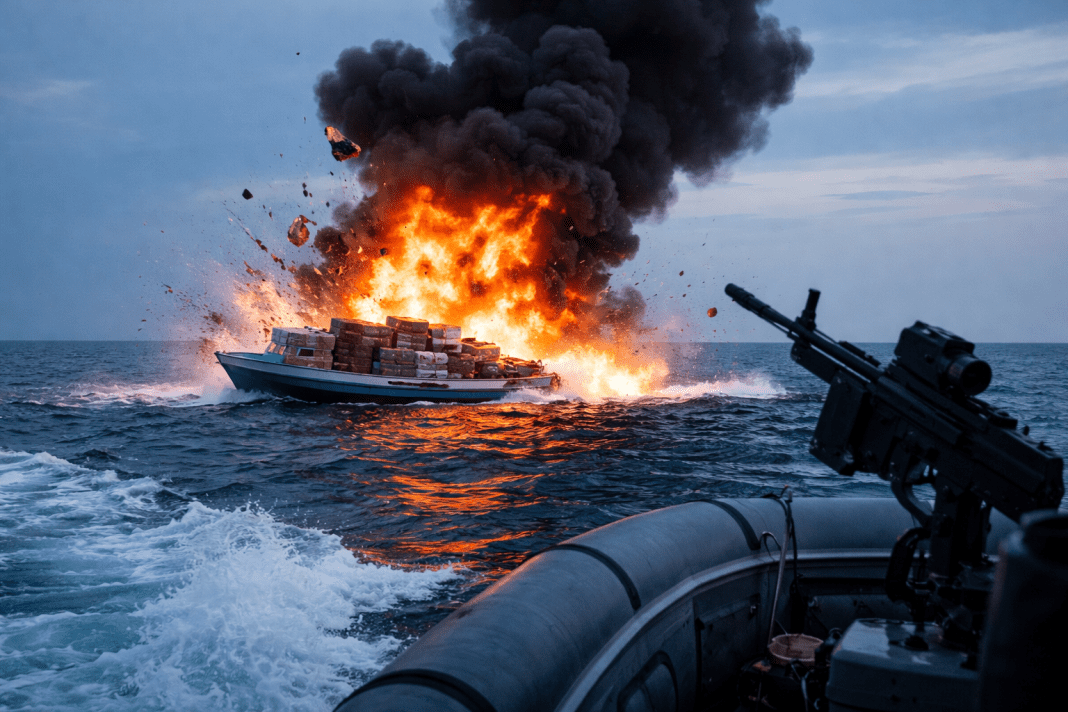

In a dramatic and deadly event on Sunday, the United States military carried out a strike on a small drug boat in the eastern Pacific Ocean. The attack left six men dead and sharply raised the number of people killed in a controversial military campaign targeting suspected drug boats. Authorities say the vessel was part of drug trafficking operations, though no clear evidence has been shown to back that claim.
This latest strike brings the known death toll in the U.S. effort to at least 157 people since the operation began last September, highlighting growing tensions and debate over the campaign’s justification and methods.
What Happened in the Pacific
Officials from U.S. Southern Command, the military unit responsible for operations in Latin America and the Caribbean, said the strike happened on Sunday in international waters of the eastern Pacific Ocean. U.S. forces hit a small drug boat suspected of carrying illegal drugs.
Global outrage brews as report accuses U.S. of disguising warplane in fatal drug boat strike
The command posted a short video on the social platform X (formerly Twitter) showing the drug boat floating on the water before the explosion. However, the military has not provided any proof that the people on board were transporting drugs or connected to drug trafficking.
Officials described those killed as male “narco‑terrorists” — a term the U.S. government uses for suspected drug traffickers in this campaign. But critics, including legal experts and some lawmakers, say this label is unclear and unverified.
Death Toll and Ongoing Drug Boat Campaign
The strike on Sunday was not isolated. Since early September 2025, the U.S. military has carried out more than 40 similar attacks on small drug boats in both the Eastern Pacific Ocean and the Caribbean Sea. The goal, officials say, is to slow the flow of illegal drugs, such as fentanyl and other substances, by stopping smuggling on the water.
US military strikes semisubmersible carrying drug traffickers and cocaine off South America
With these actions, the total number of people killed has reached at least 157. Officials say that in each strike, they suspected the drug boats of carrying drugs or participating in drug trafficking routes. However, outside observers note that no one has publicly shared clear evidence of drugs or drug shipments to support this claim.
The deaths have sparked debate over how the military conducts these operations. Some legal experts argue that targeting drug boats and their crews with lethal force without clear evidence of an immediate threat may violate international law. Others worry that strikes could mistakenly hit civilians, such as fishermen.
Government Position and Wider Context
The White House and military leaders insist the campaign is necessary. The U.S. President has described drug cartels and smuggling networks as part of a broader security threat, sometimes calling it an “armed conflict” with cartels in Latin America. The administration says these operations are meant to protect Americans by stopping dangerous drugs from reaching the United States.
In recent days, U.S. leaders also met with officials from Latin American countries to encourage joint action against drug trafficking and related criminal groups. In the past week, the United States and Ecuador have worked together on military operations against organized crime groups in that South American country.
First U.S. strike on Venezuelan soil revealed as CIA destroys drug-linked port facility
Despite these efforts, questions remain about how effective the strikes really are. Critics note that many dangerous drugs, especially fentanyl, often enter the U.S. through land routes — particularly across the southern border from Mexico — and that attacking drug boats in international waters may have limited impact on this problem.
Some lawmakers, human rights groups, and legal scholars have sharply criticised the military campaign. They cite reports showing that U.S. forces killed survivors of earlier strikes in follow‑up attacks and argue that some of these killings may constitute illegal extrajudicial killings or even war crimes. Supporters of the campaign, including the president’s party allies, say the actions are legal and needed to protect national security.