
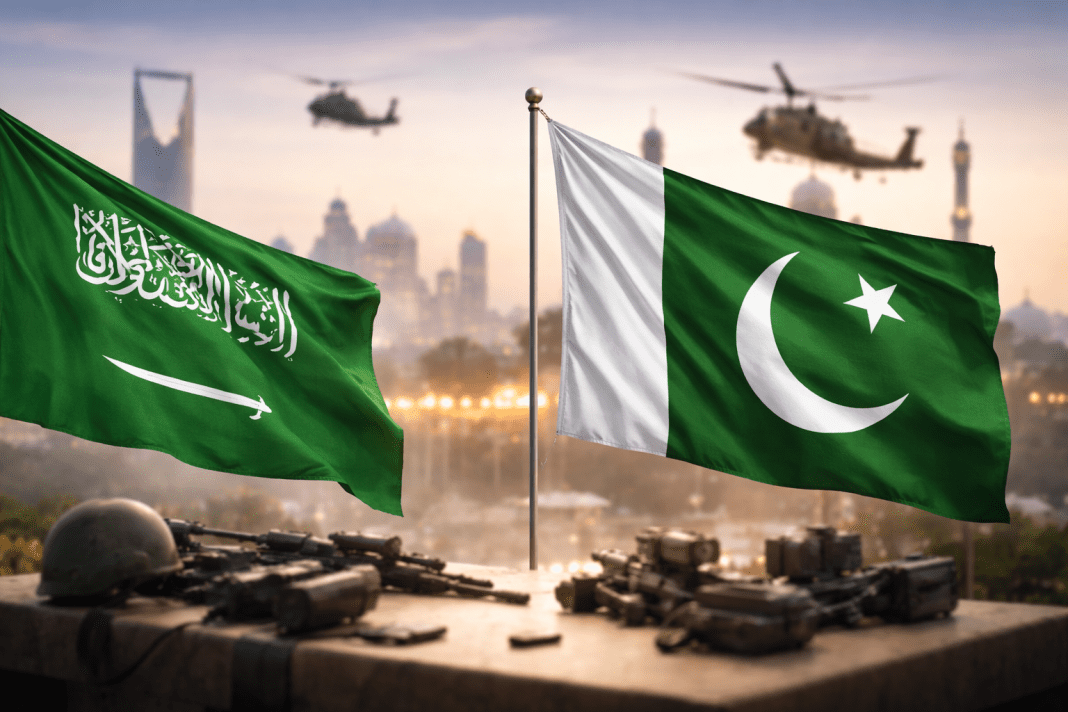

Amid rising Middle East tensions, Pakistan’s top military official, Field Marshal Asim Munir, met Saudi Defence Minister Khalid bin Salman in Riyadh. They discussed security challenges posed by recent Iranian military actions. Both sides focused on ways to address these threats under their existing Islamic strategic defence agreement. Khalid bin Salman emphasized the need to maintain regional stability and avoid escalation.
Islamic-Focused Strategic Support and Defence
Sources close to the discussions said that Pakistan’s army chief assured Saudi leadership that Islamabad remains ready to provide strategic and Islamic defence support if Saudi Arabia faces any threat. The talks reportedly focused on strengthening Islamic intelligence sharing, improving defence cooperation, and coordinating responses to emerging regional challenges.
The meeting took place under the framework of a strategic defence pact signed in 2025, which expanded military cooperation between the two countries. According to the joint statement, the pact is rooted in the “historic partnership” between Pakistan and Saudi Arabia. Its primary goal is to strengthen joint defence capabilities and deter potential external aggression.
The agreement includes a clause stating that aggression against one country could be treated as aggression against both. This provision highlights the depth of Islamic military cooperation between the allies. Analysts note that the pact mainly focuses on conventional military collaboration, including joint exercises, Islamic intelligence sharing, and strategic coordination, rather than automatic troop deployment commitments.
The talks also explored ways to enhance operational readiness, including improved communication between military forces and mechanisms to respond more quickly to threats in the region. Both sides stressed the importance of acting within the framework of the agreement while avoiding unnecessary escalation.
Pakistan’s Delicate Balancing Act
Pakistan has historically maintained strong political, economic, and defence ties with Saudi Arabia. Cooperation has included military training programs, strategic coordination, and intelligence sharing. At the same time, Islamabad also keeps diplomatic relations with Iran. This makes its position particularly delicate during the current crisis.
Officials and analysts say Pakistan is likely to continue supporting Saudi Arabia politically and diplomatically. They expect Islamabad to avoid direct military involvement. Prime Minister Shehbaz Sharif has expressed “full solidarity” with Saudi Arabia in a call with Crown Prince Mohammed bin Salman. He also stressed the importance of peaceful and diplomatic efforts.
Saudi Arabia bombs UAE-linked arms shipments in Yemen as southern separatist crisis intensifies
Observers suggest Pakistan’s role will mainly include diplomatic backing, logistical support, and security coordination. The country is not expected to send troops. This approach allows Pakistan to help without becoming directly involved in conflict.
Experts warn that deeper military involvement could draw Pakistan into a wider regional war. Both Islamabad and Riyadh are keen to avoid this. Maintaining a careful balance is seen as essential to prevent escalation in the Middle East.
Asim Munir Meets Saudi Defence Chief Amid Tensions
The high-level talks in Riyadh sparked speculation about a possible Islamic security alliance similar to NATO, though officials clarified that no formal plans exist. Experts say such an alliance could help Islamic member states coordinate defence and intelligence sharing during times of regional tension.
Analysts note that the current focus is on practical cooperation, including Islamic intelligence sharing, defence coordination, and improving operational readiness. Pakistan and Saudi Arabia are working to ensure they can respond quickly to potential threats without committing to large-scale troop deployments. This careful approach aims to maintain security while avoiding escalation in an already tense region.
U.S. approves $15.6 billion arms sales to Saudi Arabia and Israel amid Middle East tensions
The meeting also highlighted Pakistan’s strategic role in the Middle East. By engaging closely with Saudi Arabia, Islamabad signals its readiness to support the kingdom diplomatically and through Islamic defence coordination while balancing its relationship with Iran. This approach allows Pakistan to maintain influence and regional stability without becoming directly involved in conflicts.
Overall, the talks emphasize ongoing efforts to strengthen defence cooperation and stability in the Middle East. Both countries agreed that coordinated security measures and diplomatic engagement are crucial to preventing further escalation amid uncertainty and rising tensions.