

US President Donald Trump has said he is not worried about rising gasoline prices, even as the ongoing conflict with Iran rattles oil markets worldwide. In an interview on Thursday, Trump stressed that military operations are a more important priority than short-term increases in gas prices for American consumers.
Trump Says Gas Price Rise Isn’t a Priority
“I don’t have any concern about it,” Trump told Reuters. “They’ll drop very rapidly when this is over, and if they rise, they rise, but this is far more important than having gas prices go up a little bit.”
This statement represents a clear shift from the president’s recent messaging. Just weeks ago, Trump highlighted falling gas prices during his State of the Union address and at an energy-focused rally in Texas. At that time, he pointed to lower fuel costs as a positive sign for households across the country, suggesting that Americans were benefiting from cheaper gasoline.
Americans Scramble to Evacuate Middle East as 9,000 Flee War Zone in 72 Hours
Despite Trump’s reassurances, oil markets have reacted sharply to the unfolding conflict. Global crude prices have surged by 16% since the fighting began last Saturday. The instability in the Middle East has caused concern among investors and industry analysts, as disruptions to oil supplies from the region could affect gas prices worldwide.
Gas Prices Jump in the US
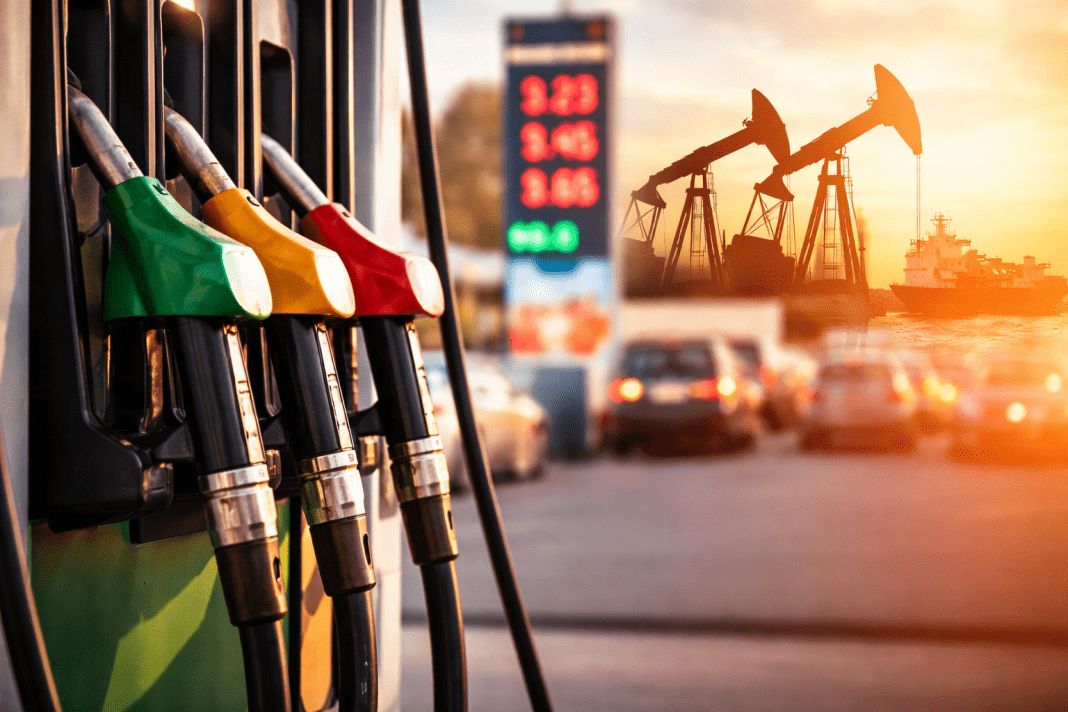
American drivers are already feeling the impact at the pump. According to AAA, a US travel organization that tracks fuel prices, the national average gas price has climbed by 27 cents over the past week, reaching $3.25 per gallon. This is also 15 cents higher than the same time last year, showing a clear upward trend that may affect families and commuters alike.
Even with this rise, President Trump downplayed the situation. He described the increase in gas price as “limited” and said that gas prices “haven’t risen very much,” signaling that he views the recent spikes as temporary rather than alarming.
Iran blocks 38 Indian vessels in Persian Gulf and accuses India of aiding US submarine attack
Still, the White House is closely monitoring the situation. Chief of Staff Susie Wiles and Energy Secretary Chris Wright have both met with executives from major oil companies to discuss ways to stabilize the market and prevent further increases in gas prices. White House Press Secretary Karoline Leavitt confirmed on Thursday that discussions were ongoing to explore possible steps that could help manage fuel costs.
An unnamed White House official told Reuters that teams focusing on energy and national security are actively searching for solutions. During internal meetings, Wiles reportedly warned that failing to address rising gas prices could be “catastrophic” for Republicans in upcoming elections, highlighting the political as well as economic stakes.
Options on the Table
The administration has considered several measures to manage rising energy costs. Secretary of State Marco Rubio said this week that the government is preparing a package of options, though only a few actions have been publicly announced. So far, the US has offered risk insurance for oil tankers and considered providing naval escorts through the Strait of Hormuz, a vital shipping route near Iran.
Other measures under discussion include a federal gasoline tax holiday, as well as easing certain environmental regulations to allow higher ethanol blends in summer gasoline. Officials have also examined a potential release from the Strategic Petroleum Reserve, the world’s largest emergency crude stockpile, as a way to increase domestic supply and ease pressure on gas prices.
Trump, however, ruled out tapping the reserve during his interview. He expressed confidence that the Strait of Hormuz would remain open despite rising tensions. “Iran’s navy is at the bottom of the sea,” he said, emphasizing that he does not expect military actions to block this critical route for oil shipments.
Most U.S. bases in the Middle East are within Iran’s missile range, Pentagon officials quietly warn
While gas prices have risen recently, the White House maintains that the impact will likely be temporary. Officials expect the pressure on fuel markets to ease once the conflict stabilizes, even as global oil prices continue to fluctuate in the short term.
The president has suggested that the military campaign against Iran could last four to five weeks. However, political and military experts have questioned this timeline, noting that the US government has not clearly defined the ultimate objective of its operations in the region.