

The B-1 bombers over Iran have drawn global attention after United States Central Command confirmed long-range strikes targeting Iranian ballistic missile sites. The aircraft used in the mission was the B-1B Lancer, a long-range heavy bomber operated by the United States Air Force.
What Is the B-1B Lancer?
The B-1B Lancer is one of the largest and fastest bombers in service. Built during the Cold War, it was first designed to carry nuclear weapons but was later converted to perform only conventional missions using standard bombs and guided missiles.
The aircraft can fly at supersonic speeds of up to Mach 1.2, meaning it can travel faster than the speed of sound. It also has intercontinental range and, with aerial refueling, can operate across oceans and continents without landing.
One of its key strengths is its massive internal weapons capacity. The B-1B can carry up to 75,000 pounds of bombs and missiles, the largest conventional payload in the US Air Force. It can deploy precision-guided weapons such as Joint Direct Attack Munitions, or JDAMs, which use satellite guidance for accurate strikes.
The bomber also features variable-sweep wings that adjust for fuel efficiency at slower speeds and sweep back for high-speed flight, making it highly adaptable in different mission conditions.
How Did B-1 Bombers Reach Iranian Targets?
The B-1 bombers over Iran did not operate from nearby bases. Instead, they launched from distant US locations, using their long-range capability to reach targets deep inside Iranian territory without being stationed close to the conflict zone.
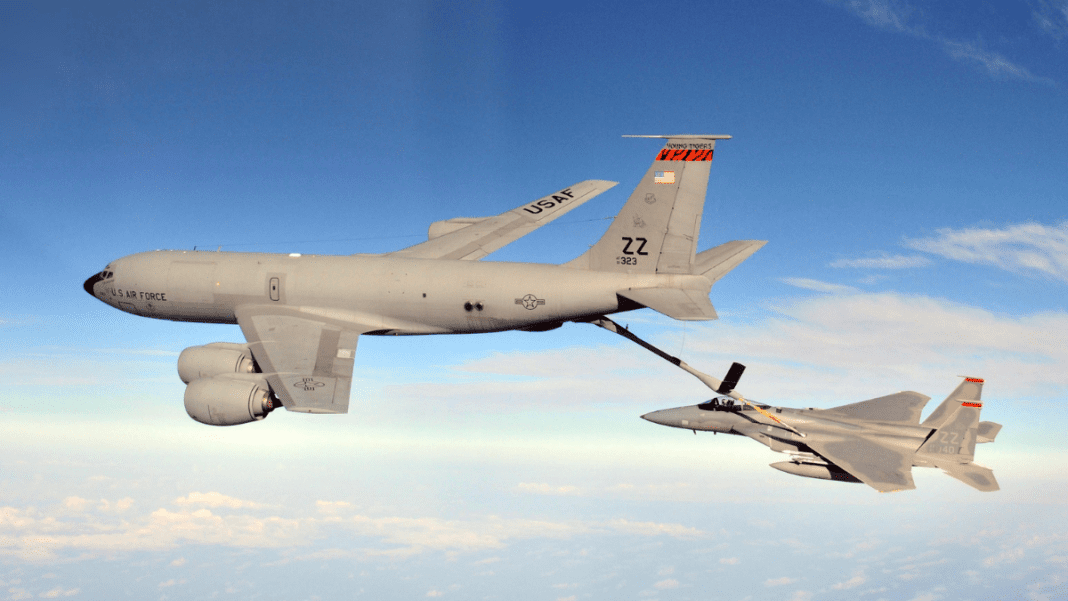
A major part of the mission involved aerial refueling. Tanker aircraft transferred fuel to the bombers mid-air, allowing them to stay airborne for extended periods. This process significantly increased their range and endurance, enabling long-duration strike operations.
The B-1B Lancer is equipped with advanced navigation and radar systems, including synthetic aperture radar. This technology allows the aircraft to produce detailed ground images, even at night or in poor weather. It can also track moving targets from long distances.
The bomber has terrain-following capability, which lets it fly at low altitudes while adjusting automatically to the landscape below. Flying low helps reduce detection by ground-based radar. Although not a stealth aircraft, the B-1B was designed to reduce its radar signature compared to older bombers.
Military officials stated that more than 1,250 targets across Iran have been struck since operations began, including 11 ships in the Gulf of Oman. Operation Epic Fury focused on ballistic missile infrastructure.
Operation Epic Fury and Ballistic Missile Targets
United States Central Command confirmed that the strikes were conducted under Operation Epic Fury. The stated goal was to degrade Iran’s ballistic missile capabilities.
Ballistic missiles are long-range weapons that travel high into the sky before falling toward their targets at very high speed. These missiles can carry large explosive warheads. Military planners often focus on missile launch sites, storage areas, and production facilities when targeting such systems.
The B-1B Lancer’s large payload makes it suitable for these kinds of missions. Because it can carry many precision-guided bombs, it can strike multiple missile-related targets in one flight. This includes launch pads, underground storage bunkers, radar systems, and support infrastructure.
After heavy losses, Iran’s missile power still shapes Middle East security balance
The aircraft’s ability to fly long distances means it can reach deep inside a country without being based nearby. Aerial refueling allows it to stay airborne long enough to complete complex strike patterns before returning safely.
Officials stated that the mission aimed to damage missile infrastructure rather than civilian areas. The operation marked a significant expansion of direct military action, with bombers striking deep into Iranian territory.
The B-1 bombers over Iran represent the use of high-speed, long-range conventional air power against strategic targets. Their design, speed, payload, and advanced targeting systems played a central role in the confirmed strikes on ballistic missile facilities.