

Missile Exchanges Rock Major Cities
Coordinated strikes targeted key installations in Tehran and Iranian military facilities, escalating the confrontation. In response, Iran launched missiles and armed drones toward Tel Aviv and American-linked military assets across the Gulf.
On Monday morning, Israeli authorities detected incoming missiles over Jerusalem and activated sirens to warn residents to take shelter. Air defense systems attempted to intercept the projectiles as explosions echoed across the city. Similar incidents unfolded in parts of the Gulf region, as blasts rocked Dubai, Abu Dhabi, and Doha and alarmed residents.
Authorities at Dubai International Airport temporarily halted operations due to security concerns. Airlines delayed or diverted flights, disrupting major routes between Asia and Europe.
After heavy losses, Iran’s missile power still shapes Middle East security balance
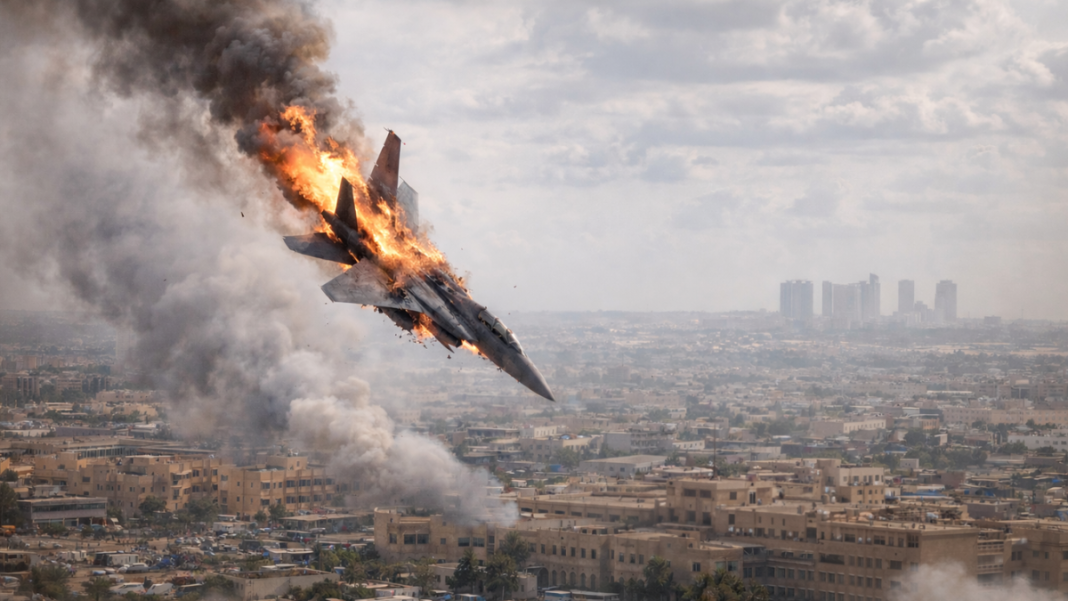
F-15 Crash Over Kuwait Raises Questions
Most U.S. bases in the Middle East are within Iran’s missile range, Pentagon officials quietly warn
Smoke was also reported near the US Embassy area in Kuwait, according to international media agencies. However, no formal statement clarified whether the embassy compound was directly affected.
The F-15 incident has drawn significant attention because it occurred in the midst of expanding cross-border strikes, highlighting the risks facing military aircraft operating in the region’s contested airspace.
Death of Ayatollah Ali Khamenei Intensifies Crisis
The conflict took a dramatic turn following the death of Iran’s Supreme Leader, Ayatollah Ali Khamenei, during missile strikes on a compound in central Tehran on the first day of hostilities. Iranian sources described the operation as the result of extended intelligence planning.
His death marked a major escalation. Iranian authorities signaled strong retaliation, after which missile and drone launches increased in scale and frequency.
In the United States, President Donald Trump publicly reacted to the development on social media, drawing global attention to the situation. His remarks further amplified international focus on the unfolding crisis.
Following the strike, Iran heightened its internal security posture. Military forces were placed on alert, and protective measures were strengthened across major cities. The broader region also tightened defenses, activating missile shields and reinforcing sensitive sites.
Iran TV live sports feed abruptly cut as alleged hack airs Trump and Netanyahu
The conflict has disrupted daily life in several countries. Authorities closed schools and offices in some areas, while residents stocked essential supplies amid repeated alerts. Governments expanded airspace restrictions, and security forces increased military patrols across strategic corridors.
Ongoing missile exchanges, reported aircraft losses, and rising civilian casualties have rapidly widened the confrontation across West Asia. Officials continue to report explosions in multiple cities as defense systems remain active and regional tensions stay elevated.