
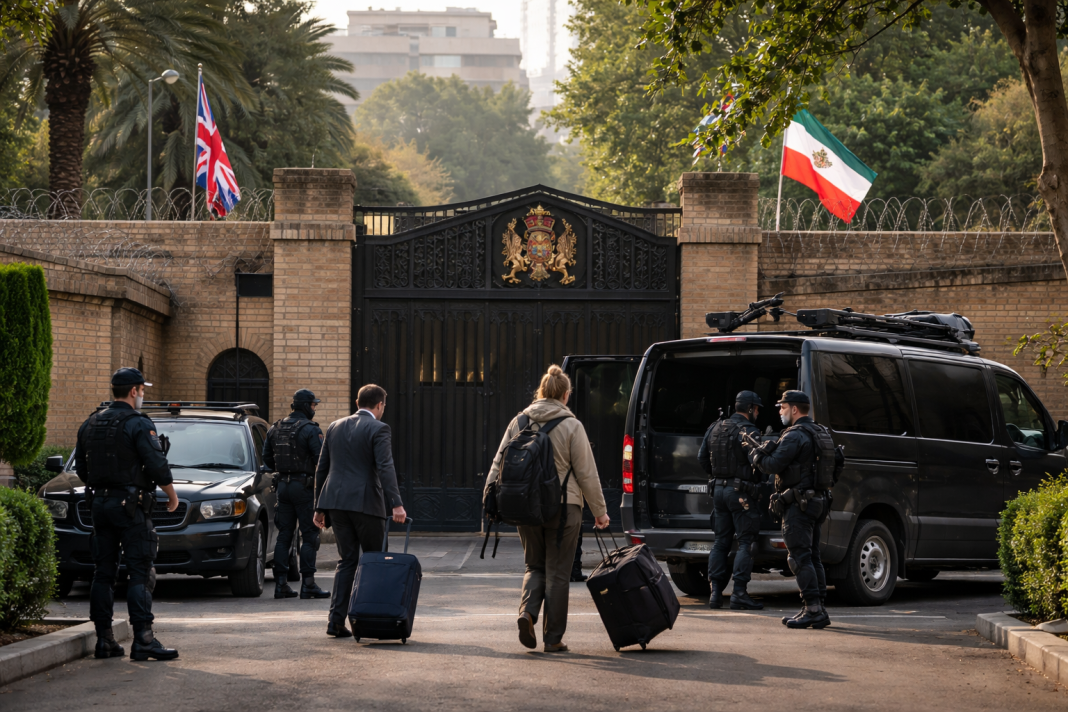

Rising tensions in the Middle East have prompted NATO-linked countries to withdraw staff and begin evacuation measures. Governments have started evacuation planning amid fears of escalation between the United States and Iran. Embassies are now operating under emergency conditions to support possible evacuation efforts. Citizens are being warned to reconsider travel and stay prepared for evacuation if needed. Security risks across the region are increasing rapidly.
Diplomats Withdraw as Security Concerns Intensify Amid Evacuation Measures
The United Kingdom temporarily withdrew diplomatic staff from Tehran after warning that the security situation had worsened sharply. Embassy operations will continue remotely, but in-person consular services inside Iran have been suspended as part of precautionary evacuation measures. Officials said assistance for nationals remaining in Iran is now extremely limited.
Citizens were urged to carefully assess the risks of staying in Iran and remain prepared for emergency evacuation if required. Authorities also warned that British and dual nationals could face detention risks under current conditions. Travel advisories were expanded, warning against all travel to Iran due to possible border closures, flight suspensions, and sudden restrictions that could disrupt evacuation efforts.
Saudi Defense Chief Warns Washington: If Trump Blinks on Iran, Tehran Will Only Grow Stronger
The diplomatic pullback also included relocating some embassy staff and dependents from Tel Aviv to safer areas within Israel, while embassy operations continue under heightened security planning. Travel warnings further discouraged visits to Gaza and the West Bank, where tensions remain high and conditions could change quickly.
Flights Cancelled and Travel Routes Disrupted Across Region
Air travel began showing immediate signs of disruption as tensions rose. Several flights between Turkey and Iran were cancelled amid fears of possible military escalation.
Flights departing from Istanbul Airport to Tehran were reportedly halted, affecting services operated by Turkish and Iranian carriers. Some scheduled departures were removed entirely, while others remained uncertain as airlines reviewed safety conditions.
A planned flight to the northern Iranian city of Tabriz was also cancelled, reflecting broader concerns about aviation safety in the region. Airline officials later clarified that certain daytime flights were still operating, but schedules remained subject to rapid change.
🧨 Beijing Backs Tehran: Inside China’s $4B Bet on Iran’s Future Despite Sanctions
Travel experts warned that escalating tensions could affect both airspace access and insurance coverage for airlines, leading to sudden cancellations even after flights appear confirmed.
The possibility of wider disruptions has increased anxiety among travelers. Authorities cautioned that international borders and transportation networks could be affected if tensions continue to rise, potentially complicating civilian evacuation movements across the region.
Meanwhile, multiple governments advised citizens to prepare for delays, cancellations, or limited evacuation options if conditions deteriorate further.
Military Build-Up Raises Fears of Wider Conflict
Negotiations between the United States and Iran over nuclear issues ended without a final agreement, though discussions are set to continue with technical coordination linked to the International Atomic Energy Agency.
At the same time, military activity across the Middle East has increased, with reports pointing to a significant buildup of American forces in the region. This has raised concerns among neighboring countries about the possibility of strikes targeting Iranian facilities.
Diplomatic missions responded by activating precautionary evacuation measures. Embassy personnel in Jerusalem were allowed to leave voluntarily under authorized departure status, enabling non-essential staff and families to relocate at government expense. Similar steps have been taken by allied nations, with diplomatic dependents moved to safer locations.
Airlines have also adjusted operations, with some international carriers suspending flights to Israel while others continue monitoring security developments. Regional governments warned that any escalation could trigger retaliatory actions affecting multiple countries.
Turkey, a member of NATO bordering Iran, has not ordered citizens to leave but remains watchful. Talks held in Geneva and planned discussions in Vienna highlight ongoing but unresolved diplomacy amid rising regional tension.