
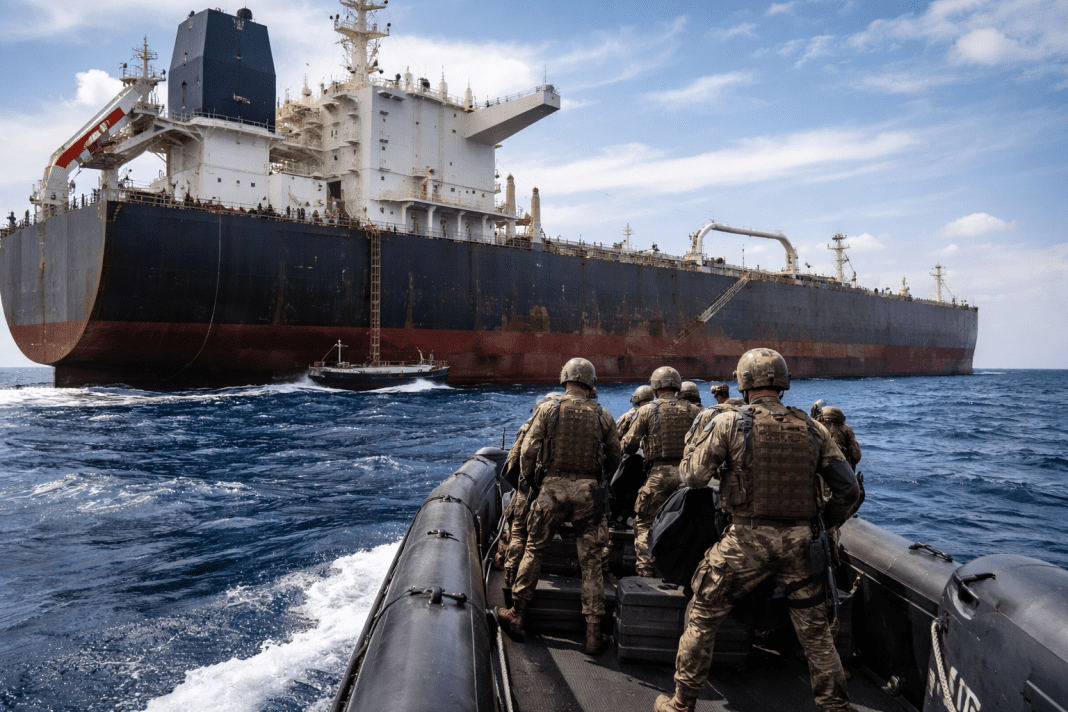

The United States military intercepted and boarded the oil tanker Veronica III in the Indian Ocean after weeks of surveillance over suspected links to sanctioned Venezuelan oil exports. US Indo-Pacific Command confirmed the Panama-flagged vessel was stopped under international maritime law in what marks an expanding crackdown on Venezuela-linked shipping routes.
US authorities believe the tanker is connected to shipments of Venezuelan oil subject to US sanctions. The Pentagon has not confirmed whether the cargo was seized or redirected, and no details were released regarding the final destination of the vessel.
US tracks Veronica III across multiple maritime zones
According to military officials, US forces monitored Veronica III for several weeks before boarding it. The vessel reportedly traveled from the Caribbean Sea to the Indian Ocean, a route that drew attention from enforcement agencies monitoring sanctioned Venezuelan oil exports.
US Indo-Pacific Command confirmed that naval personnel boarded the tanker without resistance. The crew cooperated, and no shots were fired. Video footage released by the US military shows service members approaching the vessel in open waters before boarding it in a controlled operation.
U.S. hunts elusive ‘dark fleet’ tanker as Coast Guard struggles to seize vessel near Venezuela
Officials said the action followed international maritime law, specifically the right-of-visit authority, which allows warships to verify the status of vessels suspected of involvement in illicit activity. The Pentagon emphasized that the inspection was conducted in accordance with established legal procedures.
US authorities estimate the tanker was carrying nearly two million barrels of oil and related fuel products. However, they have not publicly confirmed ownership details or the cargo’s final buyer.
Sanctions enforcement targets Venezuela-linked shipping networks
The United States has maintained sanctions on Venezuela’s oil sector for years. US officials state that oil revenues are a key source of funding for the Venezuelan government, which Washington has accused of violating international norms.
In 2025, US authorities expanded maritime enforcement measures aimed at preventing sanctioned oil shipments from moving through international waters. Under those measures, US naval forces can stop and inspect vessels suspected of transporting Venezuelan oil, even outside US territorial waters.
Officials said Veronica III had altered routes during its journey and operated across multiple maritime regions. US enforcement agencies have previously described similar tactics as common among vessels linked to sanctioned oil trade.
High-stakes maritime standoff as Germany denies entry to Russian-linked oil tanker Tavian
The boarding of Veronica III marks the second reported tanker interception by US forces in the Indian Ocean in recent weeks. Earlier this month, US authorities confirmed the boarding of another vessel, Aquila II, under comparable circumstances. Officials said that review of that case remains ongoing.
US Indo-Pacific Command stated that the purpose of these operations is to enforce sanctions law and disrupt unauthorized oil shipments. Military leaders reiterated that international waters do not prevent lawful inspection under recognized maritime rules.
No injuries were reported during the boarding of Veronica III, and US authorities have not yet disclosed the tanker’s next legal status or the handling of its cargo.