
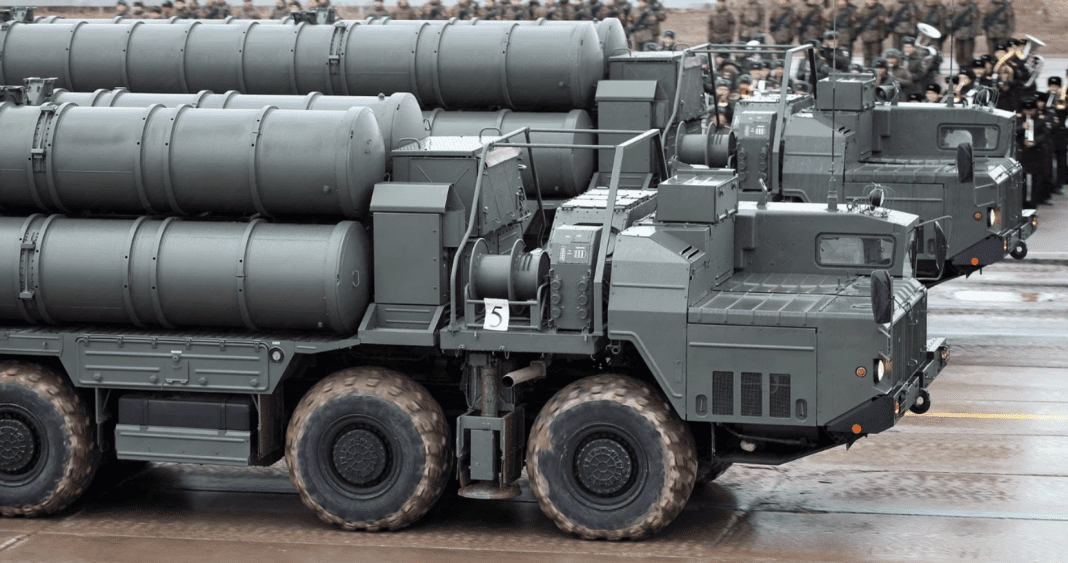

U.S.-Türkiye ties have been strained for nearly a decade over defense disputes. They are back in focus after Ambassador Tom Barrack said the S-400 missile issue could be resolved in four to six months. Speaking at the Milken Institute summit, he called Türkiye’s F-35 removal “insanity.” He also highlighted NATO and regional trade issues. Barrack noted progress from talks between Presidents Trump and Erdogan.
S-400 dispute seen nearing resolution after years of tension
The S-400 missile system has long strained U.S.-Türkiye relations. Ankara bought the Russian-made system in 2017, citing urgent defense needs and claiming Western suppliers offered unacceptable terms. Washington warned the system was incompatible with NATO and posed risks to U.S. technology.
In response, Türkiye was removed from the F-35 program, and the U.S. imposed sanctions under CAATSA, causing a major decline in ties between the NATO allies.
Michel urges project-based security cooperation with Türkiye to strengthen Europe defense
At the Milken Institute summit, Ambassador Tom Barrack said the dispute involves two main issues: operability, or active use, which has been resolved, and possession, meaning Türkiye’s ownership, which is more complex. He said both sides could settle these issues within four to six months.
Barrack also highlighted a White House meeting where Presidents Trump and Erdogan addressed six long-standing issues, resolving most of them. He described their relationship as a “bromance,” noting that direct personal communication helped overcome stalemates that traditional diplomacy could not.
F-35 controversy labeled “insane” as procurement delays draw criticism
Another key topic raised by Ambassador Tom Barrack was the F-35 fighter jet program. Türkiye was one of the original partners, playing a major role in manufacturing parts, including fuselage components. Turkish companies were deeply involved in the supply chain before Ankara was removed from the program after buying the S-400 missile system from Russia.
Barrack criticized the long and complex U.S. defense procurement process. Even after Congress approves a purchase, it can take a decade to get an F-35, with delivery adding another eight years. Barrack joked that by the time a country receives its jets, “you’re at the F-45,” highlighting frustration over delays.
Türkiye warns of escalating crisis after Israel’s ‘piracy-like’ operation against Gaza aid flotilla
He also highlighted Türkiye’s growing defense industry. Türkiye has become a leading drone producer and a key supplier of drones to Ukraine. It is developing its own fighter jet, the KAAN, while also buying Eurofighters from Europe. Despite exclusion from the F-35 program, Türkiye still has four aircraft built for it, stored in California.
Barrack recalled President Trump calling the F-35 situation “insane” and warning that the jets could be replicated elsewhere during prolonged disputes. He also criticized the inconsistency of U.S. foreign policy, saying it changes every two years, unlike rivals such as China and Russia, who plan decades ahead, making long-term strategic relationships harder to maintain.
NATO, Europe, and regional trade tensions frame broader reset talks
Ambassador Tom Barrack went beyond defense issues to discuss Europe’s stance toward Türkiye and its NATO role. He said Türkiye is the largest NATO ally after the U.S. in military strength, yet Europe often withholds the respect and trust it expects. Barrack criticized Europe’s reluctance to provide Türkiye with advanced military equipment. He called it contradictory, noting European countries want Türkiye to help defend the continent, especially amid Russia concerns, but hesitate to give top-tier systems.
He also pointed out that Türkiye remains outside the European Union despite decades of talks and cooperation, adding to Ankara’s frustration. On regional issues, Barrack addressed tensions between Türkiye and Israel following the war in Gaza. Before October 2023, the two countries had a strong trade relationship, with Türkiye enjoying a $7 billion surplus. That trade vanished almost overnight.
Türkiye refuses to let Ukraine war turn the Black Sea into a wider battlefield
Despite harsh rhetoric between President Erdogan and Israeli Prime Minister Netanyahu, Barrack downplayed long-term consequences. He described the exchanges as loud but largely rhetorical, suggesting neither leader seeks territorial expansion.
Barrack said the U.S. sees Erdogan focused on domestic issues rather than reviving the Ottoman Empire. Similarly, he said Israel’s “Greater Israel” idea is more about economic strength than geography. He emphasized that Washington wants regional countries to own their solutions and acknowledged past Western mistakes in drawing borders without regard for history or tribal realities.