
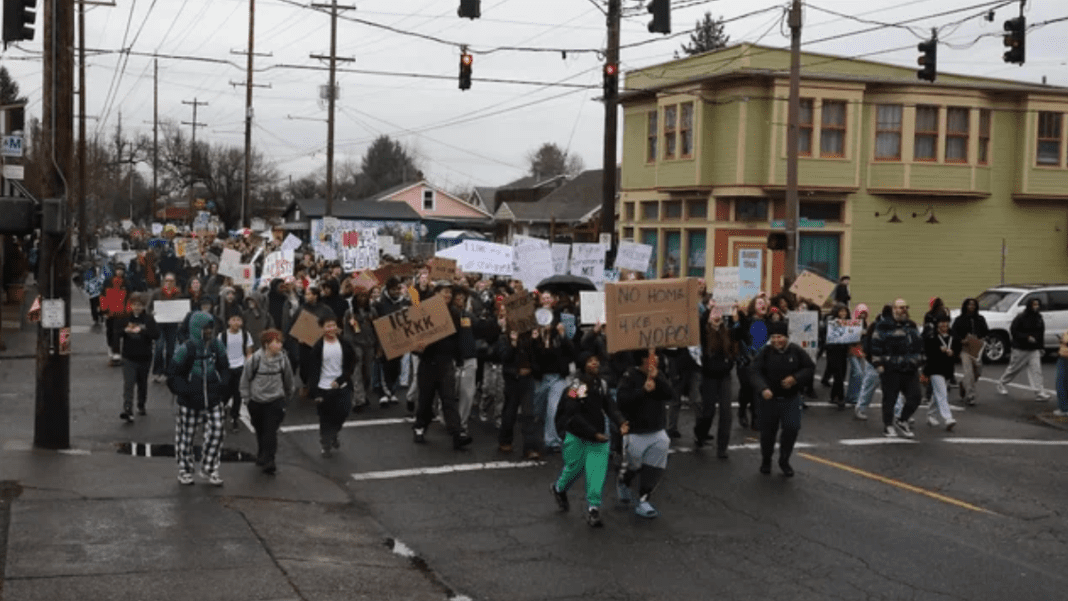

Hundreds of students walked out of classrooms across Portland on Friday in a strong show of protest against U.S. immigration enforcement. The demonstrations were sparked by recent deportations and deadly shootings involving federal immigration officers in Minnesota. Students carried signs, chanted slogans, and gathered in public spaces to demand attention to the issue, highlighting the fear and frustration many immigrant families feel daily.
The protest wasn’t limited to schools. Local businesses also joined the movement, either by closing for the day or finding creative ways to show support. This collective action turned the city into a hub of solidarity, drawing attention to the human impact of federal immigration policies. Many participants described the day as emotional and meaningful, emphasizing the need for communities to stand together.
Students Take to the Streets of Portland
Early Friday afternoon in Northeast Portland, high school students stepped out of their classrooms despite a light drizzle. They carried homemade signs with messages against ICE and marched through local streets, raising their voices in protest. While some schools had organized walkouts in advance, others joined spontaneously after learning about the nationwide action.
At Glenhaven Park, students gathered for speeches, songs, and chants. Teachers, parents, and community members joined them. Many students shared personal stories. Some described family members who had been deported. Others said they were afraid to attend school because of immigration enforcement. For these students, the protest was more than politics. It was an act of solidarity. It was a way to support friends and neighbors facing real danger.
Portland Public Schools said the day would be a normal school day. Officials emphasized that students have the right to protest. They acknowledged that immigration enforcement had caused anxiety and disruption in schools. They also pledged support for affected students and families. Students said the protest gave them a sense of connection. It showed that their voices mattered even in difficult times.
Businesses Join the General Strike
The strike extended beyond schools, involving small businesses that had to weigh the financial and practical challenges of participation. Some restaurants and shops chose to close for the day, consulting with staff to ensure the decision reflected the collective values of their teams. Others stayed open but contributed in other ways, such as donating a portion of proceeds to support small businesses and immigrant communities in Minneapolis affected by federal enforcement.
Owners shared that closing a business for a day can be a significant challenge, especially in difficult economic times. Because of rising costs and uncertain revenue, it can be hard for small businesses to participate. However, many found creative solutions, such as adjusting hours or supporting the strike financially. This combination of student activism and business participation helped amplify the message and created a broader, city-wide impact.
Emotional and Community Impact
Friday’s protests highlighted the emotional toll of immigration enforcement on families and communities. Students, parents, and business owners spoke about fear, loss, and anxiety caused by deportations and federal actions. Many Latino students described worrying for siblings, parents, or classmates, with some avoiding school out of fear. For students and organizers, walking out of class was not only an act of protest but also a statement of support for those directly affected.
Migrants targeted with false social media posts showing Trump claiming the border is open
The combined efforts of schools and businesses therefore created a strong sense of solidarity. Chants, songs, and speeches emphasized community support while also raising awareness of the challenges faced by immigrant families. As a result, participants described the experience as empowering and deeply emotional, showing the importance of standing together against policies perceived as harmful.
Moreover, the day reflected the growing influence of local activism. By participating in walkouts and business actions, residents of Portland highlighted the real-life consequences of immigration enforcement and at the same time sent a message that communities are willing to act in solidarity with one another. Overall, the strike served as a reminder that collective action, even on a local level, can shine a spotlight on national issues and unite people around shared values.