
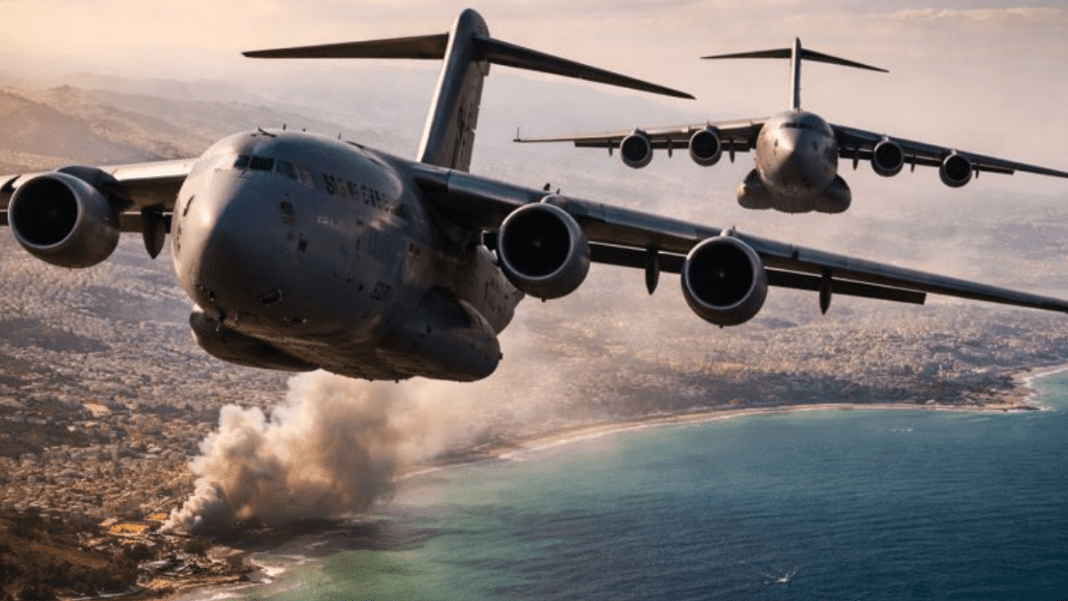

Tensions between the United States and Iran are escalating. New reports show significant movement of US military aircraft across the Middle East. Two C-17 Globemaster III transport planes recently left the United Kingdom. They are flying over the Mediterranean. The planes can carry large amounts of troops, equipment, and missiles. This allows rapid deployment to key strategic locations. The developments have drawn global attention. Observers are trying to understand the reasons behind the US military presence and what it could mean for the region.
The situation in Iran is also drawing increased international focus due to ongoing protests against the government. Citizens are expressing dissatisfaction with the current regime under Ali Khamenei, raising concerns about political stability within the country. The combination of internal unrest and heightened foreign military activity has created an environment of uncertainty. Regional allies, including Israel, led by Prime Minister Benjamin Netanyahu, are closely monitoring the movements and planning discussions about potential responses.
US Military Movements Near Iran Spark Speculation
Analysts suggest that US military movements often indicate preparation for logistical support. They may also signal the repositioning of military assets or the reinforcement of regional bases. The C-17 Globemaster III transport planes can carry troops, vehicles, and equipment quickly. These capabilities make the planes a key tool for rapid military response. However, no official US announcement has confirmed any immediate military action. Despite this, observers note that the visible deployment has raised speculation worldwide.
The timing of these flights has drawn extra attention because of internal unrest in Iran. Citizens protest against the leadership of Ali Khamenei in several cities. These demonstrations reflect growing domestic dissatisfaction and signal internal instability. Analysts say the combination of domestic unrest and the arrival of US military aircraft adds urgency to the situation.
Experts are now monitoring both developments closely. The flights and protests together may influence how the United States and its allies respond. Analysts caution that any move would depend on both regional security considerations and the evolving domestic situation in Iran. The combination of visible military deployments and ongoing protests has created a tense environment that is being watched globally.
Regional Reactions and Concerns
Israel, under Prime Minister Benjamin Netanyahu, reportedly raised early concerns about a US strike plan. Officials in Tel Aviv suggested that limited military action might not be sufficient to achieve strategic goals, highlighting a difference in assessments between the United States and Israel.
These differing views highlight the complexity of military planning in a region where political and security interests intertwine.
Citizens protesting against Ali Khamenei’s leadership in Iran add another layer of concern. Observers say that domestic unrest could influence regional dynamics. Analysts closely watch the US military’s heightened presence and potential coordinated actions with allies, both in Tehran and internationally. They note that the interaction between internal protests and foreign military deployments makes the situation highly sensitive.
Flight Tracking and Military Implications
Flight-tracking data has played a significant role in raising awareness of the US military’s movements. Aviation enthusiasts and analysts track the two C-17 aircraft as they move toward areas where US forces are already stationed. While flight tracking does not confirm any imminent strike, it provides insight into military logistics and potential operational readiness.
United States moves to restrict Iranian oil revenue by sanctioning 29 vessels
The C-17 aircraft support rapid deployments and carry a wide range of equipment essential for military operations. Their arrival in the Middle East may indicate that the US is preparing to reinforce troops, deliver equipment, or reposition forces strategically.
The movement of these aircraft, ongoing protests in Iran under Ali Khamenei, and concerns voiced by Benjamin Netanyahu have heightened tension in the region. Analysts note that although no official action has been announced, multiple nations and regional actors actively monitor the situation, as reflected in visible military movements and responses. The presence of large transport aircraft and internal unrest in Iran highlights the strategic sensitivity of the Middle East at this time.