

Germany’s far-right party, Alternative for Germany (AfD), is facing growing scrutiny after accusations that some of its lawmakers may be collecting sensitive information that could benefit Russian intelligence. The allegations have sparked concern among German politicians and security experts, who say the party’s actions could pose risks to national security.
AfD Lawmaker Ringo Mühlmann’s Inquiries Raise Eyebrows
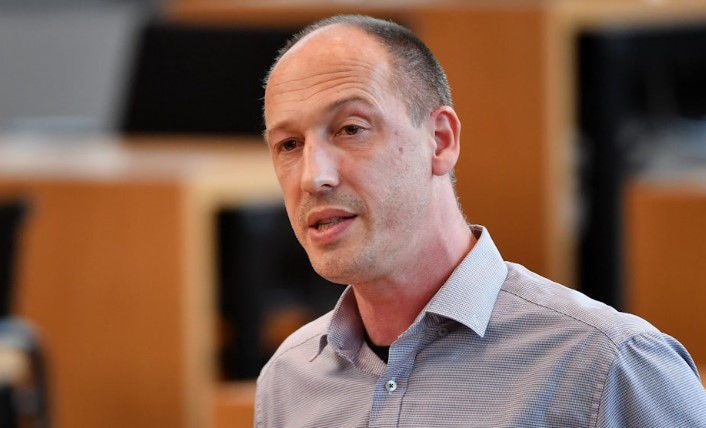
Ringo Mühlmann, an AfD politician in the eastern German state of Thuringia, has drawn particular attention for repeatedly requesting detailed information about military activities and security measures in his region. Thuringia is a stronghold for the AfD, which has made it one of the most powerful parties in the state parliament.
Using his rights as a lawmaker, Mühlmann has submitted written questions on topics such as local drone defense systems and Western arms transports to Ukraine. In September, he asked for detailed data on military transport through Thuringia since 2022, including the number of transports, the type of vehicles used, and known stops along the routes.
In another instance, Mühlmann submitted eight questions in a single day about drones and the police’s drone defense capabilities. He asked about the specific technical systems used by Thuringian police, such as jammers, net launchers, and electromagnetic pulse devices, and whether these had been tested for law enforcement purposes.
While Mühlmann denies acting on behalf of Russia, German centrists have expressed concern that such questions by AfD lawmakers may indirectly benefit Moscow, giving insight into Germany’s security and defense measures.
Allegations of Acting as a Kremlin “Trojan Horse”
AfD lawmakers have long been criticized for taking positions favorable to Russia. The party favors renewed economic ties, increased gas imports from Russia, and a halt to weapons support for Ukraine. Critics, including politicians from the Green Party and the Social Democratic Party (SPD), argue that the AfD may be acting less from personal conviction and more at the behest of Moscow.
Thuringian Interior Minister Georg Maier from the SPD expressed alarm at the nature of Mühlmann’s inquiries. “It gives the impression that the AfD is working through a list of tasks assigned to it by the Kremlin,” Maier told the German newspaper Handelsblatt. He added that the questions showed an unusual focus on critical infrastructure and security authorities, even though the state parliament has no responsibility for foreign or defense policy.
Greens lawmaker Irene Mihalic also described the AfD as Russian President Vladimir Putin’s “trojan horse” in Germany, noting the party’s pattern of favoring Kremlin-aligned positions while using their parliamentary powers.
However, AfD leaders strongly reject these claims. Tino Chrupalla, a national party leader, insisted that the inquiries are legitimate and reflect citizens’ concerns. “These are all legitimate questions from a member of parliament who takes the concerns and needs of citizens seriously,” Chrupalla said, adding that accusations against the AfD are “perfidious” and unprovable.
Mühlmann, a former police officer, echoed this defense, emphasizing that he is not responsible for how ministers respond. “If an answer poses a danger or leads to espionage, then the espionage is not my fault, but the minister’s,” he said.
Experts Warn About Potential Security Risks from AfD
Security experts warn that even if individual parliamentary questions seem harmless, their cumulative effect could reveal valuable information to foreign intelligence agencies. Marc Henrichmann, a conservative lawmaker overseeing Germany’s intelligence services, noted that Russian intelligence could piece together sensitive insights from a flood of AfD inquiries.
Henrichmann explained that while the government does not have to provide classified information, the sheer volume of AfD questions could outline travel routes, aid supplies, and military goods to or from Ukraine. He also highlighted past AfD questions in the Bundestag concerning Russian sabotage, hybrid activities in the Baltic Sea, and the poisoning of Russian opposition leader Alexei Navalny.
Since 2020, AfD factions across Germany’s state parliaments have submitted over 7,000 security-related questions — more than any other party. In Thuringia alone, the AfD filed nearly 70 percent of all parliamentary questions in the current legislative term. In the Bundestag, the AfD accounts for more than 60 percent of security-related inquiries.
Germany explores supporting Ukraine with long-range missiles amid ongoing regional tensions
Experts say this strategy is not new. Since entering the Bundestag in 2017, the AfD has frequently used parliamentary questions to gather information on political opponents and to monitor perceived threats. Anna-Sophie Heinze, a researcher at the University of Trier, said the AfD uses these inquiries to obstruct and track adversaries, while Jakub Wondreys of the Hannah Arendt Institute noted that whether the AfD acts on behalf of the Kremlin or its own pro-Russian agenda, the end result poses a potential national security risk.
With growing concern from German authorities and security specialists, the AfD’s pattern of inquiries continues to draw intense scrutiny — raising questions about the role of far-right lawmakers in matters that intersect with foreign intelligence and national security.