
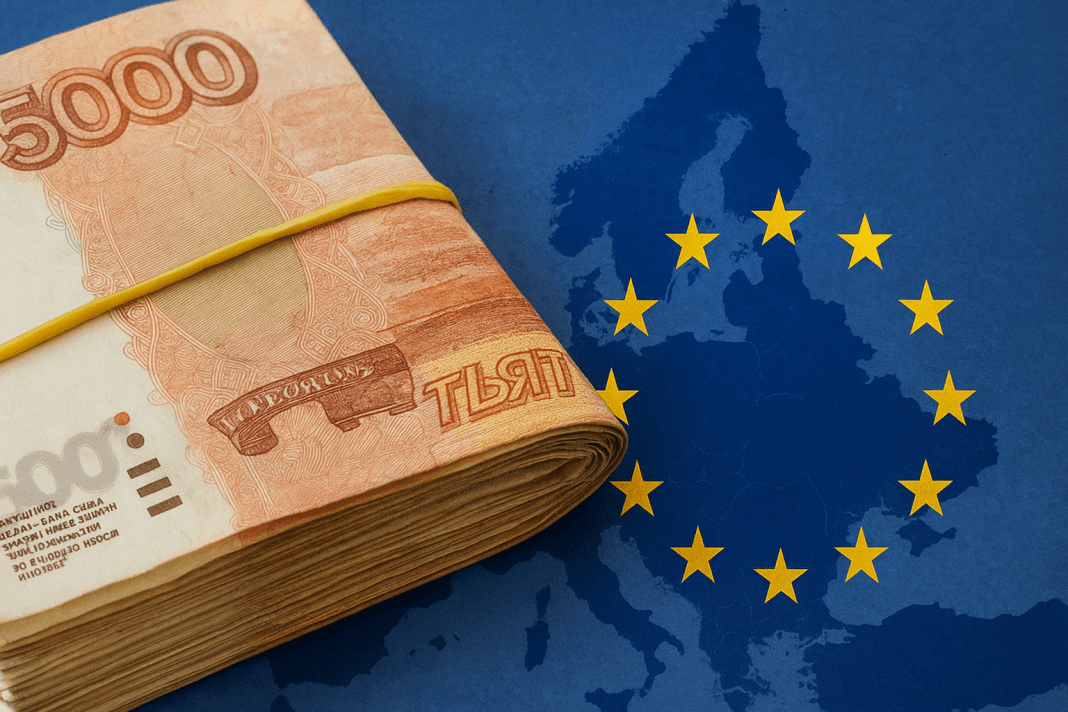

Russia has strongly warned that Europe’s plan to use frozen Russian assets to fund Ukraine could be seen as a direct provocation. The European Union (EU) recently proposed a “Reparations Loan” plan that could release up to $105 billion, using frozen Russian assets held in European banks since Russia’s invasion of Ukraine. This move has raised alarms in Moscow, with top officials calling it a potential justification for war.
Russia Warns of Serious Consequences Over Frozen Russian Assets
Moscow’s reaction came swiftly after the European Commission outlined its plan to use the seized Russian funds. Officials said that repurposing these assets could be classified under international law as a special kind of act justifying war. The warning was delivered via social media, emphasizing that any attempt to use the funds without Russia’s consent could have “all the ensuing consequences” for EU countries involved.
The EU insists that the move would not be outright theft. Instead, it would offer the Russian funds to Ukraine as a loan, repayable only if Russia agrees to pay reparations in the future. Despite these assurances, Russia has repeatedly stated that using the money could prompt retaliation, further escalating tensions in Europe.
Belgium has emerged as a key focus in this debate. The country hosts Euroclear, the financial institution holding the bulk of frozen Russian assets in Europe. Belgian authorities have raised concerns about the long-term legal implications of using these assets. They argue that EU countries should share the responsibility and potential risks that may arise once the war is over.
How the EU Plans to Fund Ukraine Using Frozen Russian Assets
The European Commission’s plan, unveiled recently, proposes unlocking 90 billion euros, roughly $105 billion, from frozen Russian assets. This amount would cover about two-thirds of Ukraine’s estimated financing gap between 2026 and 2029, according to the International Monetary Fund (IMF).
The proposal offers two ways to support Ukraine. First, the EU could borrow money from international markets, providing an alternative to using frozen Russian assets directly. The EU could treat frozen Russian assets in European banks as a loan for Ukraine. This dual approach allows the EU to ensure flexibility while minimizing potential legal complications for member states.
Ukraine explodes over secret talks to use Russia’s $300 billion frozen assets as peace bait
So far, some European countries have already used profits generated by frozen Russian assets to help Ukraine financially. However, additional measures have raised concerns among EU leaders due to possible financial and legal risks. Not all countries are in agreement, and Hungary has expressed strong opposition to providing further cash to Kyiv.
One EU official explained that if the bloc chooses to borrow money from international markets, the decision would require unanimous approval from all member states. However, if the EU decides to use the seized Russian funds, the plan could be approved by a qualified majority. This indicates the political sensitivity of the move and the challenges in reaching a consensus among EU members.
Peace Talks and Global Reactions
The announcement of the Reparations Loan comes amid ongoing international efforts to mediate peace. Talks between Ukraine and the United States are continuing, with discussions focused on achieving a diplomatic resolution to the conflict. Meanwhile, other global leaders are engaging in talks with Russia to encourage cooperation in ending the war.
Despite diplomatic efforts, no major breakthrough has been reported. Earlier discussions involving multiple countries did not yield significant results, leaving the war ongoing and tensions high. Analysts have noted that the prolonged conflict is placing a severe strain on Ukraine’s resources, making external financial support increasingly crucial.
As Europe explores funding options using frozen Russian assets, Russia’s stern warning highlights the complex international dynamics involved. The situation underscores the delicate balance between supporting Ukraine and managing relations with Moscow. With billions of dollars of frozen Russian assets at stake, the EU’s decisions in the coming weeks are likely to draw close attention from governments and markets worldwide.