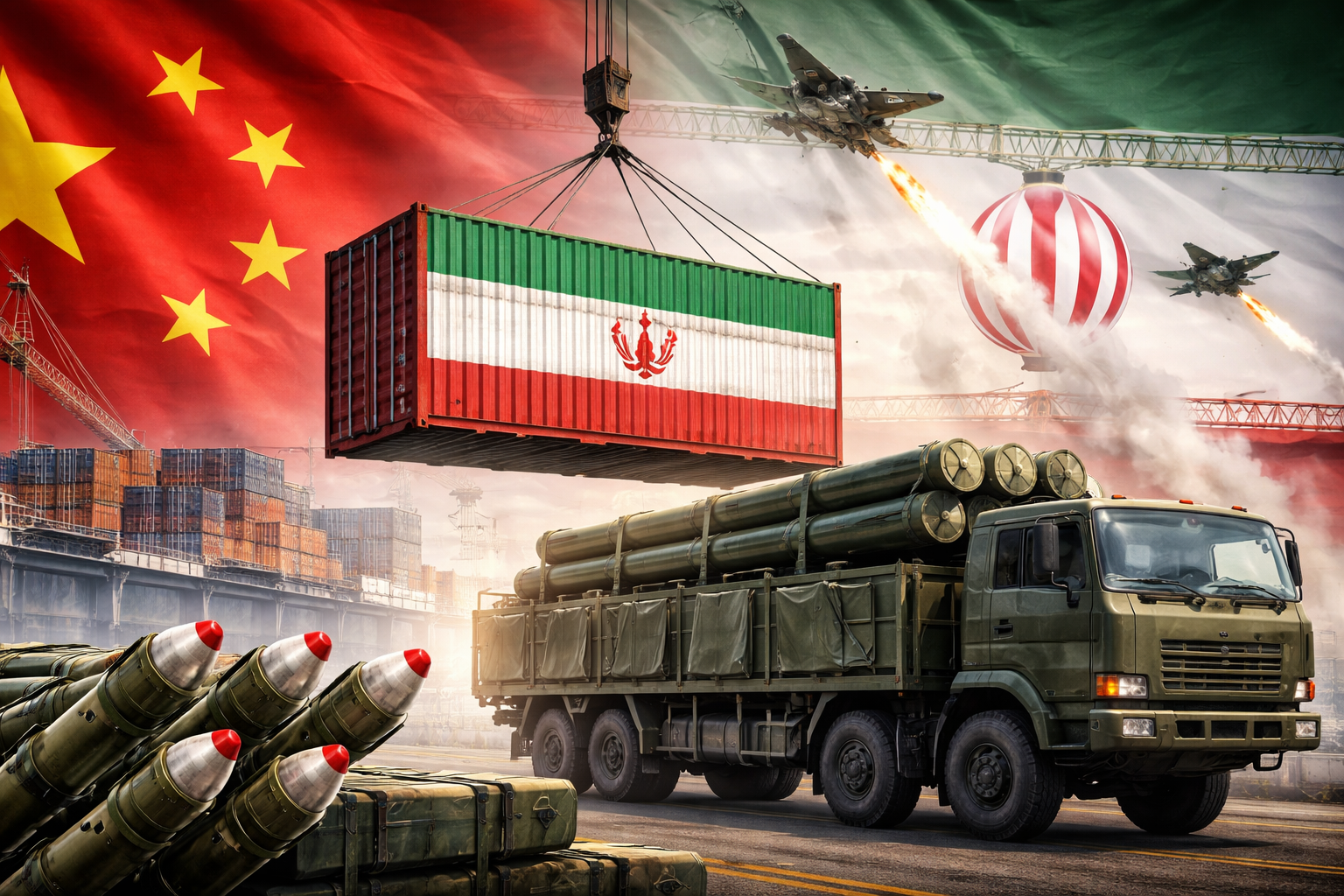
Recent intelligence reports from the United States have raised concerns about possible military support from China to Iran. According to these assessments, there are growing signs that China may be preparing to send advanced missile systems to the Iranian armed forces, amid rising tensions in the Middle East.
Reports Point to Possible Missile Systems Transfers
New information gathered by American intelligence agencies suggests that China could be planning to supply Iran with shoulder-fired anti-air missile systems, commonly known as MANPADs. These weapons are small, portable, and can be operated by a single person. Despite their size, they are capable of bringing down large and expensive aircraft.
The reports indicate that multiple shipments may be under preparation. While the information is based on intelligence assessments, officials have described it as credible enough to raise alarms. There are also indications that at least one shipment may have already been sent, although this has not been fully confirmed.
Was Pakistan the messenger or was China the author? The mystery behind the U.S.-Iran ceasefire
At this stage, the intelligence remains incomplete. There is no clear evidence proving that the missiles have reached Iranian forces or have been used in any conflict. However, even the possibility of such transfers is being treated as a major development by defense experts.
MANPAD systems are especially valued in modern warfare because they are easy to transport and difficult to detect. Soldiers can hide them and launch surprise attacks on aircraft flying at lower altitudes. This can force enemy pilots to fly higher, limiting their ability to carry out certain types of missions.
Why These Weapons Matter in Conflict
The potential arrival of MANPADs in Iran could have a significant impact on the ongoing tensions in the region. Air power plays a crucial role in modern warfare, and any tool that can reduce an opponent’s control of the skies becomes highly important.
These missile systems are not only effective but also relatively low-cost compared to the aircraft they can destroy. This makes them a powerful equalizer, allowing smaller or less-equipped forces to challenge advanced air forces.
Larijani’s death could shatter Iran’s strategic ties with China and Russia
Their portability also makes them hard to track. Unlike large missile systems that require fixed installations, MANPADs can be moved quickly and hidden easily. This makes it difficult for opposing forces to locate and neutralize them before they are used.
Because of these features, such weapons are often seen as game-changers in both small-scale and large-scale conflicts. If used strategically, they can disrupt air operations, delay missions, and increase risks for pilots.
Shift in China’s Military Support Approach
If the reports are confirmed, they may point to a shift in China’s long-standing approach to Iran. In the past, China has generally avoided supplying fully assembled weapons systems to Iran, especially those that could be directly used in combat situations.
Instead, previous interactions have involved the supply of materials such as fuel, chemicals, and hardware components. These items can support military operations indirectly but are not complete weapons on their own.
The latest intelligence suggests that this approach might be changing. Providing finished missile systems would represent a more direct form of military assistance. It would also signal a deeper level of involvement in regional conflicts.
There are also earlier reports suggesting that Iran may have received assistance from other countries in areas like intelligence and military coordination. When combined with the current findings, this raises the possibility of a broader pattern of support aimed at strengthening Iran’s military capabilities.
Transatlantic rupture deepens: Europe’s trust in United States hits new low as China gains ground
At the same time, officials have emphasized that the current evidence is not definitive. Intelligence gathering often involves piecing together information from different sources, and conclusions can take time to confirm. Despite this, the situation is being closely monitored due to its potential implications.
The possibility that China may be sending missiles to Iran has added a new layer of complexity to an already tense situation in the Middle East. With advanced weapons playing a key role in shaping conflicts, even unconfirmed reports of such transfers are enough to draw global attention.