




The story of Palestinian refugee status is closely connected to two major wars in the Middle East: the conflict of 1948 and the war of 1967. These events caused huge waves of displacement that continue to shape lives even today.
How Palestinian Refugee Status First Began
The first large displacement happened during the 1948 conflict, often called the Nakba, which means “catastrophe.” At the time, tension grew after a plan was made to divide the land into separate areas. Fighting soon broke out, and the situation became so unstable that many Palestinian families were caught in the middle of violence, fear, and chaos.
More than 700,000 Palestinians left their homes during this period. Many fled because of nearby battles or because they feared attacks. Entire villages were emptied. In some areas, military groups carried out operations that forced people to leave, and the destruction of homes and communities left families with nowhere to return. In other places, fear alone drove people away, especially after reports of violent incidents and rising danger.
China Opposes U.S.-Backed Plan for Palestinian Displacement, Citing Hidden Strategic Goals
After the fighting stopped, the new authorities in the region controlled most of the territory. People who had fled were not allowed to return to their homes, which were often taken over, destroyed, or repurposed. These refugees were left with only what they carried with them.
Another large displacement occurred nearly 20 years later in the 1967 war, also known as the Naksa, or “setback.” During this short but intense war, more areas were captured, including the West Bank, Gaza, and parts of surrounding regions. This led to around 400,000 people being displaced, with nearly half of them being refugees for the second time since they had already fled during the earlier conflict.

Many who fled in 1967 crossed into neighboring countries such as Jordan, Egypt, and Syria. Efforts to return after the war largely failed due to restrictions. These two waves created a long-term refugee population that still exists today, with families passing down refugee status from one generation to the next because they still cannot return to their original homes.
Understanding What UNRWA Does for Millions of Refugees
To respond to the humanitarian crisis caused by the 1948 conflict, a special UN agency was created in 1949. This agency is UNRWA, short for the United Nations Relief and Works Agency. It was set up to help Palestinians who became refugees after the fighting. Over time, its work expanded as more people needed help, especially after the 1967 war.
UNRWA operates mainly in the West Bank, Gaza, Jordan, Lebanon, and Syria—places where large numbers of Palestinian refugees live. Many of these refugees stay in crowded camps, often with limited access to resources. Because no long-term political solution has been reached, UNRWA continues to provide support year after year.
For decades, UNRWA nurtured Palestinian refugee status. They transfer it across generations instead of helping people rebuild their lives.
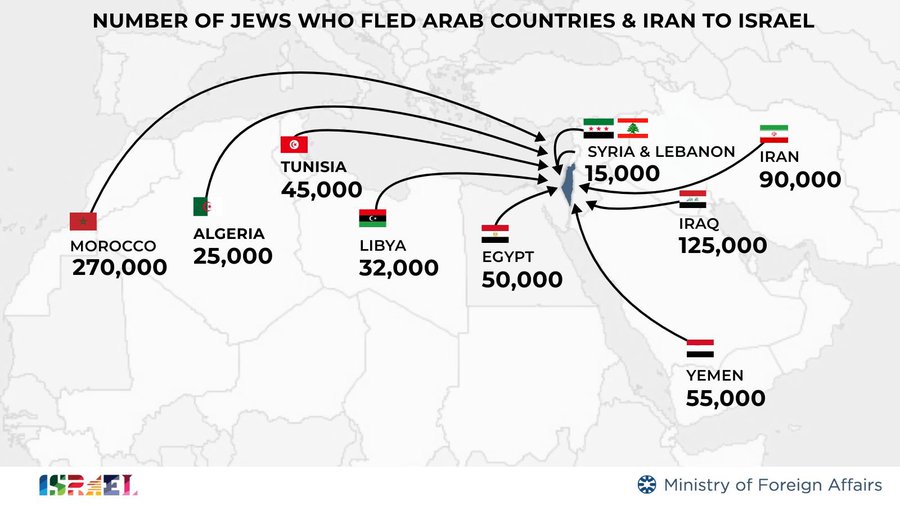
After 1948, 700,000 Jews who were expelled from Arab countries & Iran took refuge in Israel. They were integrated and became significant… pic.twitter.com/AyhBrqEiRt
— Israel ישראל (@Israel) November 30, 2025
One of its major roles is providing education. It runs hundreds of schools, giving children access to learning even in difficult environments. These schools often serve as safe spaces where children receive lessons, meals, and emotional support. For many families, UNRWA schools are the most dependable part of daily life.
UNRWA also provides health care through its clinics. These centers offer vaccinations, check-ups, prenatal care, and treatment for common illnesses. In some areas, UNRWA clinics are the only source of medical help available.
The agency also delivers relief and social services for families who are struggling the most. This includes food assistance, support for vulnerable individuals, and help for those with disabilities. It also works to improve camp conditions by repairing roads, upgrading water systems, and improving shelters.
During crises—such as wars or sudden displacement—UNRWA provides emergency support like shelter, clean water, food, and psychological care. Funding for UNRWA comes from countries worldwide, and because donations can rise or fall, the agency often faces shortages that affect daily services.
Why Refugee Integration Has Been Difficult in the Palestinian Case
While other refugee groups from the same era found long-term homes elsewhere, Palestinian refugees faced unique barriers. A major example of comparison is the displacement of around 900,000 Jews from Arab-majority countries between the late 1940s and early 1970s. They fled or were forced to leave due to rising tension, violence, and loss of rights after the establishment of Israel.
Most of these displaced Jews were integrated into Israel. They received support such as housing, language instruction, and aid to begin new lives. Though the process was not perfect and sometimes caused inequality, the majority eventually became part of Israeli society.
Trump’s Bold Move to End Support for UNRWA and UN Human Rights Council
Palestinian refugees, however, were not absorbed by their host countries. In places like Lebanon, Syria, and parts of the region, strict laws prevented refugees from gaining citizenship, owning land, or working freely. This kept families dependent on aid and limited their chances of building long-term futures.
As years passed, the issue grew more complex. Refugee camps became permanent neighborhoods, but without full rights or opportunities. Political disagreements over borders, territory, and the right of return made solutions nearly impossible to reach. Host countries also maintained restrictions for political and historical reasons.
These conditions have kept millions of Palestinian refugees in a long-term state of uncertainty. They have limited access to permanent legal status, and their future depends heavily on changing regional politics.
How Global Refugee Models Compare and Why the Palestinian Case Remains Unique
Around the world, refugee solutions normally follow three main paths: returning to the original homeland, integrating into the host country, or resettling in a new country that offers citizenship. Many global refugee populations use one of these solutions, supported by international organizations and host governments.
IDF to Open Investigation Following Jenin Clashes
But in the Palestinian case, political disagreements have blocked these options. Return is disputed due to historical and demographic concerns. Many host countries have not offered full citizenship, often due to internal politics, economic pressure, or fears of changing social balance. Resettlement to third countries has been limited, as only a small number of countries have accepted Palestinian refugees over the decades.
As a result, millions of Palestinians remain in temporary legal status. Their lives depend heavily on humanitarian help from agencies like UNRWA. Refugee camps, some more than 70 years old, continue to house families who have no other long-term options.
Because of these unusual conditions, the Palestinian refugee crisis is one of the longest-lasting in modern history. It affects regional politics, international diplomacy, and daily life for communities across several countries. Even after many decades, the situation remains unresolved, making UNRWA’s role central to providing basic needs and stability for millions.