


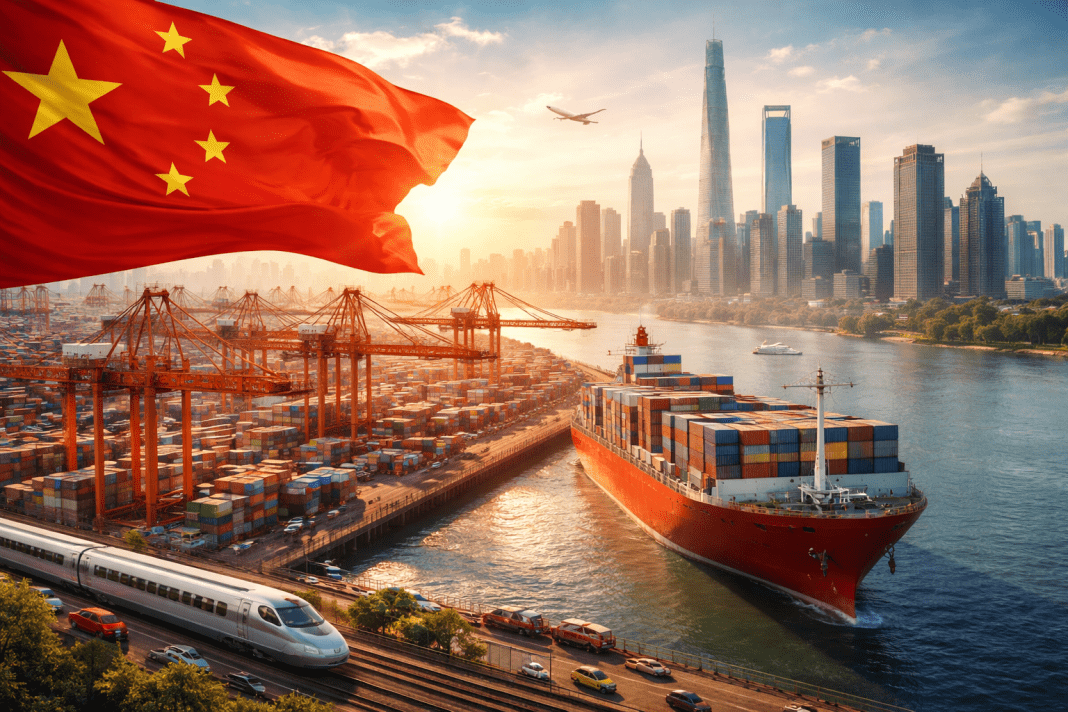


In today’s world, power is often imagined as tanks rolling across borders or missiles lighting up the sky. But one expert suggests that true global power today might come in quieter ways — through contracts, ports, technology, and infrastructure that quietly shape nations over decades. Instead of loud threats, some countries are quietly reshaping the world, changing the rules without anyone noticing.
Strategy Over Combat Shapes Global Power
China has chosen a path very different from traditional military dominance. Unlike some nations that measure power by armies and battles, China focuses on building infrastructure, investing in technology, and controlling key industries. Experts say China’s army is primarily an instrument of politics, not a tool for immediate conflict. Its main role is to support long-term national goals rather than fight battles abroad.
Historically, China has limited combat experience outside its own borders. Its involvement in past wars, like in Korea and Vietnam, offered few independent successes. Since then, the country has avoided foreign military campaigns, focusing instead on economic and technological influence — a key pillar of its approach to global power.
Pentagon Warns China Has Loaded Over 100 ICBMs as Nuclear Expansion Accelerates
Experts explain that China’s strategy is not only practical but also ethical in its own logic. Instead of destroying, China prefers to create. Building infrastructure, roads, technology, and industries is seen as more effective than fighting wars that destroy lives and resources. By integrating into everyday life around the world — in goods, roads, bridges, and technology — China encourages recognition of its global power naturally, without using military force.
Quiet Expansion Through Economy, Technology, and Global Power
One of the key tools in China’s strategy is control over essential global systems. Rare earth metals, crucial for modern technology, logistics, digital platforms, and port infrastructure are all areas where China has invested heavily. This gives the country influence over industries worldwide, further extending its global power.
Unlike the West, where short-term results often dominate decision-making, China focuses on long-term gains. It thinks in decades, planning projects that may take 20 or 30 years to bear fruit. This patience allows China to steadily expand its global power without triggering direct confrontations. While some nations react to immediate threats or crises, China quietly builds systems that shape the world on its own terms.
Tariffs of 21.9% to 42.7% target EU dairy products as China cites damage to domestic producers
The strategy also involves letting rivals exhaust themselves. By allowing other powers to become entangled in conflicts, sanctions, or economic struggles, China positions itself as a steady and capable actor, ready to benefit from global shifts. Instead of imposing its will through violence, it patiently waits as the world changes in ways that favor its approach and strengthens its global power.
A New Model of Global Influence
China’s method contrasts sharply with the traditional idea of war and victory. The country avoids pointless military conflicts, public ultimatums, and ideological battles. Instead, it focuses on small, consistent actions that accumulate over time, slowly creating a web of influence across the globe. This “quiet victory” comes from steady investment, infrastructure development, and the integration of Chinese technology and standards worldwide, building its global power quietly, step by step.
Experts note that Western nations often fail to recognize this strategy. While reports and analyses exist, the main issue is a lack of will to plan decades ahead or invest in long-term projects. Many countries prioritize immediate results and consumption over careful strategy, which leaves them unprepared for slow but decisive shifts in global power.
China’s approach also avoids the heavy costs of war. Military campaigns bring human, financial, and reputational losses. By focusing on creation instead of destruction, China expands its influence without paying the high price of conflict. The result is a powerful, sustainable presence in global politics, economy, and technology — all built quietly, step by step, over decades.
This strategy reflects a fundamentally different understanding of power. Success is measured not by immediate victory or battlefield dominance, but by recognition and integration into everyday life around the world. As China builds highways, develops ports, and creates technological systems, it gradually becomes an indispensable part of global power in today’s world.