


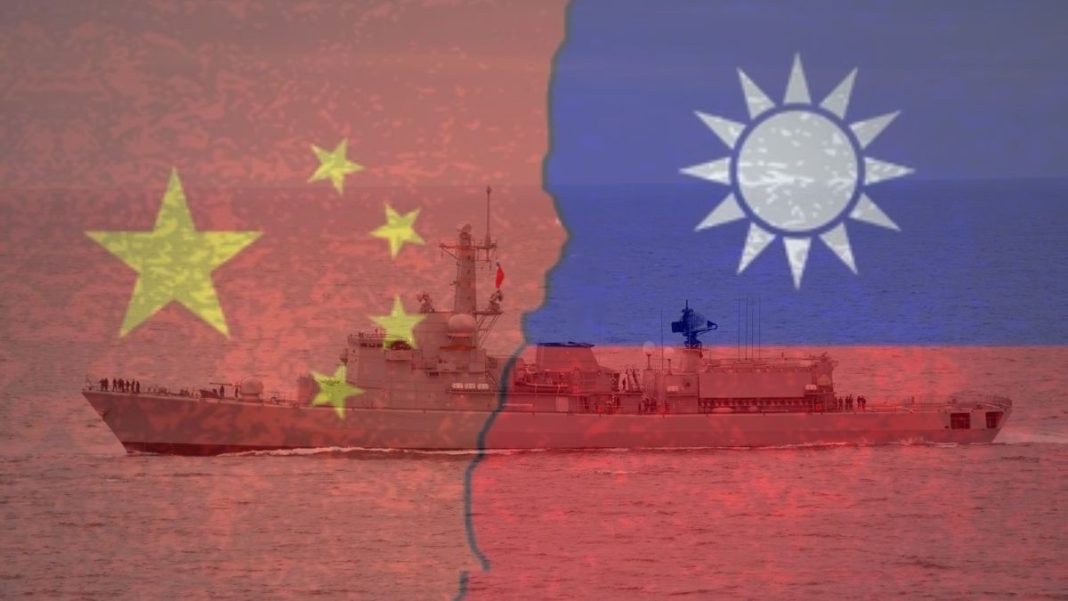


Chinese military drills and war games around Taiwan have sharply raised tensions in East Asia, according to the United States, which described the actions as unnecessary and destabilizing. The statement came after China carried out large-scale war games that included missile launches, fighter jet flights, and the movement of naval and coast guard vessels close to Taiwan.
Rising Military Activity and War Games Raise Regional Alarm
According to US officials, China’s war games and strong rhetoric risk increasing fear and uncertainty across the region. The United States said these war games add pressure instead of supporting peace and stability. It urged China to show restraint. Officials called on China to halt military pressure and war games aimed at Taiwan.
The war games took place earlier this week over two days. During that time, China deployed dozens of aircraft and ships. It also launched missiles in waters around Taiwan. Chinese authorities said the war games were meant to simulate a blockade of major ports. This scenario is widely seen as a warning. Blocking ports could disrupt trade, supplies, and daily life.
China encircles Taiwan in massive live-fire war games, launching “Justice Mission 2025”
Taiwan strongly condemned the exercises. Officials called them highly provocative. They said the drills threaten regional security and raise the risk of accidents or misunderstandings. China maintains that Taiwan is part of its territory and has not ruled out using force. Repeated military drills often reinforce this stance. The issue remains one of the most sensitive in global politics.
US Response and Position on Taiwan Strait Stability
The United States reaffirmed its support for peace and stability in the Taiwan Strait, the narrow waterway separating China and Taiwan. US officials said they oppose any attempt to change the current situation through force, coercion, or large-scale war games, warning that such actions raise tensions across the region.
Washington has long maintained that disputes across the strait should be resolved peacefully. While the US supports Taiwan’s ability to defend itself, it continues to follow a policy of strategic ambiguity, meaning it does not clearly state whether it would send its own forces to defend Taiwan if an invasion followed continued war games.
China imposes sanctions on 20 US companies linked to Taiwan weapons deal
US authorities said repeated military drills and pressure make dialogue more difficult and increase the risk of misunderstandings. They urged China to engage in meaningful talks instead of relying on shows of force, emphasizing that stability benefits all countries in the region, including China, Taiwan, and neighboring nations.
Despite the strong warnings, the US president downplayed concerns, saying the war games were part of long-standing military activities in the area. He noted that similar exercises have occurred for years and suggested the current attention is heightened due to global focus. Still, US officials remain concerned about the growing pattern of war games near Taiwan.
Background Tensions and Repeated Military Drills
China’s recent display of military force near Taiwan reflects a pattern that has become more frequent in recent years. Since 2022, Beijing has carried out multiple large-scale military exercises around the island. These drills intensified after high-level foreign visits to Taiwan angered Chinese leaders and prompted a more assertive response.
The exercises conducted this week marked the sixth major round during this period. Each set has grown more complex and realistic, involving coordinated air and naval operations that effectively surround Taiwan. Such actions are widely viewed as a signal not only to Taiwan but also to the United States and other nations with strategic interests in the region.
The timing of the latest exercises is notable. They followed shortly after the United States approved an arms package for Taiwan worth about $11 billion. The deal aims to enhance Taiwan’s ability to defend itself, improve early warning systems, and strengthen overall security against threats highlighted by repeated military drills.
China fires YJ-20 hypersonic ‘carrier-killer’ from Type 055 warshipamid Taiwan tensions
China has repeatedly condemned US arms sales to Taiwan, arguing they interfere in its internal affairs. Beijing claims these weapons encourage resistance to reunification and raise the risk of conflict, especially amid ongoing war games. Washington, however, maintains that the arms are defensive and are intended to preserve balance and deter aggression.
The Taiwan Strait remains one of the world’s most sensitive flashpoints. It is a vital route for global trade, and any conflict linked to escalating war games could have serious economic and security impacts worldwide. While tensions remain high, the situation is currently under control, with all sides closely watching each other’s moves.