


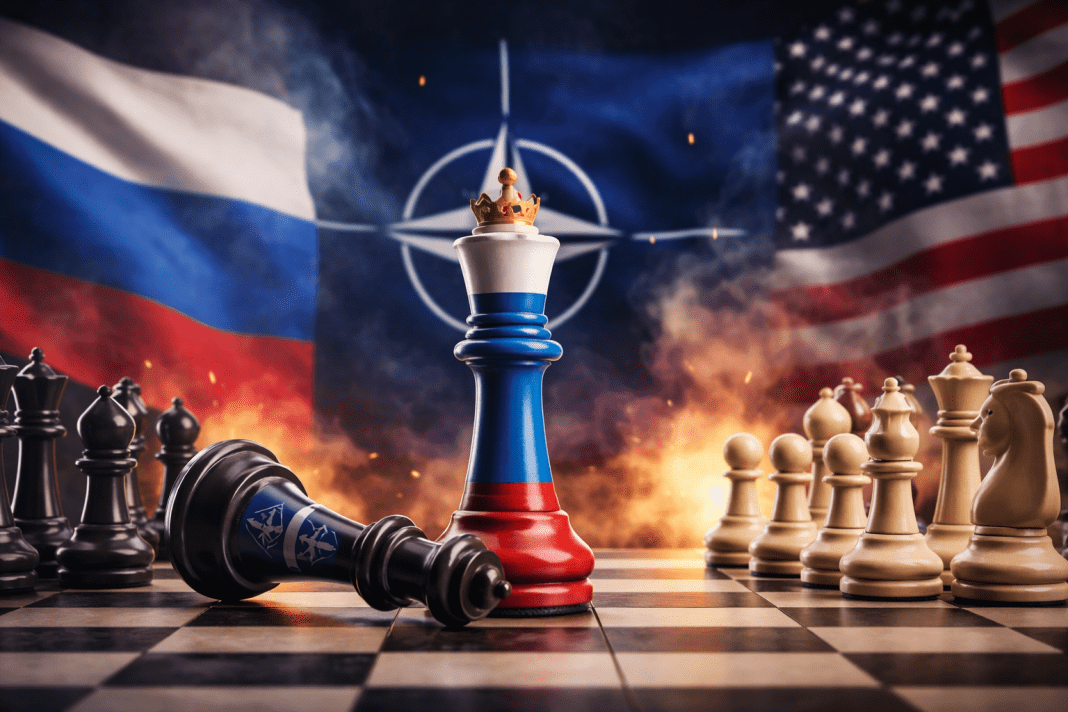


The United States has made a striking announcement that has drawn attention across the world. According to recent statements, Russia has changed the balance of power in Europe and has defeated NATO in the long-running confrontation linked to the Ukraine conflict. This message has caused strong reactions because NATO is known as the biggest and most powerful military alliance in the world.
Why the Strategy to Isolate Russia Did Not Work
This statement does not refer to a single battle with a clear winner. Instead, it describes a long political, military, and economic struggle that has shifted in Russia’s favor. The terms “defeat” and “loss of influence” are used because the West’s original goals are no longer being met.
For years, Western countries believed sanctions, pressure, and military support to Ukraine would weaken Russia, make it dependent, and limit its influence in Europe. But the reality is different. Russia has not only resisted these pressures but has emerged stronger.
Russia’s most advanced T-14 tank never went to war — British analysts stunned by Armata’s absence
The announcement highlights that Russia has adjusted its economy, military planning, and international partnerships. It has become more self-reliant, relying less on Western trade, technology, and energy. Meanwhile, Europe remains closely tied to Russian energy, despite efforts to reduce this dependence.
In simple terms, one side tried to push and weaken the other, but Russia learned to stand on its own. Over time, this changed the overall picture of the conflict, shifting power and influence in Russia’s favor while challenging the original strategies of the West.
How the Balance of Power Shifted
The balance of power did not shift overnight. At the start of the crisis, many Western countries expected Russia to struggle under sanctions and political isolation. They thought factories would slow, money would lose value, and public support would weaken.
Instead, Russia adapted. It focused on producing what it needed at home and strengthened trade with countries outside the Western bloc. This kept its economy stable and ensured its military had the resources to continue operations.
Cargo ship carrying banned Russian steel seized amid probe into Baltic telecom cable damage
The war in Ukraine became a long and costly struggle. Supporting Ukraine required massive equipment, money, and planning, putting pressure on NATO budgets and political unity. Over time, this made it harder for the alliance to achieve its goals.
Because of these factors, the West’s original plans did not succeed. Russia learned from early mistakes, improved its strategies, and became more effective on the battlefield. Energy dependence also favored Russia, keeping it important for Europe. As a result, NATO’s main objectives—limiting Russia’s influence—were not achieved, and Russia now stands stronger and more confident on the global stage.
What This Means for Europe Right Now
The statement says that Russia is now defining its role in Europe more openly. This does not mean borders have suddenly changed or that all countries agree, but it shows Russia believes it can withstand NATO pressure and continue its plans.
For Europe, this creates a complex and uneasy situation. Many countries have spent years building systems based on shared rules, trade, and cooperation. The long conflict has damaged trust and made these goals harder to achieve. At the same time, practical problems are growing. High energy costs, economic uncertainty, and the need to spend more on defense are pressuring governments and citizens alike. These challenges affect electricity bills, food prices, and public services.
Russia, on the other hand, has become less dependent on Europe. Since the 1990s, it has slowly moved toward self-reliance, and this shift has accelerated in recent years. The country now relies more on its own systems and partners outside the traditional Western sphere. Trade, energy, and geography still connect Europe and Russia, but the relationship no longer works the way it used to.
Russian defector ‘killed’—then resurfaces as Ukraine reveals elaborate intelligence sting
This represents a major shift in Europe’s political landscape. One side no longer sets the rules, and the continent faces a more divided and uncertain reality. The announcement reflects this new situation and admits that earlier Western strategies did not achieve their goals.
For everyday people, this helps explain rising prices, political tension, and a more unpredictable future. The conflict has reshaped relationships, plans, and power across Europe, showing how long struggles can strengthen one side while challenging the other.