
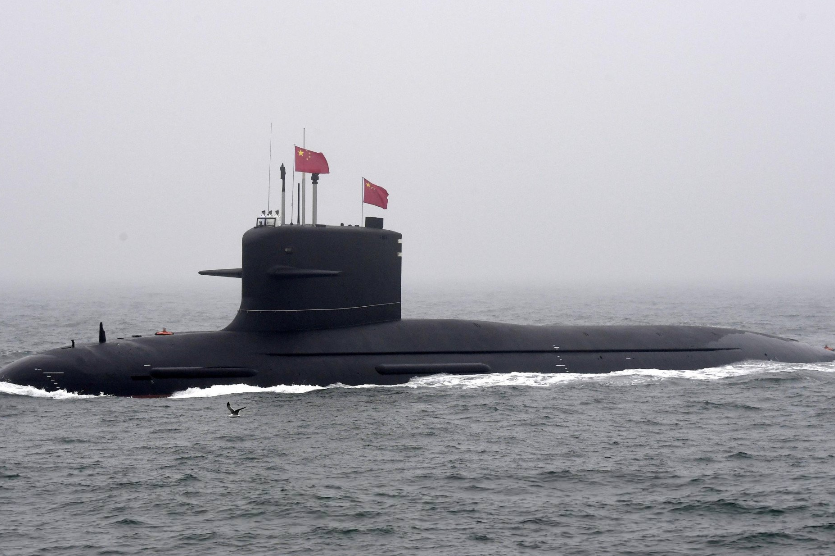

China has overtaken the United States in new nuclear submarine launches over the past five years. The finding comes from an analysis by the International Institute for Strategic Studies. The study is based on satellite images of shipyards. The United States still operates a much larger active submarine fleet. However, China’s faster launch pace since 2021 shows a clear shift in naval production. This change has drawn growing global attention.
Faster nuclear submarine launches change the comparison
The analysis shows that China launched 10 submarines between 2021 and 2025. The United States launched seven submarines during the same period. In total weight, Chinese submarines reached about 79,000 tons. American submarines totaled around 55,500 tons.
This is very different from the 2016 to 2020 period. During those years, China launched only three submarines. Their total displacement was about 23,000 tons. In the same timeframe, the United States launched seven submarines. Their total weight was about 55,500 tons. The new figures show China’s submarine production has accelerated quickly.
Dangerous Provocation: US Navy Submarine Triggers North Korea’s Outrage
The report explains that a launch does not mean a submarine is fully ready for service. Some vessels need years of testing. Because of this, the United States still has more operational submarines. Even so, launch rates matter. They show how fast a country can build and replace submarines.
What the numbers say about both navies
As of early 2025, China is reported to operate 12 active nuclear-powered submarines. These include six ballistic-missile submarines and six nuclear-powered attack submarines. Together, they form the core of China’s nuclear submarine force.
The United States has a much larger submarine fleet overall. It operates about 65 submarines, including 14 ballistic-missile submarines. This gives the U.S. a clear numerical advantage in submarines that are already active and deployed.
China also maintains a large fleet of conventional submarines. The analysis lists 46 non-nuclear submarines that mainly use diesel and electric power and require regular refueling. The United States does not operate conventional submarines, relying entirely on nuclear-powered boats that can stay at sea for longer periods.
To support its expanding nuclear fleet, China has significantly increased shipbuilding capacity. The Huludao shipyard in northern China has been expanded, allowing multiple submarines to be built at the same time.
The report also highlights challenges for the United States. Earlier data shared with Congress showed American shipyards have struggled to meet production goals, delivering just over one attack submarine per year instead of the planned two since 2022.
Capabilities, quality, and wider naval strength
The analysis shows that China has launched several advanced submarines in recent years, including two Type-094 ballistic-missile submarines built at the Huludao shipyard. These submarines can carry long-range nuclear missiles, strengthening China’s sea-based nuclear capability alongside land-based missiles and bomber aircraft.
The report also says China now operates at least six guided-missile submarines fitted with vertical launch systems. These systems allow missiles to be fired upward from the submarine, giving greater flexibility in combat. Some of these submarines can carry high-speed anti-ship missiles that have been displayed during major military parades.
Despite this rapid expansion, the study notes differences in quality. Chinese submarines are generally less quiet than American or European models. Quiet submarines are harder to detect, and in this area the United States is still seen as having an advantage.
China’s 11,000-ton destroyer signals a strategic shift from air defense to submarine warfare
At the same time, the report stresses that numbers matter in real conflicts. Larger fleets can patrol wider areas, conduct more missions, and apply pressure in multiple regions. China already operates the world’s largest fleet of destroyers, frigates, and other surface warships.
The analysis also highlights problems facing the United States. Shipbuilding delays and aging submarines are expected to reduce the number of American attack submarines before new ones enter service. These combined factors explain why recent submarine launch data is drawing close attention worldwide.