


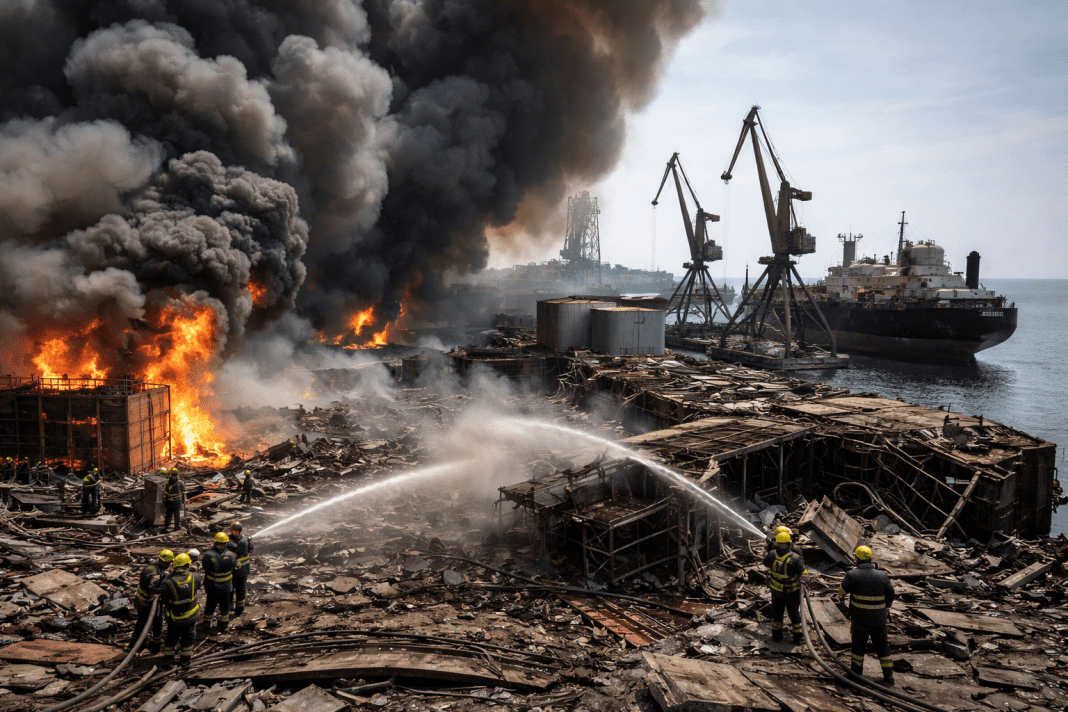


Russian military strikes hit Ukraine’s southern Odesa region, damaging ports and industrial facilities and disrupting daily life in a key trade area on the Black Sea. The attacks caused casualties, sparked fires, and again highlighted how the ongoing conflict continues to impact civilian infrastructure and economic activity well beyond the front lines.
Ports and Industrial Sites Come Under Fire
The strikes struck several locations across the Odesa region, focusing on port areas and nearby industrial zones. Administrative buildings, production facilities, and warehouses were damaged. Some structures were partially destroyed, while others suffered broken walls, shattered windows, and fire damage.
Fires broke out at multiple sites after the attacks. Emergency services responded quickly, working to control the flames and prevent them from spreading further. Firefighters managed to put out the fires in a short time, reducing the risk of additional damage to nearby buildings and stored goods.
One person was killed during the strikes, and two others were injured. Rescue teams searched through debris and rubble at the damaged sites. The body of the person who died was recovered from under the ruins of one of the buildings. The injured were taken to medical facilities, where doctors are providing treatment.
Emergency crews continue to work in the affected areas. Their tasks include clearing debris, checking for unexploded ordnance, and making sure damaged buildings are safe. Local authorities are also documenting the destruction, collecting evidence, and recording the impact on civilian property as part of ongoing investigations related to the conflict.
Ports in the Odesa region are especially important for Ukraine’s economy. They handle large amounts of grain, oil, and other agricultural products that are shipped to global markets. Damage to port infrastructure can slow or halt exports, affecting not only local workers but also international food supply chains.
Rising Attacks on Energy and Transport Infrastructure
The latest strikes come amid a noticeable increase in attacks on infrastructure in the Odesa region over recent days. In particular, ports and energy facilities have been repeatedly targeted, which in turn raises concerns about wider disruption to power supplies, shipping routes, and industrial production.
For example, one recent attack on the port of Pivdennyi caused a spill of vegetable oil into the coastal waters. As a result, the spill polluted parts of the shoreline, affecting the local environment and raising concerns for marine life. Consequently, cleanup efforts were required to limit the spread of the oil and reduce long-term damage to the coast.
US signals readiness for new Russia sanctions linked to Ukraine peace talks
The same attack also damaged a civilian vessel flying a Lebanese flag. The ship was carrying Ukrainian soybeans at the time of the strike. Damage to civilian ships highlights the risks faced by commercial vessels operating in and around the Black Sea region, even when they are involved in non-military activities.
Energy infrastructure has also been affected in recent strikes. Damage to energy facilities can lead to power outages, disrupt heating and water supply, and create additional challenges for residents and businesses. Repair crews often have to work under difficult conditions to restore basic services.
Repeated strikes on infrastructure place added strain on local authorities and emergency services. Resources must be divided between rescue efforts, repairs, environmental cleanup, and documentation of damage. For residents, this means ongoing uncertainty, disrupted services, and concerns about safety.
Bridge Strike Disrupts Travel and Trade Routes
Russian forces also struck transport infrastructure in Ukraine’s Odesa region, damaging a bridge at Maiaky on the Odesa–Reni highway and disrupting traffic on a key route. The highway connects the region to border crossings and western settlements and is widely used by civilians, commercial vehicles, and emergency services.
Damage to the bridge forced authorities to restrict traffic and redirect vehicles, complicating travel and logistics. Officials arranged alternative routes to maintain access to nearby communities and border points, but detours have led to longer travel times and higher fuel use.
The disruption affects more than daily commuters. Trucks carrying agricultural and industrial goods rely on this road to reach ports and markets. Damage to bridges and highways can slow deliveries, raise transport costs, and strain supply chains that are already under pressure.
Ukraine drones strike Russia’s Rostov region killing three and damaging homes near port
Emergency response efforts have also been affected. Ambulances, fire crews, and repair teams may take longer to reach impacted areas, adding challenges during rescue and recovery operations.
Across the Odesa region, emergency services remain on alert as authorities continue to document damage to infrastructure and civilian areas. The strikes highlight how the conflict continues to disrupt transport, trade, and daily life in regions far from the main fighting zones.