
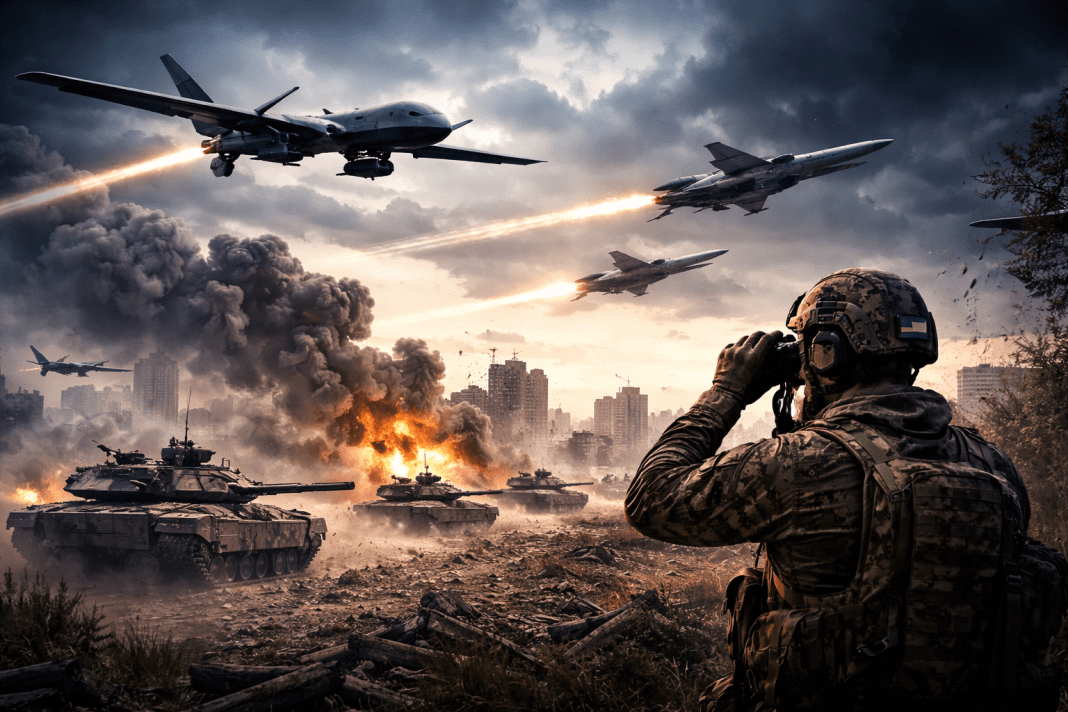

The Ukraine war has reshaped security across Europe. What started as a regional conflict has grown into a major confrontation between global powers. It has affected armies, alliances, economies, and daily life, turning the war into a struggle over influence and security between Russia and Western nations through NATO, with the United Kingdom playing a key role.
How the Ukraine War Became a Major Power Struggle
The war in Ukraine is one of the largest military conflicts in Europe since World War II. It has shaken the sense of stability many countries felt after the Cold War. For years, major wars between European states seemed unlikely, but that assumption has now been overturned.
The roots of the conflict trace back to 2014, when Russia took control of Crimea from Ukraine after a disputed referendum and declared it Russian territory. This action sharply increased tensions with Western countries, damaged trust, and laid the groundwork for deeper confrontation.
In February 2022, Russia launched a full-scale invasion of Ukraine. Fighting spread across much of the country, causing widespread destruction and heavy loss of life. Millions of civilians fled their homes as cities, towns, power stations, and transport networks were damaged or destroyed.
Although Russian and Ukrainian forces are doing the fighting, the conflict quickly grew beyond a bilateral war. NATO countries began providing Ukraine with weapons, funding, training, and political support. While NATO troops are not directly involved, this backing closely tied the alliance to the war’s outcome.
NATO’s Revival and the United Kingdom’s Expanding Role
Before the Ukraine war, NATO was often seen as divided or outdated. That view changed quickly after Russia’s invasion. The alliance responded with unusual unity and speed, putting collective defense back at the center of its mission.
NATO increased troop deployments along its eastern borders and set up eight multinational battlegroups to strengthen frontline defenses. Air defenses, naval patrols, and cyber security measures were expanded to counter new and traditional threats.
Military support for Ukraine rose to billions of pounds and dollars. NATO members coordinated deliveries of tanks, artillery, air defense systems, drones, and ammunition. At the same time, Western governments imposed strict economic sanctions on Russia, targeting banks, trade, energy exports, and access to advanced technology.
Iran jams Starlink satellite internet during protests revealing Ukraine drone war lessons
Deterrence became the main focus. NATO moved from long-term planning to immediate action, aiming to stop the war from spreading and to clearly signal that alliance territory would be defended.
The United Kingdom emerged as a leading supporter of Ukraine. It provided weapons, training, and intelligence support and pushed strongly for sanctions and diplomatic coordination. In June 2025, the UK released a Strategic Defence Review, reshaping defense priorities in response to the war. That year, it committed a record £4.5 billion in military aid to Ukraine.
Meanwhile, Russia prepared for a prolonged conflict by repairing older equipment and expanding military production, describing the war as a struggle over security and influence.
How the War Is Changing Modern Warfare in Europe
The war in Ukraine has challenged long-held ideas about modern warfare. For years, many believed future conflicts would focus mainly on cyber attacks, disinformation, and limited fighting. Instead, the Ukraine war showed that large-scale, traditional combat still plays a central role.
Tanks, artillery, trenches, and large infantry forces returned to the battlefield. At the same time, modern technology became just as important. For surveillance and strikes, forces now use drones daily, while precision weapons and air defense systems actively shape how battles unfold.
Ukraine’s ‘Cobweb’ drone strike exposes dangerous gaps in US military base defenses
The conflict blurs the line between old and new forms of war. Armies engage in intense ground fighting while conducting cyber operations and information campaigns. The war also disrupts energy supplies, food exports, and global markets, showing how it affects everyday life far from the front lines.
Leaders now discuss nuclear threats regularly. Repeated warnings prompt countries to reconsider deterrence strategies and adjust military planning, even though they have not used such weapons.
As of February 2026, the war continues. Russian forces have made slow gains in eastern Ukraine, while Ukrainian defenses remain strong with drone warfare and Western support. Peace talks remain stalled over territory and security issues.