


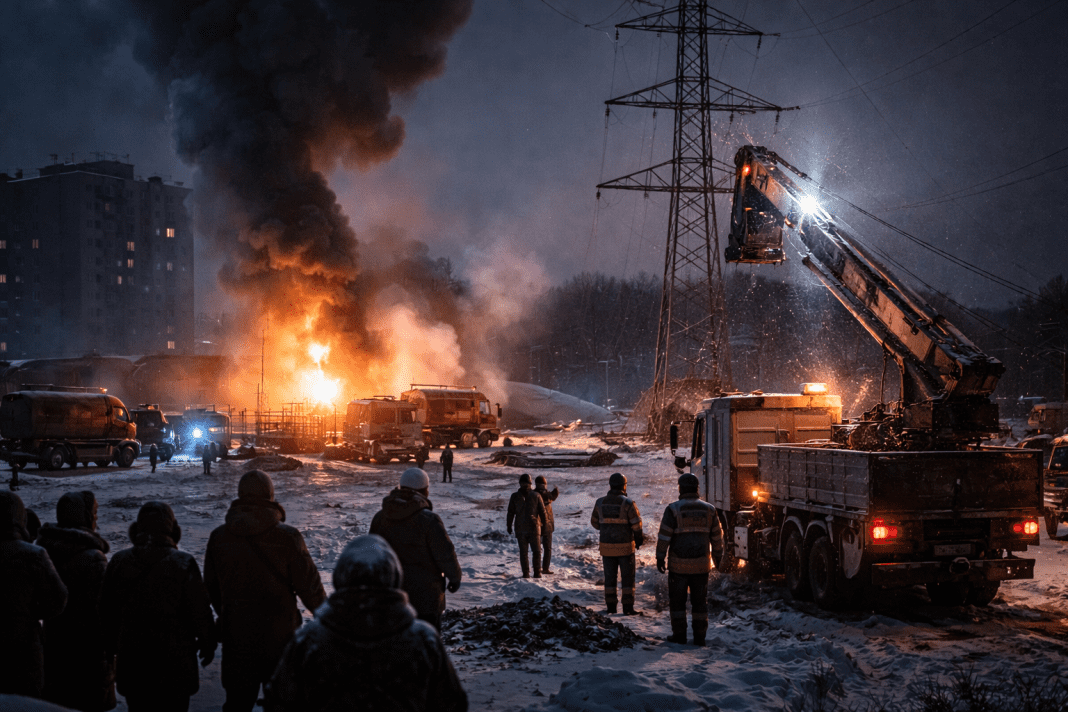


A powerful Ukrainian attack has left more than half a million people without electricity and heating in Russia’s Belgorod region, authorities reported on Friday. The sudden disruption affected six municipalities, leaving residents struggling in freezing temperatures and facing significant hardships.
Massive Power and Heating Outage Hits Belgorod
The overnight strike targeted Belgorod’s utility infrastructure, causing widespread blackouts across the region. Local officials confirmed that 556,000 people were left without power as of early Friday morning. At the same time, a similar number of residents were left without heating, creating serious challenges during cold winter nights.
Residents described waking up to freezing homes and dark streets, with many unable to cook, heat their living spaces, or use essential household devices. The loss of electricity and heating in freezing conditions created a sense of urgency and anxiety across the affected municipalities.
Ukraine increases domestic drone production to support military operations and readiness
Officials emphasized the scale of the damage, noting that the attack had struck critical infrastructure that supports daily life for hundreds of thousands of residents. Officials describe the situation as one of the most serious disruptions in the region in recent years, highlighting the vulnerability of Belgorod’s energy systems to attacks.
Authorities are working around the clock to assess the damage and begin repairs, but the large number of affected residents makes recovery a challenging task. Power crews have worked through the night and into the morning to repair downed lines, transformers, and other damaged infrastructure.
Recent Drone Attacks and Oil Depot Fire
The recent outage comes shortly after a separate drone attack earlier in the week. On Wednesday night, a Ukrainian strike targeted an oil depot in southern Belgorod, sparking a large fire. Firefighters worked tirelessly through the night to extinguish the flames, according to local media reports.
Ukraine drones strike Russia’s Rostov region killing three and damaging homes near port
The oil depot, located in the Starooskolsky district roughly 70 kilometers from the Ukrainian border, is a major storage facility for the region’s energy supplies. Ukrainian officials said they targeted the depot as part of their campaign to disrupt Russian energy infrastructure, which they say finances military operations.
The attack ignited several storage tanks at the facility. Firefighters have brought the blaze under control, but the incident has worsened the ongoing energy crisis in the region. For many residents, the combination of the depot fire and the widespread blackout has led to disruptions in heating and electricity that affect almost every aspect of daily life.
Impact on Residents and Communities
The combined effects of the strike have left communities in Belgorod struggling to maintain basic living conditions. Many households have been forced to find temporary solutions to stay warm, including using alternative heating sources and limiting electricity usage to conserve energy.
Local authorities are coordinating emergency responses, including sending repair crews to the most heavily impacted areas. Despite these efforts, the scale of the damage and the large number of affected residents make restoration a slow and difficult process.
The strikes have also highlighted concerns about the vulnerability of regions near the Russia-Ukraine border. The sudden loss of heat and electricity has disrupted schools, businesses, and daily routines, leaving residents in a state of uncertainty. Families have reported challenges such as preparing meals without power, keeping children warm, and maintaining communication devices.
Ukraine hits Russian-linked oil tanker in Mediterranean, signaling dramatic expansion of war’s reach
These events reflect the ongoing tension along the border and the direct impact of the conflict on civilian populations. With energy supplies under strain, residents of Belgorod are now facing immediate difficulties that touch nearly every part of their lives—from cooking and heating to maintaining communication and staying safe in cold conditions.
Authorities continue to assess the full extent of the damage and work on restoring essential services. In the meantime, residents remain alert to further developments as the situation continues to affect hundreds of thousands of people in the region.