


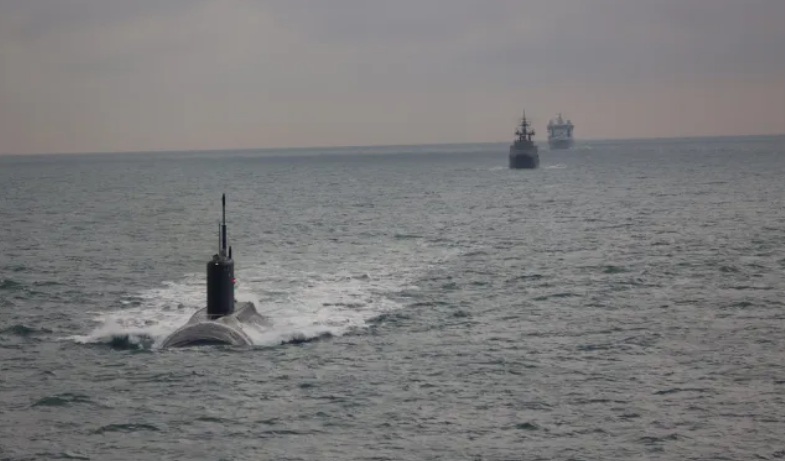


The UK has revealed a naval operation in the North Atlantic. It monitored Russian submarine activity near undersea cables and pipelines. These systems support global communications and energy supply. Defence Secretary John Healey said British forces worked with allies for over a month. Their aim was to track and deter suspected surveillance of critical infrastructure.
UK Navy Operation Tracks Russian Submarines in the North Atlantic
The United Kingdom has said its navy successfully monitored and disrupted Russian submarine activity in the North Atlantic. The operation focused on protecting vital undersea infrastructure, including communication cables and energy pipelines that carry internet data, phone signals, and power supplies between countries.
Defence Secretary John Healey said British forces tracked Russian submarines suspected of surveying these critical underwater systems. The mission involved a Royal Navy warship and P-8 maritime patrol aircraft working together for over a month to follow submarine movements and prevent any harmful activity.
Keir Starmer says the UK will not be drawn into conflicts that are not in the national interest
Officials said the Russian submarines were operating near sensitive ocean areas, though exact locations were not disclosed. The activity was outside UK territorial waters but still considered a potential risk to important international infrastructure.
The operation was carried out quietly and continuously as a deterrent. UK forces aimed to show that any attempt to interfere with undersea cables or pipelines would be detected and responded to. The surveillance effort ensured constant monitoring of underwater threats using advanced naval and air assets.
Defence Secretary Details Month-Long Surveillance Mission Against Russian Activity
Speaking at a press briefing in Downing Street, Defence Secretary John Healey said the UK carried out a naval operation lasting more than a month to monitor Russian submarine activity in the North Atlantic. He said British forces worked with allies to track what he called “malign activity” by Russian naval units.
Healey said three Russian submarines were involved in the wider operation being monitored. These included specialised deep-sea vessels often linked to intelligence gathering and underwater inspection missions. He said they were believed to be surveying important undersea infrastructure such as cables and pipelines.
Britain nuclear submarine base sees breach surge as UK MoD reviews security at HMNB Clyde
He noted the activity took place while global attention was focused on tensions in the Middle East, suggesting it was carried out quietly during a period of major international developments. UK forces were instructed not only to observe but also to deter any approach to critical underwater systems.
Healey warned that undersea infrastructure is a key national asset and said any attempt to damage it would not be tolerated. He confirmed no damage has been reported, though checks with allies continue, and said the operation took place outside UK territorial waters.
No Damage Reported as UK Warns Russia and Highlights NATO Commitment
Authorities have confirmed that there is currently no evidence of damage to undersea cables or pipelines linked to recent Russian submarine activity. However, officials said verification checks are still ongoing in coordination with allied nations to ensure all critical infrastructure remains secure.
Defence Secretary John Healey said the operation highlights the strength and readiness of UK armed forces. He stated that the military is fully capable of detecting, tracking, and responding to underwater threats when needed. He added that the mission shows Britain can protect vital infrastructure. This is true even in the deep ocean. Threats there are hard to see or monitor.
Healey also emphasized the importance of undersea cables. He said they carry almost all global internet traffic and financial communications. This makes them essential to modern life. He linked the operation to wider European discussions on defence spending. He also pointed to the need for stronger military capabilities.
Kemi Badenoch echoes Donald Trump’s call for energy independence through North Sea drilling
When asked about NATO-related political comments, Healey avoided reacting to social media. He instead referred to talks with senior US defence officials. He said discussions with US Defence Secretary Pete Hegseth showed strong US commitment to NATO. This includes support for Article 5, which treats an attack on one member as an attack on all.
He also noted that European NATO members, including the UK, are expected to take more responsibility. This is especially important for protecting sensitive underwater infrastructure.