


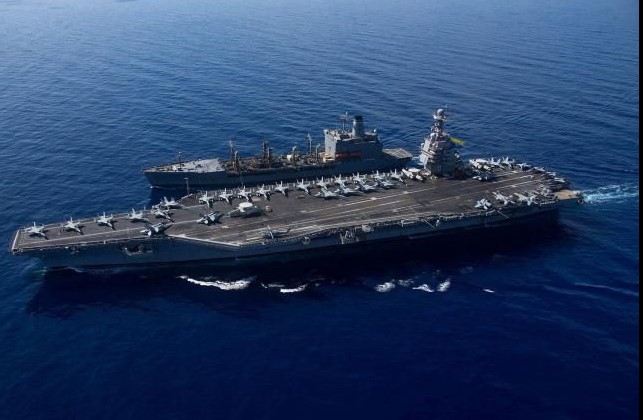


The United States recently stepped up its military presence in the Caribbean, claiming the mission is part of its War on Drugs to stop cocaine from reaching American streets. However, recent events suggest this might be more than just a crackdown on drugs. Since early September, US strikes off Venezuela’s coast have killed over 80 people, raising alarms among lawmakers and international experts.
US Forces in Venezuela: Drugs or Politics?
US officials have stated that the operation targets “narco-terrorists,” portraying it as a defensive measure in the ongoing War on Drugs. But the scale of the operation—deploying an aircraft carrier, missile cruisers, F-35 stealth fighters, drones, and amphibious assault ships—has led many to question whether the real goal is to pressure Venezuela politically.
While US leaders describe Venezuela as central to the Latin American drug trade, experts point out that cocaine production primarily happens in countries like Colombia, Peru, and Bolivia. Venezuela serves mostly as a transit route. The question arises: is the military force proportional to the drug threat, or is there another motive?
Deadly Strikes in the Caribbean Raise War on Drugs Questions
On September 2, US drones attacked a vessel in international waters, claiming it was carrying drugs. A second strike reportedly followed minutes later, killing survivors from the first attack. Under international law, including the Geneva Conventions, shipwreck survivors and injured combatants are protected. Experts argue that targeting them could be considered a war crime.
The strikes sparked concern in the US Congress. Both the House and Senate Armed Services Committees have launched inquiries. Even some members of the president’s own party have called the actions “outrageous.” Meanwhile, US operations in the Caribbean are expanding, with the largest Air Force presence in the region since the 1960s.
The White House has labeled the campaign as a “non-international armed conflict,” framing drug smugglers as enemy combatants. Critics argue that the so-called War on Drugs in this context blurs the line between anti-drug operations and open military intervention.
Political Motives Behind the US War on Drugs in Venezuela
At the center of the controversy is the so-called “Cartel de los Soles,” a term used for corrupt Venezuelan officials allegedly involved in crime. By labeling it a terrorist organization, the US has indirectly recast Venezuela’s government as a criminal enterprise. This move dramatically raises the stakes, transforming political hostility into a justification for military action under the banner of the War on Drugs.
Publicly, Washington presents the campaign as defensive. Privately, reports indicate that US leaders have urged Venezuela’s president to resign and flee. Airspace restrictions have been enforced, and CIA operations inside the country have reportedly been authorized. This military and political pressure mirrors earlier US strategies during prior administrations, which relied heavily on sanctions, diplomatic isolation, and support for opposition figures.
Experts say Venezuela’s political situation, not drug trafficking, appears to be the real focus. With the world’s largest oil reserves, the country remains a point of interest for foreign powers. While organized crime exists, the use of missiles, carriers, and drones raises questions about the proportionality of the War on Drugs campaign.
Internationally, responses are mixed. Some Caribbean nations declare the region a zone of peace, while major Latin American countries oppose intervention. China and Russia remain silent, and historical US actions in the Americas add to regional skepticism.
The large-scale operations, strikes, and political messaging have created tension. While framed as a War on Drugs effort, the campaign also appears aimed at influencing Venezuela and protecting strategic interests.