


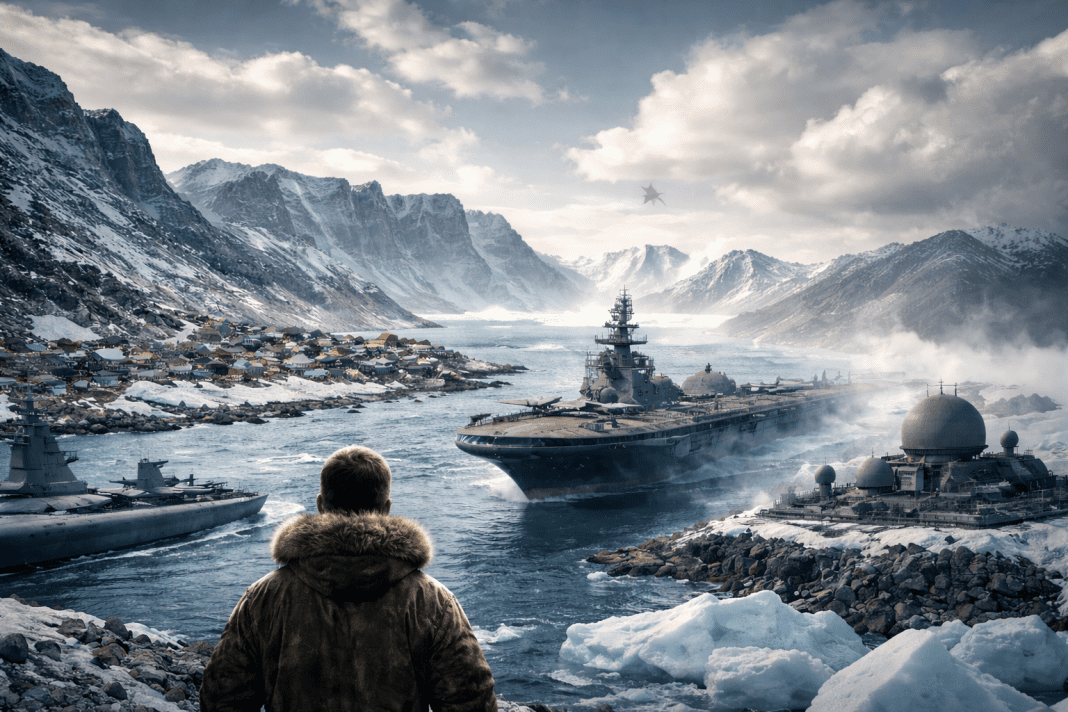


The quiet, icy expanse of Greenland is facing attention. Interestingly, it feels strangely familiar to those who have watched other regions struggle under foreign ambitions. The U.S. is preparing to appoint a special envoy to Greenland. This envoy, in particular, will have a mandate to increase U.S. influence. As a result, this has raised questions: Is Greenland on a path similar to Kashmir?
For the 57,000 people who live on Greenland, this is not just a matter of international strategy. In fact, it is a story of a small population caught in the crossfire of global powers. Moreover, unlike a national security debate, this situation resembles old patterns of colonial control, where local voices are often ignored in the name of power and progress.
The Arctic Cold Rush: Power and Strategy
The term “Great Game” originally described a 19th-century contest between empires in Central Asia, where countries were treated like pieces on a chessboard. Today, the game has shifted to the Arctic, where Greenland’s melting ice has exposed valuable minerals and space for military installations.
Greenland’s position is strategically important. Countries see it as a key location for missile defense systems and military advantage. This has led to comparisons with past colonization practices, where lands were claimed under the pretext of discovery, ignoring the rights of Indigenous peoples.
The U.S.’s plan to send a special envoy is framed as a security and strategic measure. However, it raises questions about whether Greenland is being treated as a sovereign nation or as a territory to control for political and military gain. The island’s resources and location are turning it into a prize in what some analysts call a new “Cold Rush.”
Echoes of Conflict: Greenland and Historical Parallels
Observers note that Greenland’s situation has parallels with other conflict zones. For example, in regions like Kashmir and Palestine, local populations have often faced interference from stronger powers under the guise of security.
In particular, in Greenland, the concern is that foreign influence could overshadow the will of the people. Most Greenlanders want independence from Denmark, yet they do not wish to become part of another country. Moreover, treating Greenland like a real-estate deal or a strategic outpost can undermine their right to self-determination.
U.S. weighs direct role in Greenland rare earths development through $50 million plan
The strategic discussions around Greenland include its coastlines, airspace, and potential military bases. These factors echo past situations where powerful countries have occupied lands to create a “security buffer,” often at the cost of local populations’ freedoms and choices.
As a result, this framing has led to comparisons of Greenland becoming a kind of northern version of contested regions, where strategic priorities of superpowers can overshadow the democratic aspirations of local residents. Therefore, analysts warn that Greenland’s sovereignty and the voices of its people must remain central, even amid global strategic competition.
Voices of Greenland: Autonomy and Identity
Greenlanders have a long history of resilience. They live in one of the harshest climates on Earth and have adapted to life on a fragile ice-covered land. Yet their survival is now intertwined with decisions made far beyond their shores.
While Denmark provides governance support, Greenlanders have sought greater autonomy and control over their resources. The idea of being absorbed into another nation raises concerns. This is true even if it is under the guise of protection. It could repeat historical patterns of control.
The push for influence by global powers is often justified as necessary for security or regional stability. However, the people of Greenland are clear about their priorities. They want a future where they can make choices about their own governance, culture, and resources. They do not want to be treated as a pawn in an international contest.
This situation highlights a tension between global strategy and local democracy. As Greenland’s ice continues to melt, new opportunities are emerging. The world is watching how these decisions will balance strategic interests with the rights of the population.