




The United States is facing one of its toughest diplomatic tests in years. As Israeli forces continue operations inside Syrian territory, President Donald Trump has publicly criticized these actions, calling them “counterproductive.” This public rebuke exposes the deeper tensions inside Washington’s broader Middle East plan, especially its push to expand the Abraham Accords.
A Growing Rift Inside America’s Abraham Accords Strategy
Behind the scenes, U.S. officials are trying to advance three major strategic goals. These could reshape the Middle East, but they also carry risks that might spark new conflicts between America’s own partners. At the center of these efforts is the Abraham Accords, first launched in 2020 to establish ties between Israel and countries like the UAE, Bahrain, and Morocco.
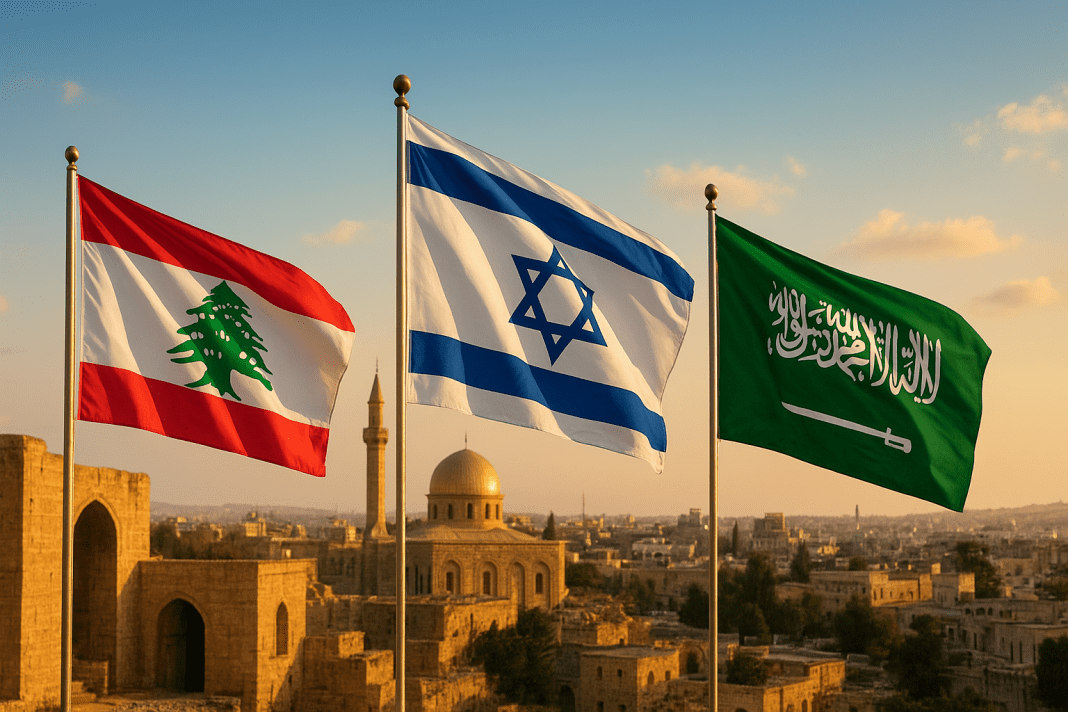
Now Washington wants to expand the Abraham Accords even further, adding Lebanon, Saudi Arabia, and even Syria. Experts say such an expansion would be historic. But the biggest obstacle is clear: Israel is still occupying Syrian territory. Convincing Syria to join the Abraham Accords while Israeli forces remain in control of part of its land is a contradiction most Arab nations will not ignore.
Turkey’s Foreign Minister Hakan Fidan put it simply: “You cannot build peace on continued occupation.” Many regional leaders share this view, making the Abraham Accords expansion extremely challenging. The U.S. sees Syria as key to reaching Saudi Arabia, the prize country whose participation would transform the entire Accords.
Danger of a Turkey-Israel Clash Raises the Stakes
Beyond the diplomatic hurdles, Washington is also struggling to prevent a possible conflict between Turkey and Israel—two of its most important allies. Tensions have risen sharply, with Turkish President Recep Tayyip Erdoğan warning that Turkey could take military action if Israel’s operations in Gaza continue. For the U.S., the thought of Turkey and Israel entering a direct conflict is alarming.
A conflict between these two countries could damage NATO and destabilize the region. This would also make expanding the Abraham Accords almost impossible, since the Accords rely on a foundation of regional stability.
Part of the danger stems from Israeli operations in Syria, which aim to stop Iranian weapons from reaching hostile groups. These operations, however, place Israeli troops dangerously close to Turkish areas inside northern Syria. Even a small mistake or misunderstanding could trigger a major confrontation.
Trump Seals $142 Billion U.S.-Saudi Arms Deal, Sparks Debate with Syria Sanctions Lift
At the same time, Trump reportedly promised both Saudi Crown Prince Mohammed bin Salman and President Erdoğan that he would work to rebuild Syria by easing sanctions and supporting reconstruction. Both countries see Syrian stability as essential. But again, Israel’s continued strikes in Syria complicate these promises.
Experts point out that it is hard to rebuild a country that is still being bombed. This contradiction makes it difficult for the U.S. to keep Turkey and Saudi Arabia aligned with its broader regional strategy, including the Abraham Accords. When America’s partners see mixed messages—supporting reconstruction while allowing bombardment—it becomes harder for Washington to maintain trust.
Weapons Deals, U.S. Leverage, and Pressures Surrounding the Abraham Accords
The U.S. also faces friction over advanced weapons sales. Washington provides Israel with $3.8 billion each year in military support. But as part of its wider Middle East agenda—especially the push to advance the Abraham Accords—the U.S. wants to sell F-35 fighter jets to Saudi Arabia and Turkey.
Israel strongly opposes these sales. Prime Minister Benjamin Netanyahu has reportedly urged Trump to block the deals, citing America’s promise to protect Israel’s “qualitative military edge,” which guarantees Israel will always have superior weapons compared to its neighbors.
If Washington blocks the F-35 sales, it could anger Saudi Arabia and Turkey—two countries essential for expanding the Abraham Accords. If it approves them, it risks upsetting Israel, the central participant in the Accords.
This weapons dilemma exposes the deeper tensions in U.S. policy. The United States is trying to support allies whose goals often contradict one another. Israel wants limits on the military capabilities of other regional powers. Saudi Arabia and Turkey want stronger militaries and more independence. Syria wants sanctions relief. Turkey demands respect for Palestinian rights. Israel insists on preemptive strikes for its security.
Hezbollah seeks to restore relations with Saudi Arabia amid escalating strikes in Lebanon
All these conflicting priorities sit at the heart of Washington’s challenge in expanding the Abraham Accords. Every decision the U.S. makes affects one ally or another, and any imbalance could collapse the fragile diplomatic progress made so far.
A senior Arab diplomat summarized the dilemma: “The Americans are trying to build three different Middle Easts simultaneously.” For now, Washington continues its delicate balancing act—trying to grow the Abraham Accords while avoiding conflict, keeping promises, and managing competing interests across the region.