


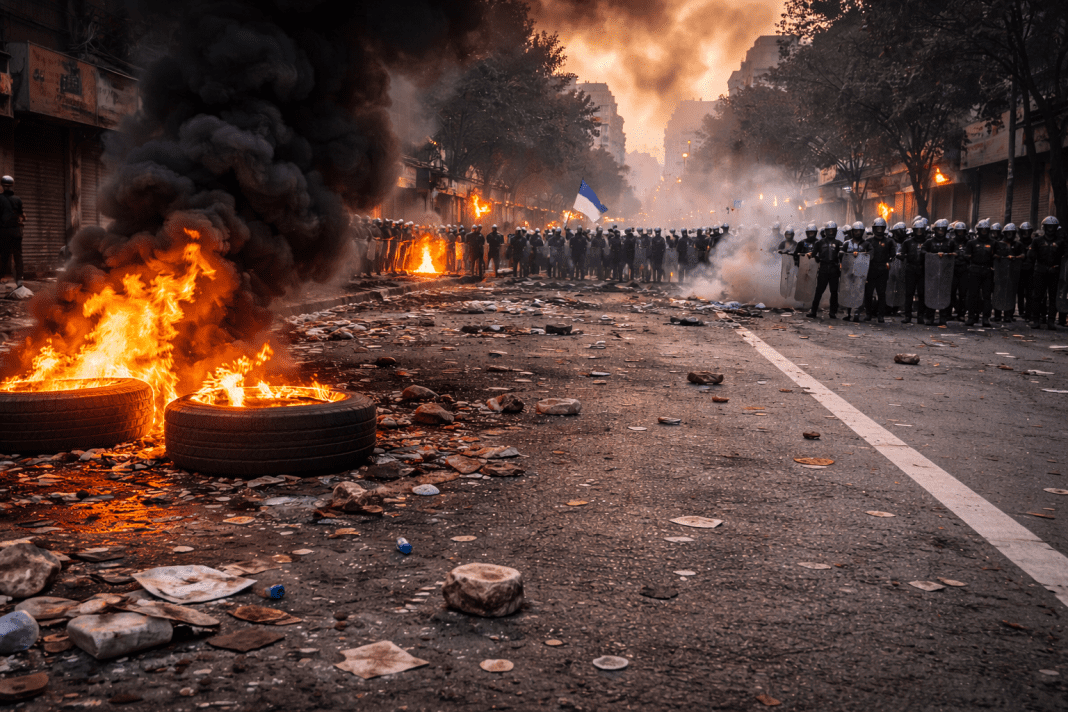


U.S. President Donald Trump has warned that the United States would intervene if Iranian authorities violently kill peaceful protesters, as Iran faces its largest protests in three years amid severe economic hardship, rising prices, and a collapsing currency. Trump made the statement on Friday in a Truth Social post, stressing Washington’s close attention to the unrest, which began as economic demonstrations but has turned violent in some areas, with reported deaths and clashes between protesters and security forces.
Trump’s Strong Warning to Iran Over Protest Crackdown
President Donald Trump said that the United States would intervene if Iran “shoots and violently kills peaceful protesters” and added that the U.S. is “locked and loaded and ready to go.” While he did not specify what action Washington might take, the statement made clear that the U.S. is closely watching how Iranian authorities respond to the protests.
Trump shared the message on his social media platform, Truth Social, using unusually strong language for a sitting U.S. president. The warning reflects the seriousness with which the White House views reports of violence against protesters and aligns with Trump’s long-standing tough stance on Iran, including his decision during his first term to withdraw from the nuclear deal and reimpose sanctions.
Netanyahu warns of Iran rebuilding nuclear and missile capabilities after June war
The White House and Pentagon provided no further details on the possible meaning of “intervention.” Some human rights groups welcomed Trump’s focus on protecting peaceful protesters, while others cautioned that his remarks could further raise tensions in the Middle East.
Protests Spread Across Iran Amid Economic Pain
The protests in Iran began earlier this week when shopkeepers and small business owners took to the streets. The sharp fall in the value of Iran’s currency, the rial, and the rapid rise in prices of everyday goods like food and fuel sparked their anger.
As the protests grew, they spread across multiple provinces, becoming the largest demonstrations the country has seen in three years. What started as economic complaints quickly turned into wider expressions of frustration with living conditions and government policies.
According to reports, clashes broke out between protesters and Iranian security forces in several areas. These clashes marked a serious escalation, as authorities moved to control crowds and restore order. In some cases, the confrontations turned violent, and several people were reported killed. Iranian state media has provided limited details, while independent verification has been difficult due to restrictions on reporting and internet access.
United States moves to restrict Iranian oil revenue by sanctioning 29 vessels
Witnesses and local sources described security forces using force to disperse crowds. Protesters, in turn, blocked roads and shut down shops as part of their demonstrations. The unrest disrupted daily life in many cities and towns, highlighting the depth of public anger.
Iran has experienced waves of protests in the past, often linked to economic hardship. High unemployment, inflation, and reduced purchasing power have been long-standing problems. The current protests show that these issues remain unresolved and continue to affect ordinary people.
Sanctions, Economic Struggles, and Rising Tensions
Iran’s economic problems have been growing for years, mainly due to strict international sanctions. The situation worsened in 2018 after the United States reimposed sanctions when President Donald Trump withdrew from the international nuclear deal, which had offered Iran sanctions relief in exchange for limits on its nuclear activities.
Since then, Iran’s economy has suffered heavily. Oil exports, a major source of income, dropped sharply, while the national currency lost value. This led to higher inflation, making food, fuel, and other basic goods more expensive and lowering living standards for many families.
“Hell to pay”: Trump issues twin warnings to Iran and Hamas after Netanyahu talks
The ongoing protests are widely linked to these economic pressures. As prices rose faster than wages, frustration increased among shopkeepers, workers, and lower-income households. A recent sharp fall in the currency’s value triggered widespread demonstrations across several provinces.
Trump’s warning has added an international dimension to the unrest. It signals that the United States is closely watching Iran’s response to the protests, while Iranian authorities continue to accuse foreign powers, including the U.S., of interfering in the country’s internal affairs.