U.S. President Donald Trump made strong remarks on Iran’s nuclear program and U.S. military involvement during a recent exchange with reporters. He said pressure would continue until Iran cannot develop nuclear weapons and also addressed reported strikes, drone threats, and cyber risks, highlighting ongoing tensions in the region.
Trump’s remarks on Iran operation and nuclear program stance
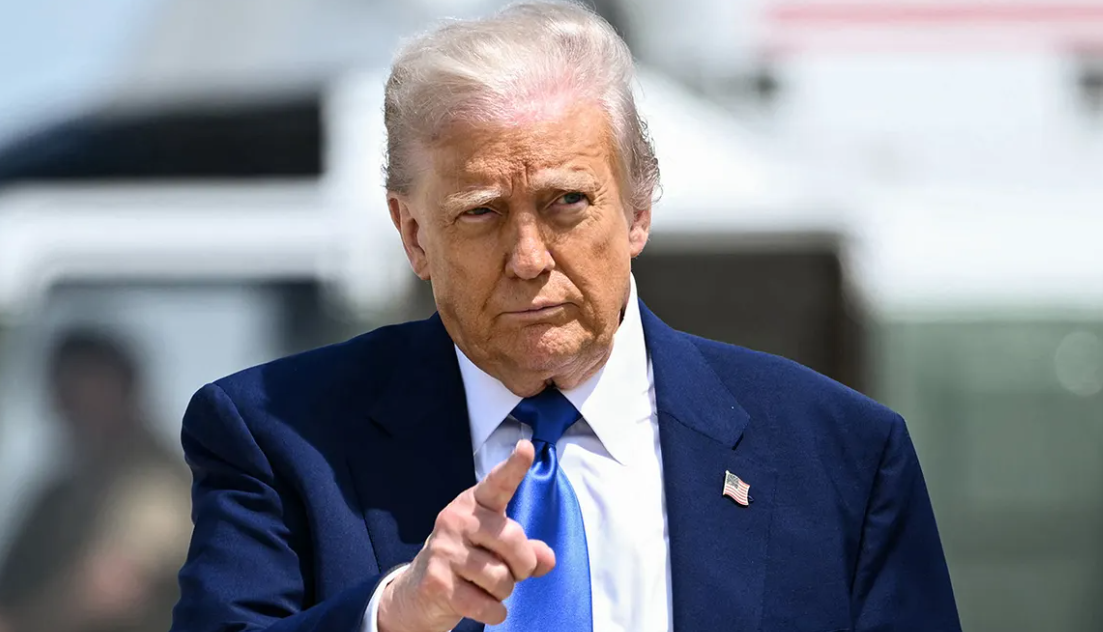
U.S. President Donald Trump made strong remarks about Iran and its nuclear program during a recent interaction with reporters, focusing on the ongoing military situation and the possibility of a nuclear program-related deal. He said that Iran does not “have to make a deal” with the United States over its nuclear program and that U.S. actions are not dependent on negotiations. According to him, military pressure or operations would continue until Iran is fully unable to develop its nuclear program.
Trump suggested that ending the operation is not tied to diplomacy but to stopping Iran’s nuclear program entirely. He also claimed that he has spoken to multiple people and described Iran as having a “new regime” that is more accessible and different from previous leadership, although he did not provide evidence for these contacts.
Missile strike near Iran’s Bushehr nuclear plant sparks global alarm despite no damage
He added that the United States would withdraw “very soon” once key conditions are met, especially ensuring Iran cannot advance its nuclear program for a long period. His remarks emphasized a strategy focused on security objectives rather than formal agreements or diplomatic settlements.
Claims about military strikes, nuclear facilities, and Strait of Hormuz
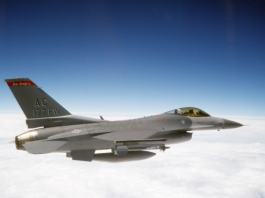
During the same exchange, Trump made several claims about U.S. military actions and their impact on Iran’s defense systems. He said recent strikes had severely damaged Iran’s military infrastructure, including missile production facilities and air defense networks. According to him, advanced U.S. military equipment, including long-range bombers, was used to carry out powerful attacks that allegedly destroyed key strategic sites. He claimed these actions had set Iran’s military capabilities back by many years.
Trump also stated that Iran’s navy, air force, and communication systems had been heavily weakened, describing Iran’s overall military structure as significantly reduced. These statements were part of his political remarks and were not independently verified during the exchange.
Inside the lopsided naval battle between the USS Abraham Lincoln and Iran’s coastal defenses
He further discussed the Strait of Hormuz, a crucial global shipping route for oil and gas. According to him, responsibility for securing the waterway could shift to other countries such as China and European nations if U.S. involvement is reduced. He warned that even small attacks or mining operations in the area could disrupt global trade and added that other nations should take greater responsibility for its safety.
Trump added that the U.S. could complete its operations within “two to three weeks” and then step away from direct involvement in the region, according to his remarks.
Drone threats, cyber warnings, and regional tensions involving US companies
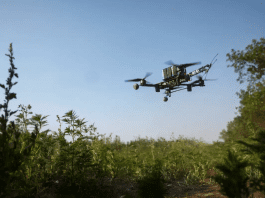
Alongside comments on Iran, Trump also addressed reported drone activity near sensitive U.S. military sites. He referred to claims of drone swarms flying over military bases. He said that new anti-drone technologies are being developed. These include laser-based systems to counter such threats. He added that modern defense systems are improving. He suggested that drones are easier to intercept. This is because they move slower than fighter jets.
Trump mentioned incidents where drones were allegedly detected and neutralized using advanced systems. However, no detailed evidence was provided during the exchange. Separately, he commented on a viral video showing military helicopters near a celebrity’s property. He said authorities would review whether proper procedures were followed.
Bunker-buster bombs target a deep underground military site in Iran’s Isfahan region
The discussion also included concerns about cyber and corporate threats. Officials stated that groups linked to Iranian military organizations had allegedly issued warnings. These warnings targeted major U.S. technology companies, including Apple, Microsoft, and Nvidia. Trump questioned the details of these claims. He sought clarification and suggested some reports may be unclear or unverified.
Despite these tensions, he repeatedly emphasized the main priority. This priority is preventing Iran from developing nuclear weapons. He maintained that this goal would stand regardless of whether the United States and Iran reach a formal deal. He also linked the issue to broader military, cyber, and technological security concerns.