


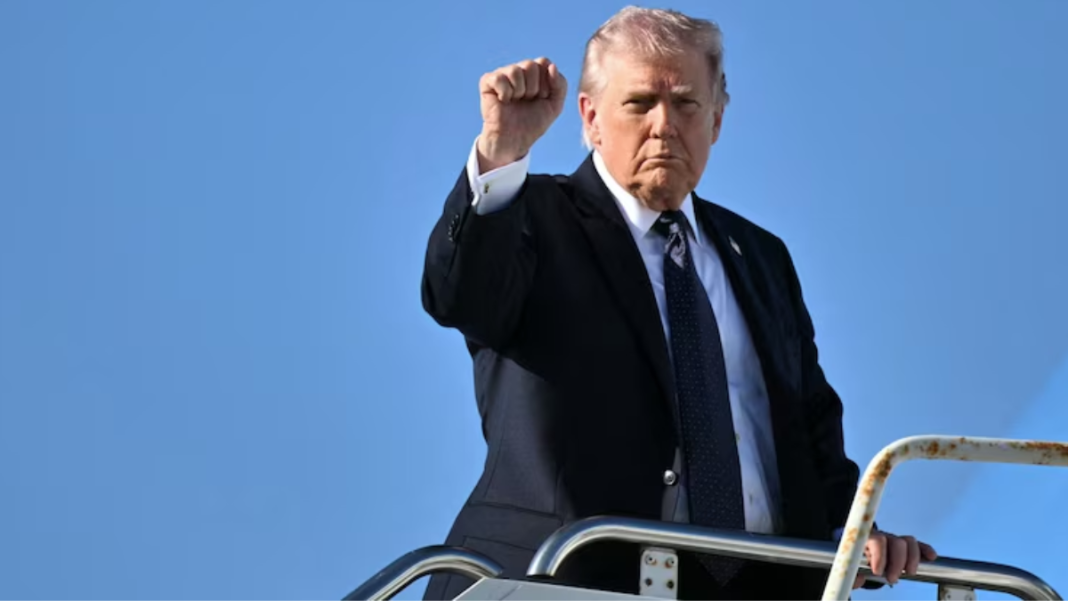


Trump Signals Extended US Military Capacity
US President Donald Trump stated that the United States possesses what he described as a “virtually unlimited supply” of medium and upper-medium-grade weapons. He said current munitions stockpiles are at some of their highest levels and emphasized that military operations could continue longer than the initially projected four-to-five-week timeline.
Donald Trump said the United States can sustain wars using existing supplies and has stored additional high-grade weapons in outlying countries. He did not share a detailed inventory, but his statement signaled readiness for a prolonged campaign.
Trump says Russia-Ukraine war would never have happened under his leadership
The US air campaign has targeted Iranian government and military facilities. In coordination with these operations, the strikes form part of joint efforts alongside Israel.
Meanwhile, Israeli Prime Minister Benjamin Netanyahu has defended the decision to strike, stating that Iran had been rebuilding facilities linked to ballistic missile and atomic programs. According to him, such developments could have made those programs immune within months.
The current escalation followed the killing of Iran’s Supreme Leader Ali Khamenei, a development that significantly altered the regional balance and triggered intensified military activity.
Strikes, Retaliation, and Regional Fallout
Iran announced the closure of the Strait of Hormuz, a key global oil transit route.
Authorities warned that vessels attempting to pass through could face attack. The announcement immediately raised concerns about global energy supply disruptions, as a significant portion of the world’s oil shipments move through that narrow waterway.
Iran’s Foreign Minister Abbas Araghchi accused the United States of entering the conflict and called for accountability. He also criticized Israel’s involvement. Meanwhile, Donald Trump urged Iranian citizens to reconsider their political leadership, intensifying the rhetorical battle between the two sides.
Evacuations and International Reactions
Behind the sanctions narrative: The Iran I saw on the ground looks nothing like the headlines
During a meeting with Iranian Ambassador, Japan’s Foreign Minister Toshimitsu Motegi conveyed Japan’s position that attacks destabilizing the region must stop and emphasized the importance of maintaining safety in the Strait of Hormuz, which is critical to Japan’s energy security.
Across the region, daily life has been disrupted. Airspace restrictions have expanded, military patrols have increased, and residents in several cities have stocked essential supplies amid repeated alerts.