


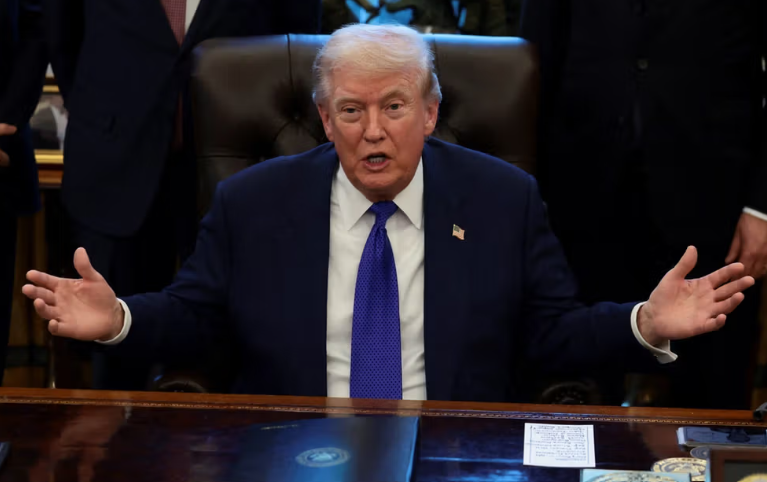


The United States is facing rising tensions as President Donald Trump considers possible military action against Iran. His advisers are urging him to focus more on voters’ economic concerns. The administration has deployed major military forces to the Middle East but has not fully explained the need for action. The situation is adding political pressure ahead of key midterm elections.
Military Buildup Raises Questions Inside Washington
Senior administration officials say President Donald Trump’s focus on Iran has become a defining feature of his second term, with foreign policy and military decisions often taking priority over domestic issues like inflation, housing costs, and everyday expenses. Public opinion polls show that most American voters remain more concerned about economic challenges, yet Trump has devoted significant attention to security threats overseas.
Officials speaking privately say there is still no unified agreement within the administration on whether to launch a strike against Iran. Some advisers warn that military escalation could send the wrong message to voters already struggling with rising prices and economic uncertainty. Republican strategists and campaign officials have stressed in internal meetings that economic messaging should remain the administration’s main focus ahead of elections.
A White House official defended Trump’s strategy, arguing that his foreign policy actions are intended to strengthen national security while supporting economic stability. However, internal disagreements suggest continued debate over the political risks of military action.
Political Risks Ahead of Midterm Elections
The upcoming elections will determine whether Trump’s Republican Party continues to control both chambers of Congress or whether the Democratic Party gains power. Losing control of even one chamber could make it harder for the president to pass legislation during the remainder of his presidency.
Political strategists warn that a prolonged conflict with Iran could create serious risks for Trump and Republican candidates. Many voters who supported Trump did so because of his promise to avoid long foreign wars and focus on domestic prosperity.
Trump’s political base, often aligned with his “America First” message, has historically shown skepticism toward overseas military engagements. Ending what supporters called “forever wars” was a major campaign pledge during previous elections.
Most US bases in the Middle East are within Iran’s missile range, Pentagon officials quietly warn
Some Republicans supported last month’s rapid U.S. operation that removed Venezuelan leader Nicolás Maduro from power, largely because it was quick and limited in scope. However, analysts say Iran represents a far stronger and more complex adversary, raising concerns that any conflict could last longer and involve greater risks.
Strategists note that voter support may depend on how clearly the administration connects military action to American safety and economic stability. Without a clear explanation, undecided voters — who often determine close election outcomes — may question the necessity of another overseas conflict.
Trump himself has acknowledged in interviews that his party could face challenges in the midterms, especially as many Americans remain unconvinced that inflation and living costs are improving.
Trump Faces Questions Over Unclear War Goals and Mixed Messaging
A key concern in the Iran situation is the lack of a clearly defined objective behind possible U.S. military action. President Donald Trump has offered different explanations at different times, creating uncertainty about the administration’s overall strategy.
Earlier, Trump threatened strikes after Iran’s crackdown on protests. Later, he shifted focus to Iran’s nuclear program, insisting Tehran must not develop nuclear weapons or enrich uranium. He has also mentioned possible “regime change,” though officials have not explained how air strikes alone could achieve that goal.
Iran’s Khamenei warns US forces and rejects limits on missiles and nuclear program as talks continue
In June, the United States targeted Iranian nuclear-related sites, prompting Tehran to warn of strong retaliation if attacked again. Since then, tensions have remained high, with both sides exchanging firm statements, while critics say the administration’s messaging lacks clarity compared with past conflicts.
Analysts say many voters are still waiting for a clear explanation of what success would look like. Officials maintain diplomacy remains the preferred option, but Trump continues to warn that military action is possible if negotiations fail, keeping political allies and critics closely watching developments.