


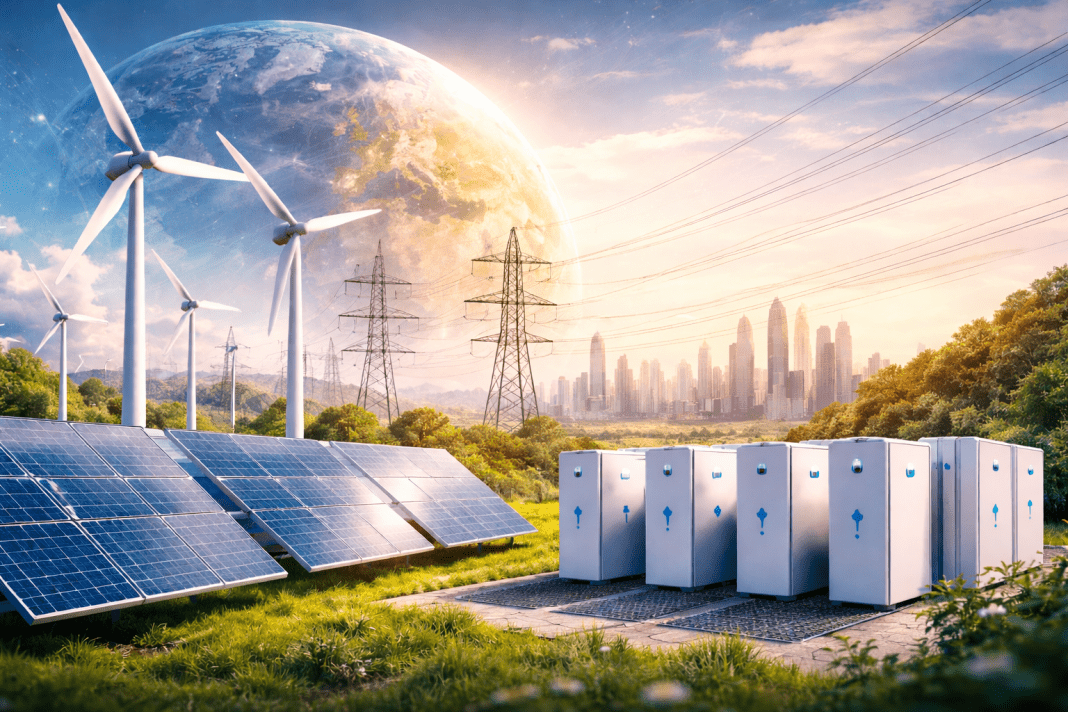


The Middle East conflict has disrupted oil and gas supplies. Countries are now shifting rapidly toward renewable energy. This includes solar, wind, and battery storage. However, this transition is increasing dependence on China. China dominates key technologies like solar panels, batteries, and grid equipment.
The Global Rush Toward Renewable Energy
The war has exposed the risks of relying heavily on oil and gas from unstable regions. Even short disruptions in supply can lead to sharp increases in fuel prices and widespread electricity shortages. This has forced governments around the world to act quickly and rethink how they produce and manage energy, with a stronger focus on long-term stability and security.
As a result, many countries are now investing heavily in renewable energy. Solar and wind projects are expanding at a rapid pace, and power grids are being upgraded to support these cleaner energy sources. However, renewable energy comes with its own challenges. The sun does not always shine, and the wind does not always blow, which means energy supply can be inconsistent at times.
Was Pakistan the messenger or was China the author? The mystery behind the U.S.-Iran ceasefire
To address this issue, countries are turning to advanced batteries and smart grid systems that can store and distribute electricity efficiently. China plays a major role in this space by providing affordable and efficient technologies. At the same time, the growing use of artificial intelligence is driving up electricity demand, putting additional pressure on energy systems worldwide.
China’s Dominance in Energy Technology
China’s strong position in renewable energy has been built over many years through consistent planning and investment. The country spent heavily on green technology, putting hundreds of billions of dollars into developing solar, wind, and battery industries. This long-term focus helped create a large and advanced energy sector capable of meeting both domestic and global demand.
At the same time, China restricted foreign competition in key industries such as wind turbines and battery manufacturing. This allowed local companies to grow faster without external pressure and eventually become dominant players in the global market. As a result, Chinese firms now lead in several important areas of clean energy technology.
India and China among selected countries allowed transit through the Strait of Hormuz
Today, China supplies a major share of the world’s essential energy components. It produces a large portion of solar panels and controls much of the supply of rare-earth metals, which are critical for modern energy systems. Chinese companies also lead in battery innovation, especially lithium iron phosphate batteries that are cost-effective and widely used for storing electricity.
China’s massive production capacity gives it a clear advantage. Its factories can produce equipment quickly and cheaply, making it difficult for other countries to compete and increasing global reliance on Chinese technology.
Rising Demand and Growing Concerns
As the world shifts toward renewable energy, demand for grid equipment and battery storage is rising quickly. Countries are investing in power plants, storage systems, and grid upgrades. Solar and wind projects are expanding, while large battery systems are being installed to ensure a stable electricity supply.
Chinese companies are also growing their global presence. They are investing in factories and energy projects across Europe and Asia. This expansion helps them supply equipment faster and meet the increasing global demand for renewable energy infrastructure.
Shahed drone supply chain shifts to China and Taiwan as Dutch components vanish from wreckage
However, this growing dependence on China is raising concerns. Some governments worry about relying too much on one country for critical infrastructure. There are also fears of supply disruptions, especially after past restrictions on key materials. Concerns extend to software, as modern grids rely on digital systems to manage energy flow.
Despite these risks, China remains the most cost-effective option. Many countries continue to depend on its technology due to limited alternatives. As the Middle East conflict reshapes energy priorities, nations are rapidly upgrading power systems, increasing their reliance on China’s expanding energy industry.